CAC Payback Period: The Metric That Decides How Fast Brands Can Scale
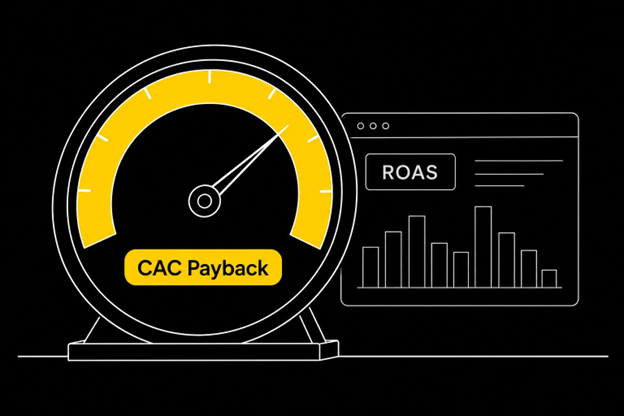
A brand hitting $10M in DTC revenue usually has a dashboard full of green numbers. ROAS looks healthy, campaigns look "profitable," yet cash feels tighter every quarter. That disconnect is the first sign platform-reported ROAS has stopped telling the truth. What actually governs how fast brands can scale is the CAC payback period: the time it takes to recover what was spent acquiring a customer through the gross profit that customer generates. Past the $5M mark, treating this as a footnote instead of a core planning input stops being an option.

Why Platform ROAS Is Lying About Scale
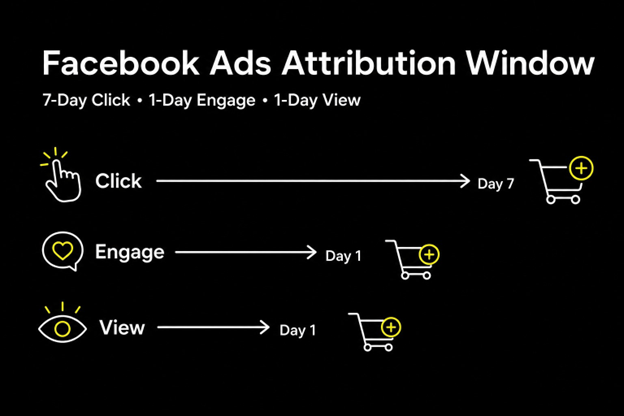
ROAS measures revenue against spend inside a single ad platform's attribution window. It says nothing about margin, repeat behavior, or what happens after the sale closes. Duncan Ferguson, Senior Strategist at Pilothouse Digital, puts it plainly: ROAS is a lagging, trailing indicator that optimizes on past performance rather than future growth, making it a deceptive input for real-time scaling decisions (Ep 619: Stop Growth Hacking Your Brand to Death). A number that only looks backward can't tell anyone whether next month's spend will pay for itself.
The Discount Death Spiral Pilothouse Warns About
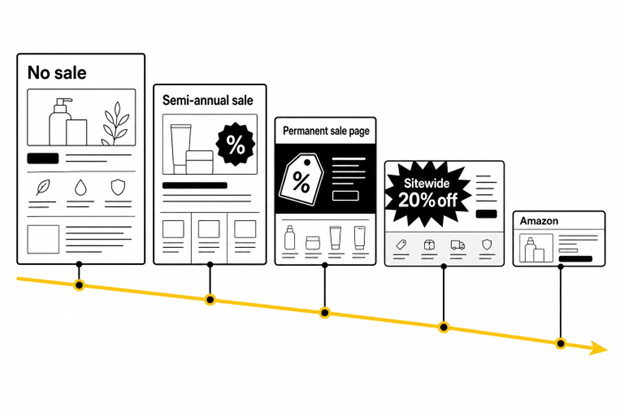
When ROAS dips, most teams reach for the same lever: discount harder. Ferguson describes a predictable downward spiral of escalating discounts, moving from occasional promotions to a permanently discounted site to offloading inventory on marketplaces like Amazon, that steadily erodes both margin and brand pricing power (Ep 619: Stop Growth Hacking Your Brand to Death). Each step makes the platform dashboard look better for a few weeks while gross margin and brand equity quietly erode. None of it addresses the real problem: the acquisition engine was never mapped to the full customer journey.
Trailing Indicators vs. True Unit Economics
The real fix comes from asking a different question. Instead of "what did this campaign return last week," try "how long until this customer pays back what it cost to get them." That's CAC payback, and it treats acquisition spend as an investment with a recovery timeline rather than a one-off transaction optimized in isolation.
Redefining CAC Payback Period With Ecosystem-Level Metrics
The standard formula is CAC divided by monthly revenue per customer multiplied by gross margin percentage. Simple math, but the inputs matter, and most brands feed it the wrong numbers by pulling CAC straight from a single ad platform's dashboard.
Worked example: a brand spends $140 to acquire a customer who generates $65 in monthly revenue at a 55% gross margin. That's $35.75 in monthly gross profit, so $140 ÷ $35.75 lands at roughly 4 months to full payback (Retainful). That four-month figure becomes the planning anchor for how aggressively the brand can reinvest in acquisition without straining cash flow.
Marketing Efficiency Ratio (MER) as the North Star
MER is total revenue divided by total marketing spend, a top-down view that captures halo effects platform-level ROAS misses entirely (Northbeam). One brand cited in that same analysis saw a 2.0 ROAS inside Meta Ads Manager but a 3.5 MER across all channels once organic and email lift were accounted for (Northbeam). Healthy DTC brands generally target an MER between 3x and 5x, with mature subscription brands pushing past 6x (Eightx); the 3.0 to 5.0 band is widely treated as the marker of sustainable profitability (Connective Web Design). Pilothouse Digital ties client success metrics to LTV, contribution margin, and incrementality rather than 7-day ROAS for this reason. MER captures the ecosystem effect that a single-channel view will always undercount.
eNCAC: Finding the Unprofitable Threshold Brands Can Safely Scale
Effective new-customer CAC, or eNCAC, isolates the true cost of a first-time buyer from the blended CAC diluted by cheap retargeting wins. One documented case saw blended CAC of $18.50 climb to an eNCAC of $24.20 once pure-acquisition targeting was applied; in-platform ROAS dropped from 3.2x to 2.1x, but new-customer AOV rose 27% and second-purchase rate climbed 18 points (Mintec). The number looks worse on the dashboard, but it's actually the more honest picture. Finding this threshold, the least profitable a brand can be while still being genuinely profitable, is how ecosystem-level metrics let brands scale acquisition without frying cash flow.
The Cohort Mistake That Silently Kills Scaling Budgets
Blended CAC hides a critical distinction: three separate cost lenses exist, blended, channel, and cohort (Sara Sanders Analytics), and conflating them is how scaling budgets quietly get burned. On average, ecommerce brands lose $29 on each new customer after marketing costs and returns, while repeat purchases average $39 in profit each (Mobiloud). If new and repeat cohorts aren't separated, that entire profit-loss dynamic disappears into a single misleading blended number.
Why Algorithms Chase Cheap Existing-Customer Revenue
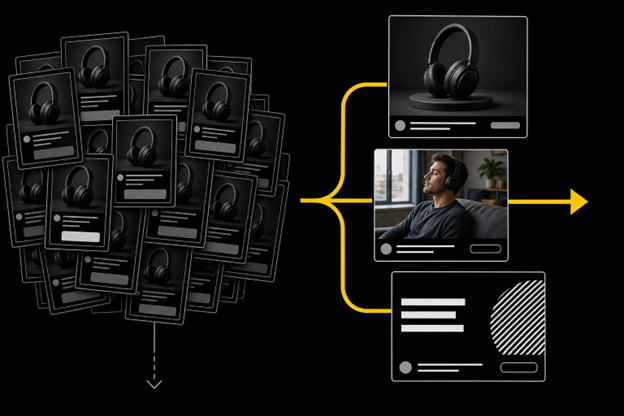
Without strict exclusion lists, ad platforms route budget toward whoever converts most easily, usually an existing customer who would have bought anyway. Pilothouse Digital's own analysis of Advantage+ campaigns found this exact pattern: budget drifts toward returning buyers, inflating in-platform ROAS while masking a flatlining new-customer funnel. The fix is deliberate customer-list exclusions paired with dedicated retention campaigns (Pilothouse Digital). It's the same problem Amazon PPC accounts run into, where mixing branded and non-branded traffic hides how weak cold-traffic performance really is.
Separating Cold Acquisition Spend From Retention Spend
Rafael Gi, Head of Strategic Growth and Partnerships at Pilothouse Digital, notes that brands under roughly $10-20M can often scale with loose strategy and platform-optimized ROAS, but past $20-30M, copycat competition compresses margins until unit economics break, forcing a shift away from blind platform trust (Ep 625: Brand Salience for DTC). Cleanly separating acquisition and retention cohorts is what keeps that break from happening prematurely.
The AOV Lever: Stop Selling Bundles to Cold Traffic
One of the fastest ways to shorten payback is lifting AOV without adding acquisition friction. Bundling looks appealing on paper, but presenting a complex bundle to a cold audience adds decision-making friction at the exact moment a brand needs the fastest possible yes.
One Core Product for Top-of-Funnel Ads
Pilothouse Digital's approach is to sell a single core product to cold traffic and save bundling for later in the funnel. This keeps the initial decision simple, protecting conversion rate at the top of the funnel where every extra second of hesitation costs money.
Using Post-Click Pages and Cart Pop-Ups as the Upsell Moment
The upsell moment belongs after the click, not before it. Post-click pages and cart pop-ups are the modern version of the infomercial "and wait, there's more" offer, adding high-margin accessories once purchase intent is already locked in. Post-purchase upsells carry no added CAC and introduce no checkout friction (Loopwork), and industry benchmarks show an average 4.7% take rate with a 5.6% AOV lift across more than 40,000 merchants, with well-optimized flows reaching 8-15% (Zipchat). That AOV increase drops directly into the payback formula's numerator, shortening recovery time without touching acquisition cost.
The Retention Lever: Shortening Payback With Content-First Email
Every dollar of revenue generated outside the paid funnel improves the marketing efficiency ratio and shortens payback for the whole business. Email and SMS are the cheapest distribution channels most brands already own but chronically under-use for anything beyond blasting discounts.
Jordan Gordon's Blueprint for Repeat-Opening Habits
Jordan Gordon, Head of Email, Retention, and CRO at Pilothouse Digital, argues that lowering CAC through owned channels is the most direct way to raise a business's Net Present Value on flat revenue, since it's revenue that didn't cost incremental ad dollars to generate (Ep 583: Counter Intuitive Ways to Maximize Net Present Value from Your Email List). An optimized retention system also frees capital that would otherwise be locked into paid acquisition, capital that can then fund scaling elsewhere.
Building Rituals and Surprise-and-Delight Over Discounts
The tactical detail matters: 85% of campaign revenue tends to come from recent site visitors, yet most brands blast anyone who opened an email in the last 180 days (Jordan Gordon, Ep 629: 85% of Your Email Revenue Comes From One Segment) Gordon's recommended cadence is two disciplined campaigns per week plus real behavioral flows, rather than 22 undifferentiated sends a month, paired with segmentation instead of blanket coupons (Ep 181: AKNF). Consumable products benefit from ritual-building content; non-consumable subscriptions respond better to surprise-and-delight moments. Multi-channel brands using Pilothouse Digital's email service show median year-over-year Shopify revenue growth 3.3 times higher, alongside lower MERs.
The Margin Lever: Replacing Discounts With Non-Monetary Friction Breakers
Discounting is the fastest way to make a bad ROAS number look good, and also the fastest way to teach customers never to pay full price again. There's a better lever available before margin has to be sacrificed.
Extended Warranties, Shipping Protection, and Personalization
Extended warranties and security add-ons reduce purchase anxiety, particularly on higher-ticket items, without training customers to wait for a sale. Non-monetary friction breakers lift retention without touching pricing strategy. Extended warranties, shipping protection, clear return policies, compatibility guidance, and personalization like custom engravings each chip away at the same buyer hesitation. Package protection covers shipping issues while warranties cover product failures, and either can be merchant-absorbed or customer-paid depending on margin tolerance. These levers resolve the same hesitation a discount would, without giving away gross margin.
The Hero Product Trap: Where Ad Spend Really Should Go
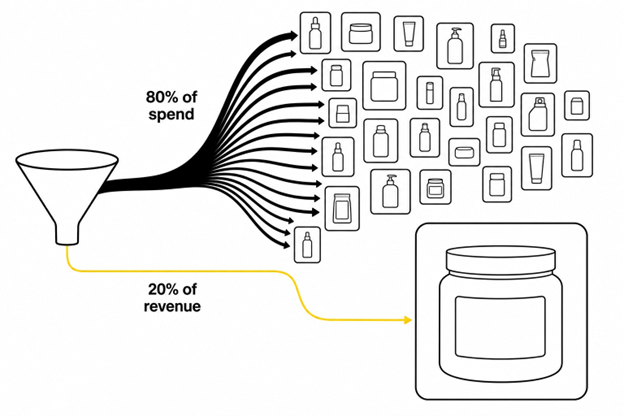
Scaling brands frequently fall into a structural trap: 80% of ad spend chases products generating only 20% of revenue, because those products look efficient on platform metrics, while the actual best-seller gets starved of budget (Ep 625: Brand Salience for DTC, Rafael Gi). Structuring an ad account by product instead of by customer persona is a common root cause, and it burns money because it rewards platform-level efficiency instead of business-level impact. Spending less on the hero product misses the point. What actually needs fixing is the account structure itself, rebuilt around whichever product is already earning the budget through its own revenue.
Scaling Past $20M: Moving From Platform Hacks to Brand Memory Structures
Below $20-30M, loose strategy and platform-optimized ROAS can still work reasonably well. Past that point, Rafael notes copycat competition compresses margins until platform hacks stop moving the needle, and brands need to shift toward consumer-centric brand salience instead (Ep 625). Pilothouse Digital's experience shows most brands hit scaling walls between $10-20M, which is a structural problem, not a demand problem. Integrated systems that connect creative, media, and retention deliver measurable results here: 20-30% higher ROAS, 20-30% lower CAC, and 15% higher AOV, with retention among multi-channel shoppers running 70% higher (Pilothouse Digital). Case studies like The Rag Company, VSSL, and Four Sigmatic show what this integration looks like when creative, media, and lifecycle stop operating in silos.
Turning CAC Payback Period Into a Cash-Flow Scaling Advantage
Understanding how this metric works, and how to calculate it, isn't an academic exercise. CAC payback sets the ceiling on how much a brand can spend acquiring customers before cash flow gets strangled , and a shorter payback period frees working capital to fund the next round of growth.
The Systems-First Bridge
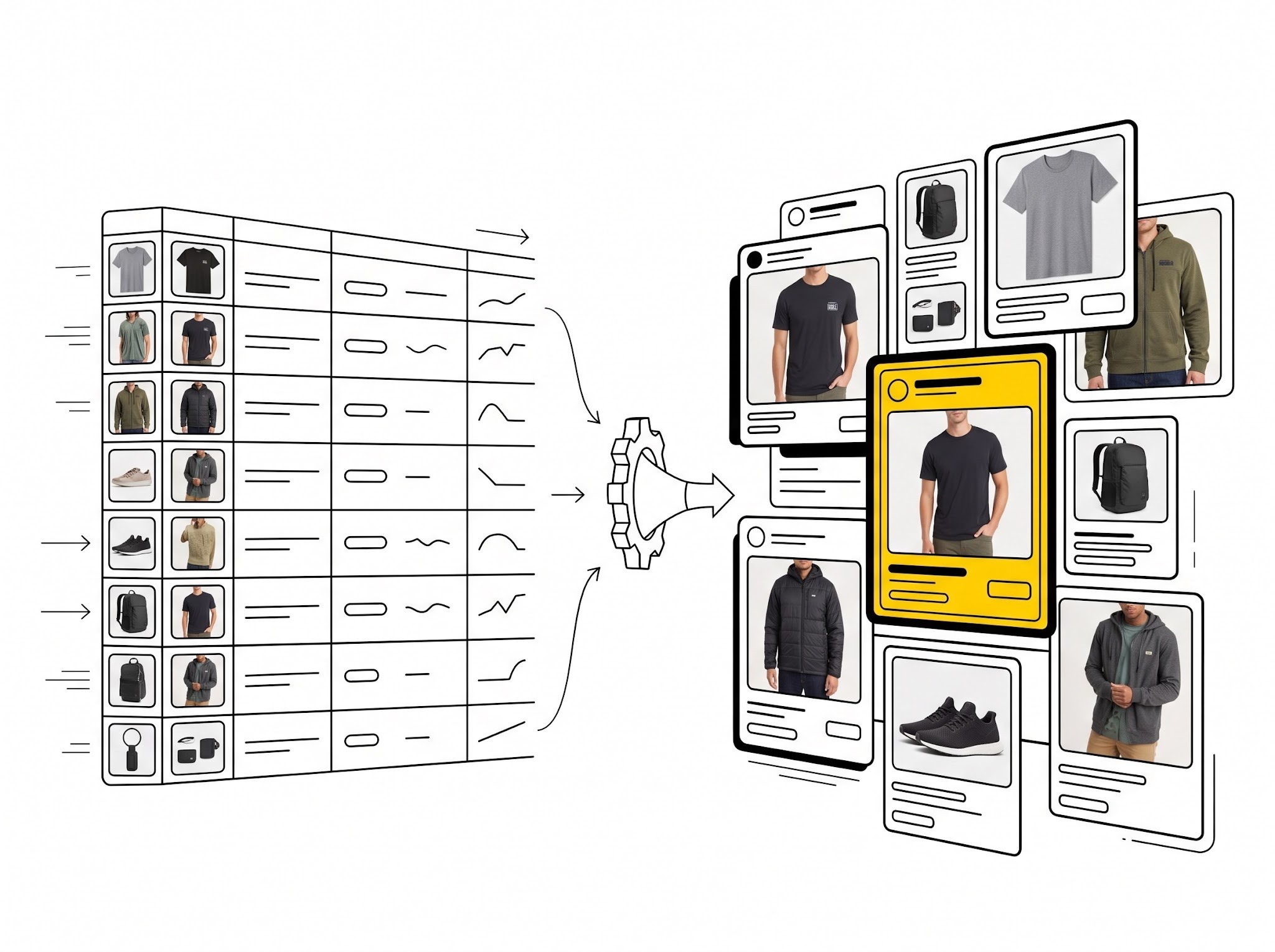
As Pilothouse puts it, tactical marketing delivers isolated results, while systems-based marketing compounds them. Treating CAC payback as a diagnostic input tied to MER, eNCAC, AOV, retention, and margin, rather than a scorecard for last week's campaigns, is what turns unit economics into a genuine scaling advantage instead of a constraint discovered too late. That's the systems-first lens Pilothouse Digital applies with brands at the $10M+ inflection point, looking at unit economics before media spend, not after.






.png)
.png)
.png)




.png)
.png)
.png)