


Meta Ads Audience Targeting in the Andromeda Era: Creative Is the New Targeting
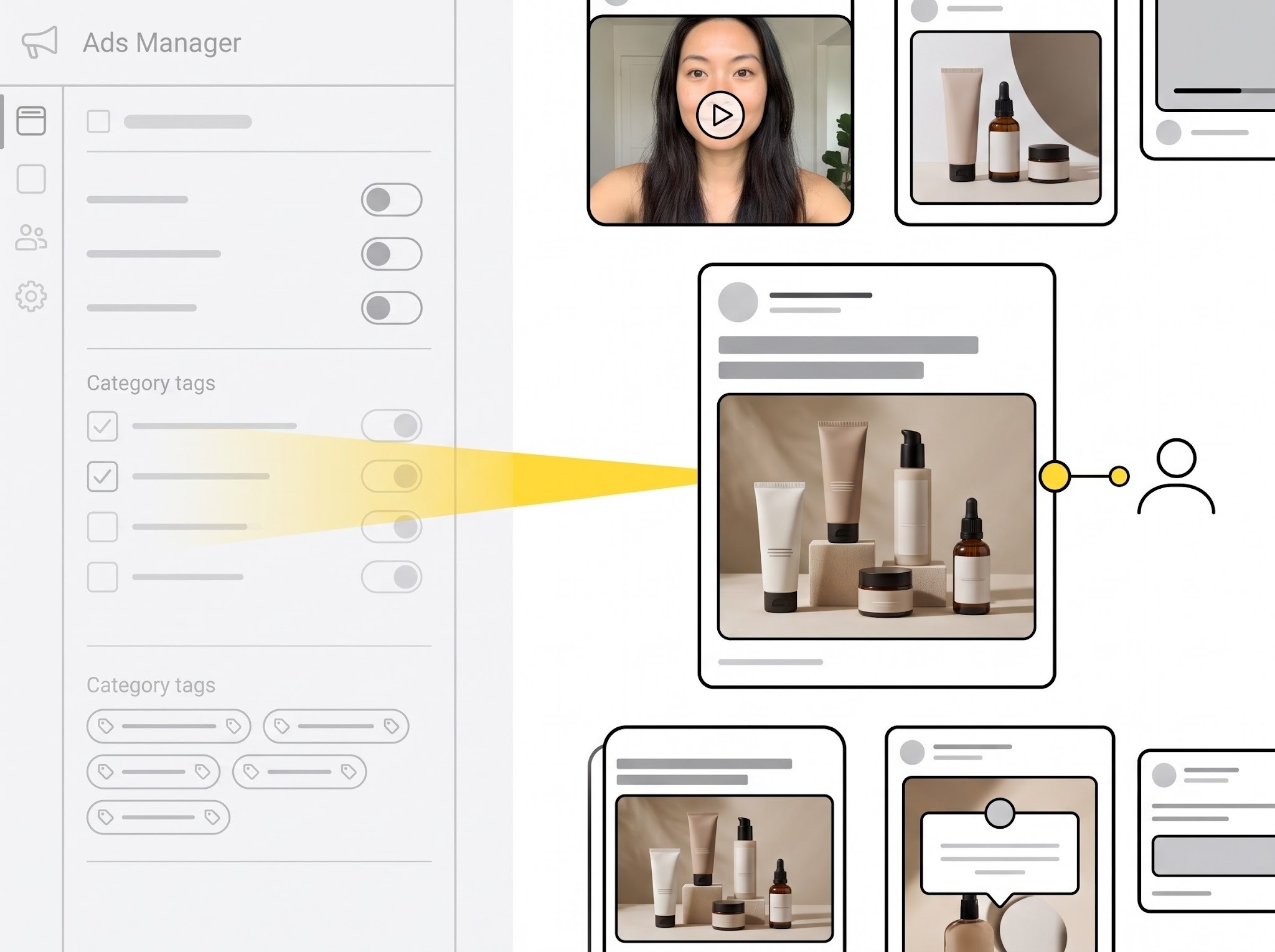
Meta ads audience targeting doesn't work the way it did three years ago. Brands that keep tweaking Detailed Targeting settings while their creative sits stale are optimizing the wrong lever entirely. Meta's Andromeda update changed the mechanics of how ads get matched to people, and for DTC brands scaling past the $10M mark, understanding this shift determines whether growth can be explained to stakeholders or not.

The Andromeda Shift: Creative Is Now the Targeting Lever
Andromeda operates at the retrieval stage of Meta's ad system, narrowing tens of millions of ads down to a few thousand candidates before ranking and auction even happen (ChatterBuzz). That retrieval layer runs on the NVIDIA Grace Hopper Superchip, which gave Meta a 10,000x increase in model complexity and over 100x the feature-extraction throughput of its prior CPU-based system. Meta reported a 6% lift in recall and an 8% improvement in ads quality on tested segments.
Daniel Sendecki, VP of Brand and Performance at Pilothouse, put it this way: Meta's algorithm used to ask who to show an ad to. Now it's figuring out which answer fits this specific person right now. That reframing turns the creative itself into the targeting mechanism.
From Media Buyer Settings to Creative Signals the AI Can Read
Media buyers used to control reach through Audience Segments, Custom Audiences, and Lookalike Audiences built inside Meta Business Manager targeting menus. Andromeda shifts that control to the creative itself. On Ep 587: Meta Andromeda Strategy, Abby Kohler, Strategist, explained that Meta's AI now reads the text and visuals inside an ad to infer the viewer's mental state, then routes the message accordingly. Targeting options still exist in Ads Manager, but they've taken a back seat to what the creative actually communicates.
Meta as a Matching Engine: Reading Creative to Infer Intent
Every ad Meta processes gets assigned an Entity ID, a semantic fingerprint that clusters similar creative into recognizable concepts. Meta reads the emotional and informational content of an ad, then pairs it with the person most likely to need that exact message at that exact moment. It behaves more like a matching engine than a targeting dashboard. Detailed Targeting used to handle this manually, through advertiser-selected categories. Now the AI interprets content directly, so the quality and clarity of the creative determines match quality far more than any manual targeting setting ever could.
The Pilothouse Thesis: Broad Targeting Needs a Specific Message
Pilothouse's core thesis on Meta ads audience targeting is straightforward: broad targeting works, but only when paired with a highly specific message. Daniel Sendecki explained on Ep 581: Meta Ads Aren't About Targeting Anymore that specificity gives the algorithm something concrete to sort and deliver against. A generic value proposition gives Meta nothing to match on. A precise message, aimed at one clear pain point, gives the system exactly what it needs to find the right niche inside a broad pool.
Answering Anxieties Instead of Interrupting
This is where the mindset shift matters most. Sendecki describes the goal of modern creative as recognition rather than interruption. A hook works when it mirrors the internal question a viewer is already asking, instead of trying to persuade them of something new. Only 3% of any audience is ready to buy immediately, according to Chet Holmes' research. This means that most impressions land on people still forming an opinion. Creative that resolves a specific anxiety earns attention that interruption-based ads no longer get.
Why Detailed Interest Targeting Is Fading
Detailed Targeting has been relied on for a decade, but it's being deliberately wound down. Meta began consolidating detailed interest categories and removing detailed targeting exclusions on June 23, 2025 (Conversios). The deprecation timeline continues: as of December 15, 2025, deprecated interests are no longer available in new ad sets, and by January 15, 2026, ad sets still containing them stop running entirely.
Daniel Sendecki, VP of Brand and Performance, discussed this on Ep 581: Meta Ads Aren't About Targeting Anymore, noting that Meta has been quietly phasing out these categories because legacy data, like what someone liked on Facebook in 2016, has no bearing on current purchase intent. Detailed Targeting expansion once helped fill gaps between narrow interest sets, but that tool matters less now that the underlying interest data itself is being retired.
Real-Time Intent Signals Replace Legacy Interest Data
In place of static interest data, Andromeda relies on real-time behavioral signals gathered from how people interact with content in the moment. That's a different data source than the old "who liked what page years ago" model, and it's why audience targeting built around stacking interests now underperforms compared to broad targeting paired with sharp creative.
Beyond Micro-Iterations: Meeting Andromeda's 70% Difference Threshold
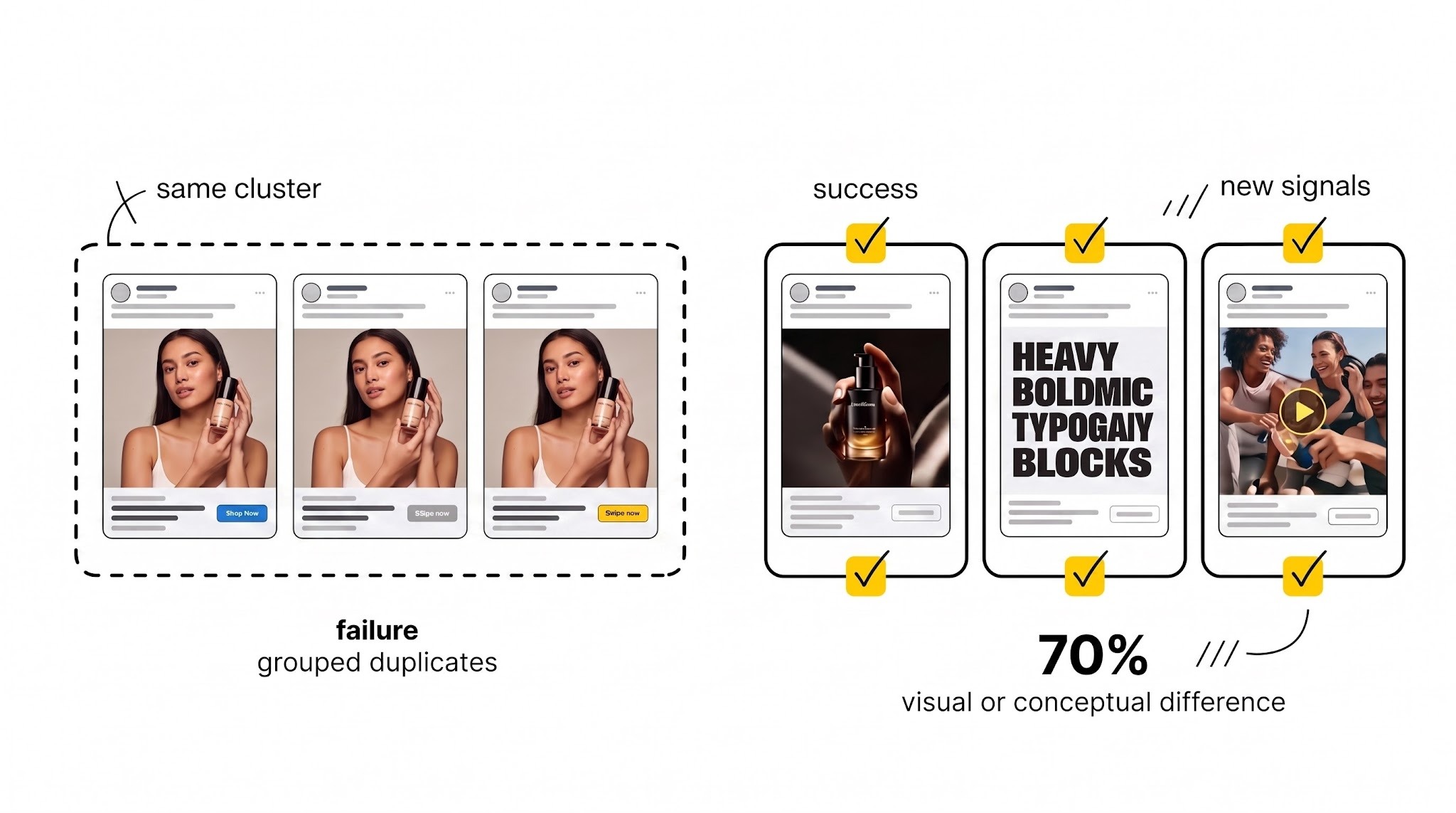
A common mistake brands make is treating creative testing as small variation: swapping a button color, changing one word in a headline. Braden Germaine, Senior Content Manager, flagged this on Ep 589: 9 Static Ads in 2.5 Hours as a major red flag. Andromeda requires a distinct visual or conceptual difference before it recognizes an ad as a genuinely new testing signal. Anything smaller gets folded into the same Entity ID cluster, meaning the "test" never actually happened from the algorithm's perspective.
Ad lifespan has compressed accordingly, dropping from roughly six-plus weeks pre-Andromeda down to two to three weeks now. Top-performing advertisers compensate by running significantly more ad variants per ad set, and brands testing 20 or more new ads per month see 65% higher ROAS than those testing fewer than 10 (Chatter Buzz). Scaledon's 2026 data backs this up: the top third of advertisers run roughly 395 live ads at any given time, compared to just 296 for the bottom third.
Mapping Psychological Intent Clusters With Search Data
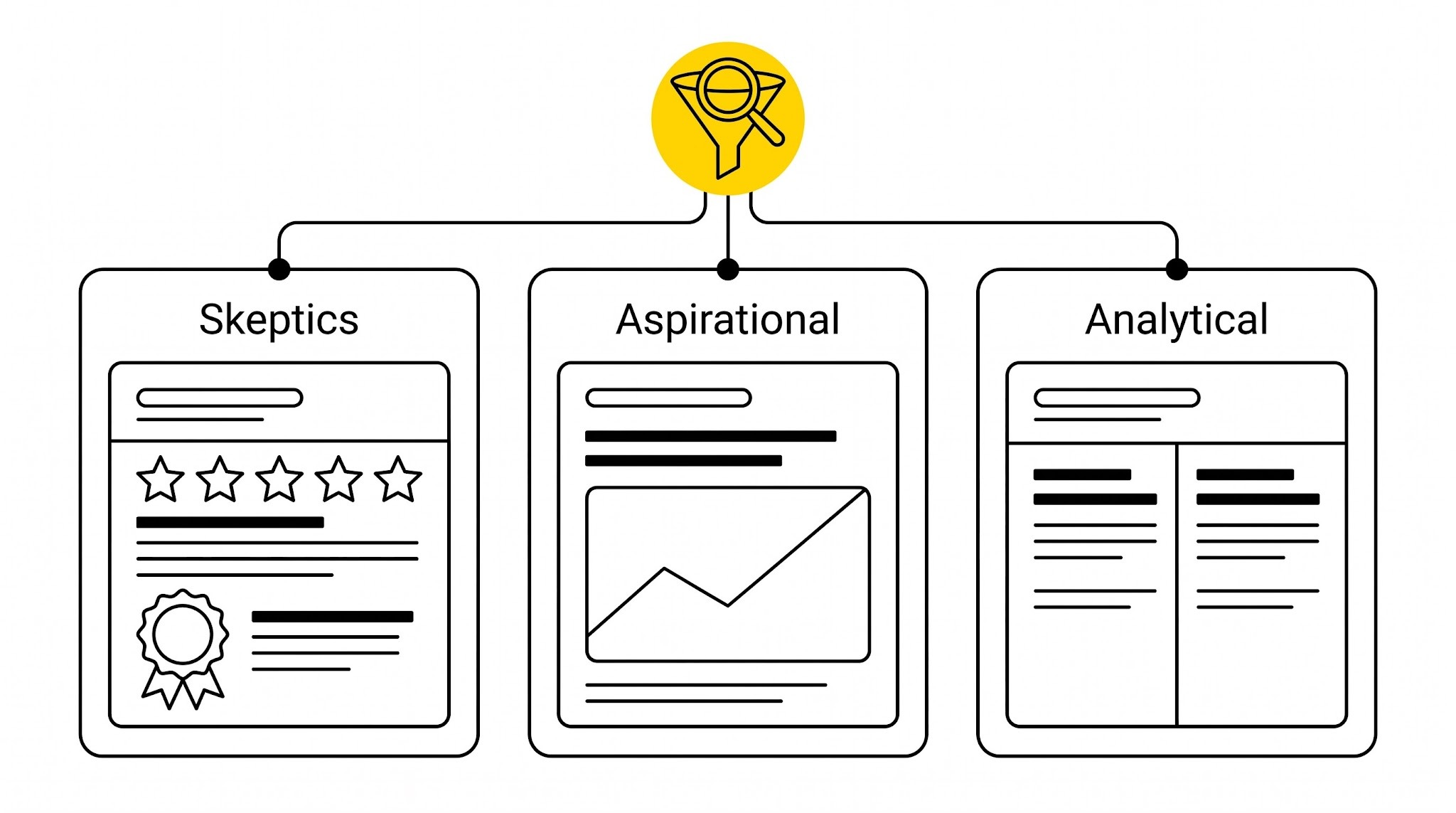
Creative now carries the targeting job, which raises the question of what it should actually say. Daniel Sendecki, VP of Brand and Performance, discussed on Ep 581: Meta Ads Aren't About Targeting Anymore, mining search data for what he calls psychological intent clusters: the frictions and comparisons people type into search bars but rarely voice out loud on social platforms. Google Search Console, Reddit threads, and Amazon review mining all surface this raw language.
Three buyer types tend to emerge from this research:
- Skeptics need proof before they'll believe a claim.
- Aspirational buyers need a vision of the outcome they're chasing.
- Analytical buyers want a direct comparison against alternatives before they'll commit.
Pilothouse has formalized this process into what it calls the Intent Resolution Model, a framework for translating unstructured search and review language into creative that resolves a specific psychological state rather than guessing at demographics.
The Media Buyer's New Role: Segmentation and Exclusion Strategy
Media buying hasn't gone away. Abby Kohler, Strategist, clarified on Ep 587: Meta Andromeda Strategy that media buying still matters in the broad era, but the job itself has changed. Instead of picking interests, buyers now focus on segmentation, making sure prospecting creative isn't shown repeatedly to people who already converted, and engagement creative isn't wasted on cold traffic that isn't ready yet.
Separating Net New, Engaged, and Existing Customers
Existing customers convert at roughly three times the rate of cold audiences, and at about half the cost per acquisition (Flighted). Meta's Audience Segments now split traffic into three buckets, New, Engaged, and Existing, and Meta removed the Advantage+ existing-customer budget cap entirely in early 2025. The replacement mechanism is manual customer list exclusion at the campaign or ad set level, with a recommended retargeting frequency capped under seven impressions per user every 30 days.
Using Geo-Targeting and Exclusion Lists via Shopify and Klaviyo
Dougie Bedell, Head of Google at Pilothouse, discussed on Ep 603: Why Most DTC Brands Fail on YouTube (And How to Fix It in 60 Days) how critical exclusion lists remain as a manual constraint inside an otherwise AI-driven system. Pulling customer lists from Shopify or Klaviyo and excluding roughly 90% of existing buyers from prospecting campaigns keeps Meta's broad targeting from simply harvesting bottom-of-funnel shoppers who were going to buy anyway. Geo-targeting layered on top of these exclusions lets brands direct fresh creative toward genuinely untapped regions instead of re-serving warm audiences.
Training the Algorithm: Building a Cumulative Creative Library
Because Andromeda learns from cumulative creative signal, brands need more than a handful of evergreen ads. Abby's approach, described on Episode 587, involves testing concepts against personas: launching five visually distinct executions (think a studio shot, a selfie-style video, and a creator testimonial) that all carry the same core message, then letting format performance reveal which persona each version reaches.
Organizing this volume around a four-zone creative library (awareness, consideration, conversion, and post-purchase) keeps testing purposeful rather than random. Each zone feeds the algorithm a different kind of signal, and together they build the pool of Entity IDs that Meta draws from when matching ads to intent.
This structure also connects to Meta's move toward Combined Awareness and Sales Campaigns, discussed by Jacob Geary, Head of Socials at Pilothouse, on Ep 591: Meta Andromeda Updates: CASC + AI Assistant + Creative Testing, which lets brands optimize for immediate purchases while simultaneously building the awareness pool needed for future growth. Rafael Gi, Head of Strategic Growth & Partnerships, tied this back to brand salience on Ep 625: Brand Salience for DTC, building memory structures around specific use cases means a brand sits among the top three options a consumer recalls when they're finally ready to buy.
Pilothouse has applied this exact system with paying clients. VSSL grew revenue 41% YoY without adding spend, largely through creative and campaign consolidation rather than budget increases, as detailed in the VSSL case study. The Rag Company saw 101% YoY growth by unifying acquisition strategy with CRO work, outlined in The Rag Company case study. Both results came from treating creative as the primary lever in media buying, not an afterthought bolted on after the budget's already set.
Looking further ahead, Avery Valerio (Aves), Creative Strategist, along with Daniel Sendecki, VP of Brand and Performance, raised the concept of Agentic Commerce on Ep 615: Prepare Your Brand for Agentic Commerce: as LLMs increasingly recommend products directly based on social proof and inferred trust signals across the web, brands will need content that AI agents can actually parse, not just human scrollers. Meta ads audience targeting is one part of a broader shift where creative quality determines discoverability everywhere, not just inside Ads Manager.
Partner With Pilothouse to Master Meta Ads Audience Targeting
Winning at Meta ads audience targeting in the Andromeda era means connecting creative production, media buying, and lifecycle strategy into one system instead of running them as three separate departments. Pilothouse Digital was built around that integration: over 160 specialists producing more than 5,000 creative assets a month, backing more than $1B in attributable revenue for DTC brands scaling past the $10M inflection point.
Get Started With Pilothouse
Brands at that stage need results they can defend to stakeholders, results that go beyond the activity metrics that used to pass for proof. Pilothouse pairs deep Meta specialization with full-funnel media, creative, and CRO under one roof, which is what makes the rapid iteration Andromeda now demands actually possible. Brands ready to see what this looks like in practice can explore Pilothouse's case studies and see how the Intent Resolution Model translates into measurable, repeatable growth.

