The 3-Visit Ecommerce Customer Journey: How Shoppers Research Before They Buy (And Which Touchpoint Loses the Sale)
Most ecommerce brands build their entire marketing strategy around the moment of purchase, pouring budget into retargeting, optimizing checkout flows, and A/B testing "Buy Now" buttons. Conversion rates plateau, cost per acquisition keeps climbing, and few brands can pinpoint why.

The checkout page usually isn't the real problem. Brands tend to optimize for the end of a journey they barely understand. The ecommerce customer journey isn't a single visit that ends in a sale. It's a sequence of distinct interactions, each with its own logic, emotional stakes, and make-or-break decisions. Getting this wrong doesn't just cost conversions, it quietly bleeds growth.
The Multi-Touch Reality: Why Shoppers Visit 3-4 Sites Before Buying
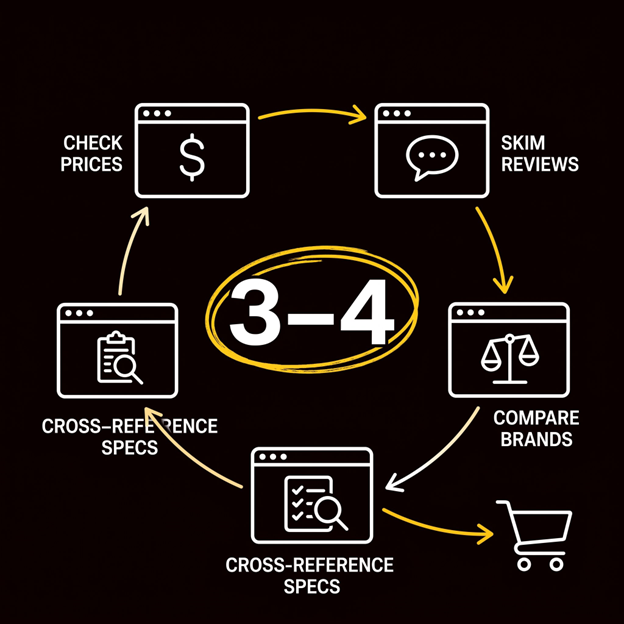
Shoppers rarely buy from the first brand they encounter. Before committing to a purchase, they typically visit three to four different websites or brands, checking prices, skimming reviews, and cross-referencing specs, as Pilothouse's Taylor Cain and Aves discuss in Ep 579: How to Nail DTC Merchandising in Q1: From Scroll to Sale. This isn't indecision, it's rational behavior in a market where information is free and switching costs are close to zero.
For premium brands, especially those with products over $200, this plays out as a "long dance." Customers almost never buy on the first ad impression. A relationship builds over multiple exposures before a decision gets made, Duncan Ferguson shares Ep 619: Stop Growth Hacking Your Brand to Death. Any category with decent search volume has a dozen credible alternatives a few clicks away, and shoppers cycle through brand sites, marketplace listings, and social proof before feeling confident enough to buy.
No single channel or ad impression carries the full weight of a conversion in this environment. Brands that miss this multi-touch reality tend to misallocate budget, overspending at the bottom of the funnel while starving the stages that actually build purchase intent.
The 3-Visit Ecommerce Customer Journey Framework
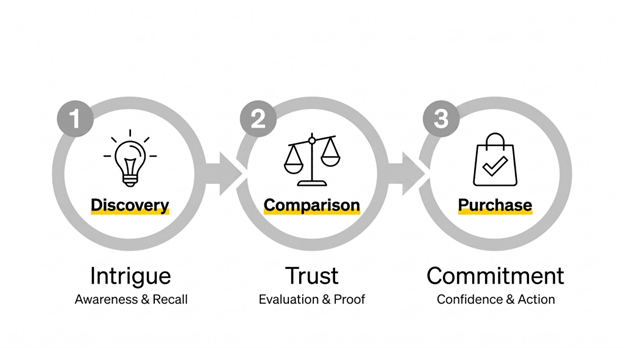
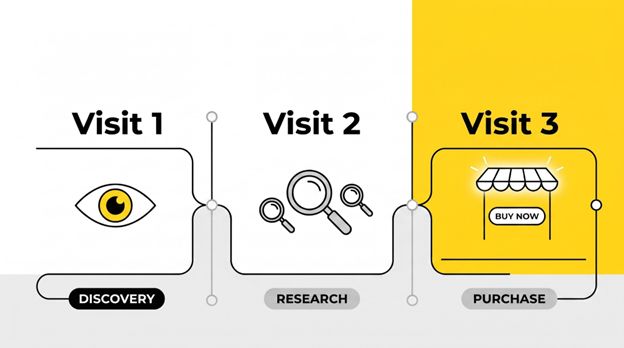
The customer journey maps across three distinct visits: discovery, comparison, and purchase. Treating these as separate experiences with different goals changes how a growing ecommerce brand approaches marketing entirely.
Each visit serves a different psychological function: the first builds awareness and intrigue, the second builds trust through evaluation, the third drives commitment. A brand that tries to close the sale at Visit 1 pushes shoppers away before they're ready. Lead with aspirational messaging at Visit 3, and the sale goes to a competitor who actually answered the shopper's last objections.
Visit 1: Brand Discovery
The first visit is when a shopper encounters a brand for the first time, whether through an ad, a social post, or word of mouth. They're not ready to buy; they're deciding whether the brand is worth another look. The goal is to be memorable and clear, communicating what the brand sells and why it matters within seconds. SEO visibility and paid social reach determine how many people get that first impression; the quality of brand expression determines how many come back for a second look.
Visit 2: Comparison and Research
By the second visit, the shopper has put the brand on a shortlist and is actively weighing it against alternatives. Content depth, social proof quality, and how well objections get addressed determine whether the brand survives this round. Shoppers want thorough product information, honest reviews, and reassurance that they're making a smart call. Brands that only show polished lifestyle photography at this point miss the mark, since shoppers are looking for substance, not just a pretty picture.
Visit 3: Final Commitment and Purchase
By the third visit, the shopper has done their homework and narrowed the field. They're close to buying but need one last push of confidence. Friction is the enemy: a clunky checkout, unexpected shipping costs, or an unclear return policy can kill the sale on the spot. Multiple payment options, visible security badges, transparent pricing, and a straightforward return guarantee chip away at the hesitation standing between a shopper and a completed order.
The Death Spiral: What Happens When Brands Over-Optimize for Visit 3
A predictable trap catches many ecommerce brands: retargeting drives the highest ROAS, so budget shifts toward closing campaigns while upper-funnel efforts get cut. Numbers look great for a quarter, then the pipeline dries up.
That's the death spiral. Brands that underfund Visits 1 and 2 to over-optimize Visit 3 eventually run out of new customers to convert. Fewer new shoppers enter the journey, the retargeting pool shrinks, and campaigns that once looked efficient plateau because there's nobody left to retarget. Balancing effort across all three visits is how brands build something that actually lasts.
Visit 1 Creative Strategy: Playing the Air Game
Visit 1 creative is the air game: not a ground battle, but territory-covering brand impressions that plant the seed rather than push a ruthless conversion. This means investing in emotional truth and storytelling rather than technical specs, focusing on the sensation or ritual associated with a product .
On platforms like Meta, the strongest top-of-funnel plays are often engagement-worthy hooks that feel culturally relevant to the target persona, acting as a "dog whistle" that attracts the right audience. Success here isn't measured in immediate conversions but in recall, reach, and the quality of the impression left behind.
Visit 2: Where the Sale Is Most Often Lost
If Visit 1 is the air game, Visit 2 is where the ground battle actually happens, and where most brands lose the sale without realizing it. This touchpoint is also the most expensive to lose, since the brand has already paid for the discovery visit that got the shopper there.
Why Unresolved Anxieties Kill Conversions
As Daniel Sendecki, VP of Brand and Performance explains in Ep 581: Meta Ads Aren’t About Targeting Anymore, shoppers in the comparison phase arrive with quiet anxieties: Will this actually work for me? Is it worth the money? What happens if I need to return it?. Brands that win at this stage provide a resolution to these questions before the shopper has to ask. When concerns go unaddressed, shoppers don't push through, they leave for a competitor who offered more confidence.
Shifting from Sizzle to Substance: Unboxing and Social Proof
A common mistake is leaning on the same aspirational creative that worked at Visit 1. That creative generates interest; consideration-stage content needs to generate confidence. The creative job shifts from sizzle to functionality and social proof, with unboxing videos addressing shipping and return concerns, and PR logos or reviews building legitimacy.
If Visit 2 creative only repeats the same generic claims competitors make, the comparison battle is already lost. Brands need to identify core differentiators competitors lack and put them front and center.
The True Cost of Losing Shoppers at the Comparison Stage
Losing a shopper at Visit 2 isn't just losing one sale, it's losing the entire lifetime value that customer might have generated. This makes comparison-stage leakage the most expensive preventable problem in the funnel, since the discovery spend is already sunk. Small improvements to Visit 2 conversion rates tend to produce outsized revenue impact, because they improve the efficiency of all the upper-funnel spend feeding into that stage.
Visit 3 Creative Strategy: Playing the Ground Game
At Visit 3, brands play the ground game: urgency, scarcity, and specific offers designed to drive the final action. Text-focused ads calling out specific conversion barriers, like "sold out five times" messaging or limited-time "but wait, there's more" offers on the post-click page, perform well here.
Dynamic Product Ad frames or overlays during sales, such as a "Welcome Offer" badge on products already viewed, add helpful context at this stage. The onsite experience matters just as much: checkout optimization, cart abandonment flows via email and SMS, and transparent post-purchase communication all help turn a third-visit browser into a buyer.
Structuring Remarketing Around Audience Segments, Not Time Windows
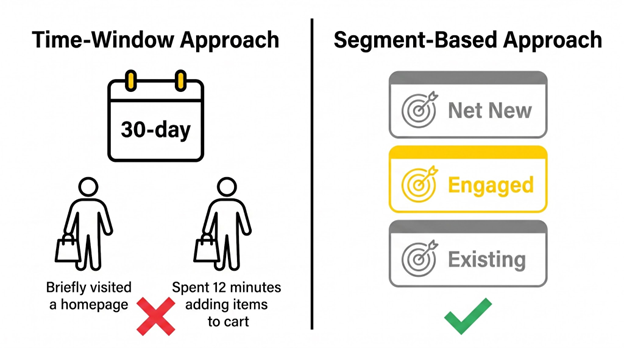
One of the most common remarketing mistakes is structuring campaigns around time windows rather than behavior. A shopper who visited a homepage once and bounced is not the same as one who spent twelve minutes reading reviews and added something to cart, yet both often get treated identically inside a "30-day window."
Effective remarketing structures accounts around audience segments: net new, engaged, and existing, rather than time elapsed, Abby, Strategist at Pilothouse, explains Ep 587: Meta Andromeda Strategy: 5 Creative Testing Shifts for $5M+ DTC Brands. A red flag worth watching for is high frequency on already-engaged audiences without enough new traffic filling the top of the funnel. Building segments around behavioral signals, not recency, produces more relevant campaigns and more efficient spend across the funnel.
Measuring the Full Journey with Marketing Efficiency Ratio (MER)
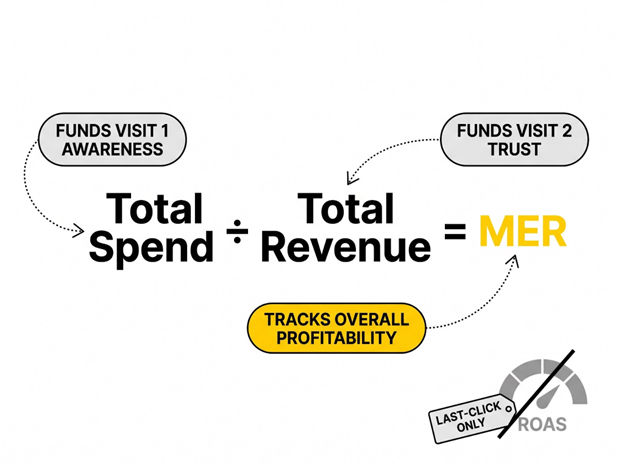
Once a strategy is structured around a multi-visit journey, measurement needs to evolve alongside it. Last-click attribution credits the final ad for a conversion but says almost nothing about which touchpoints built the trust that made that conversion possible.
Chris Richards, Account Strategist from Pilothouse, points out in Ep 605: Meta Attribution Change – Why ROAS Dropped 40% that since attribution is often a black box, Marketing Efficiency Ratio (MER), total spend divided by total revenue, serves as a more honest north star. Tracking MER alongside channel-level metrics helps ensure Visit 1 and Visit 2 investment stays funded while the business remains profitable overall, preventing the common trap of cutting upper-funnel spend simply because it doesn't show immediate ROAS.
Building a 3-Visit Journey Strategy with Pilothouse Digital
Putting this framework into practice takes integrated execution across media buying, creative, and measurement, all built around a shared model of how shoppers actually make decisions.
Creative Alignment Across All Three Visits
Pilothouse Digital works with DTC brands to align creative strategy across Visit 1 storytelling, Visit 2 objection-handling, and Visit 3 urgency, rather than optimizing channels in isolation. This includes moving from small creative "iteration" toward genuine "idea variety," building a library of creative answers matched to where a shopper actually sits in the journey.
Segment-Based Remarketing and MER-Based Measurement
Pilothouse structures remarketing around audience segments rather than time windows, and uses MER as a north star to keep early-stage awareness funded without sacrificing overall profitability. This full-funnel approach reflects real-world diagnostic work with DTC brands scaling from $10M to $50M and beyond, documented in Pilothouse's case studies.
A Diagnostic Starting Point
Brands leaning heavily on Visit 3 while growth flattens out should treat that as a signal, not a channel problem but a structural one. Mapping each stage against its own metrics, bounce rate at Visit 1, add-to-cart rate at Visit 2, checkout completion at Visit 3, is often the fastest way to isolate the weak-link touchpoint before spending another dollar trying to fix the wrong stage.