


What Is a Creative Strategist? The Role Powering Modern Paid Social

Paid social used to reward whoever had the sharpest targeting settings. The brands winning on Meta and TikTok now have a creative strategist translating audience psychology into assets an algorithm can actually read. This role has quietly become one of the most valuable seats in performance marketing, and most DTC teams still don't have a clear creative strategist definition, let alone a hiring plan for one.

What Is a Creative Strategist? Bridging Media Buying Data and Creative Production
A creative strategist is the connective tissue between analytical media-buying data and creative production. Media buyers read performance dashboards; creators and designers make assets. The creative strategist sits between them, turning CPA trends, hook rates, and audience signals into creative briefs that actually move numbers.
This hybrid nature isn't new. Creative strategists evolved from a blend of media-buyer and designer roles, handling market research and competitor analysis one day, ad-performance review and brief writing the next (Foreplay). As accounts scale, the strategist researches and plans creative tests while the media buyer distributes assets and attributes conversions, with the two functions separating into distinct roles (Stacked Marketer). MarketerHire points to creative brains as the biggest lever in paid social, with the fastest-growing brands pairing strong media buyers with strong creative, even though the two functions are often siloed (MarketerHire). Regulatory limits on targeted advertising pushed creative to the forefront and created demand for this role in the first place (MarketerHire).
Why Paid Social Is at a Moment of Recalibration
Daniel Sendecki, VP of Brand and Performance at Pilothouse, describes the creative discipline as being in a moment of recalibration on Ep 581 of the Pilothouse podcast by DTC Podcast. Creative now has to work at two levels simultaneously: emotional brand storytelling and direct-response intent resolution. The old interruptive persuasion model is breaking down. Consumers want resolution to real frictions and doubts at the point of decision, and a polished pitch alone won't get them there.
Balancing Brand Storytelling with Direct-Response Intent Resolution
A brand strategist's job has historically leaned toward voice and long-term equity, while performance creative has leaned toward hooks and conversion. Sendecki argues those two jobs now live in the same asset. Marrying performance and brand intent actually strengthens brand equity, because strong brands get built through repeated, consistent resolution of meaningful customer tensions over time. One-off viral hits don't build that same durability.
How Meta's Andromeda Algorithm Redefined the Creative Strategist's Role
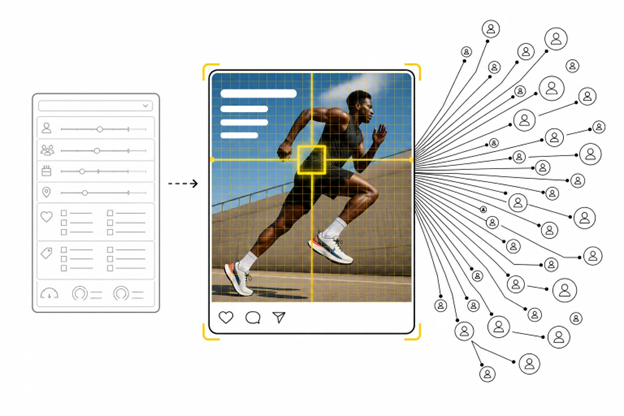
Meta's Andromeda update changed the mechanics of the job. Andromeda starts with the creative and finds the audience for it, so performance now hinges on what an ad looks like and says far more than which targeting boxes a media buyer checked (Distl). In Ep 587: Meta Andromeda Strategy: 5 Creative Testing Shifts for $5M+ DTC Brands, Abby Kohler, strategist at Pilothouse, says the update completely 180ed how the team approaches creative testing. Media buyers no longer control targeting by stacking interests and filtering by demographics like age, gender, and region. The creative itself now acts as the targeting layer.
The scale of that shift matters. The old auction system picked from thousands of ads; Andromeda picks from tens of millions at the individual level, and audience inputs now act as loose suggestions rather than firm rules (Nest Commerce). The system runs on the NVIDIA GH200 Grace Hopper Superchip (Meta Engineering), using computer vision on ad pixels, text overlays, colors, and visual hooks to find audiences, which makes creative diversity the primary scaling lever (Armada Growth).
Creative Assets as Fingerprints: From Manual Targeting to Automated Routing
Sendecki frames each ad as a fingerprint: specific messaging finds the right audience on its own instead of relying on a buyer's manual settings. Competitive advantage now comes from creative excellence and signal hygiene, not hyper-targetig. Diversifying across audience-type framing, message angle, and language is what unlocks learning inside the algorithm. Algorithmic platforms reward idea variation, creative that answers different funnel questions, far more than design variation like swapped button colors or a new hero image.
Using LLMs as Insight Engines for Audience Intent
Creative strategists used to run asset factories. Now they run insight engines, and large language models are the tool making that possible. Meta's AI effectively treats ad content as a search query, and 2026 rewards radical variation in how that query gets answered. LLM query mining follows a clear lifecycle: capture messy consumer queries, normalize them, classify intent, then cluster into themes ranked by volume, trend, and impact (Single Grain). An ambiguous query expands into fine-grained, sentence-level intents (ACM), and generative engines break a single query into sub-questions to predict the real underlying task (Wellows).
Turning Search Queries into Psychological Intent Clusters and Editorial Pillars
Strategists cluster chaotic search queries into psychological intent clusters, or editorial pillars, that describe what a customer actually fears, doubts, or needs resolved. A brand's creative library then needs to work like a search results page, with multiple distinct creative answers competing to resolve a specific pain point. Sendecki is clear, though, that a human layer of curators and editors still sits between AI analysis and raw output, keeping the brand's taste and distinctiveness intact.
The Hypothesis-Driven Testing Playbook
Isolated-variable testing, where only a headline changes against an identical layout, is dead. Meta's AI now flags repeated identical visuals as creative fatigue, which quietly drives up account CPAs. The modern playbook is hypothesis-driven: build one message per persona, then test it across formats that look nothing alike.
Mapping One Message Across Five Visually Distinct Formats

Kohler outlines five formats worth testing per message: a carousel, a branded studio static, a raw selfie-style photo, a GRWM video, and a trend-style post. Serving the same message across contrasting visual formats can meaningfully boost memorability without fatiguing the audience. This mirrors what Motion Creative Benchmarks 2026 found: brands testing 10 or more concepts monthly achieve a 31% lower CPA than those testing fewer than five, with problem-aware video winning cold traffic, UGC transformation content winning mid-funnel, and urgency carousels winning cart abandonment (SciGrowth). Converting a winning video into a static listicle has even produced a 22% higher conversion rate despite a lower CTR (Zentric), a reminder that format carries as much weight as the message itself.
Avoiding Creative Fatigue Flags
Raw volume isn't the threat here; running the same format over and over is. Testing velocity of three to five new variations weekly, plus adding a carousel or UGC compilation, typically extends creative lifespan 30 to 50% (Darkroom). Consumers spot an ad's shape, layout, and rhythm within 0.3 seconds, so relying on one format stacks frequency on the same cognitive pathway (Rocketium). A format swap, static to video, image to carousel, feed to 9:16 Reels, resets that "seen it" reflex (Adsights). Statics fatigue fastest, carousels hold on longer, and UGC outlasts polished ads; most creative fades after 10 to 14 days. The warning signs show up in this order: CTR starts declining, CPM climbs, frequency climbs, conversion rate slides, and CPA rises. Frequency above 3.0 on cold audiences is tied to a 20 to 30% conversion drop within two weeks (Finsi).
The Creative Strategist as Keeper of the Brand
Avery Valerio, Creative Strategist at Pilothouse, calls the role the "keeper of the brand" on Ep 40: How to Write Creator Briefs That Actually Perform. The strategist holds the most account performance information of anyone touching creative and has to titrate that knowledge down into something a creator can actually use.
Over-Contextualizing Briefs and Titrating Data for Creators
The biggest pitfall, per Valerio, is assuming outside creators care about the brand or its metrics the way an internal team does. Strategists need to over-contextualize briefs rather than under-explain them, while avoiding over-scripting, since outlining benefits in conversational language lets creators deliver something natural. The brief is genuinely where most ads break down (Adrian Apollo), and marketplace-sourced creators often over-polish content that then underperforms (Hustler Marketing). Valerio also plans briefs around funnel representation gaps, identifying which persona or funnel stage is missing that month, and stresses visual hooks in the first three to five seconds over audio hooks, since algorithmic delivery has changed how attention gets captured.
Rigorous Strategy vs. AI Slop: Why Inspiration Beats Iteration
AI amplifies whatever strategy already exists; a weak idea at scale is still a weak idea, and relevance, emotion, and clarity haven't gone anywhere as the fundamentals that matter (Creative Bloq). Audiences reward authenticity and actively call out AI slop when they see it (Fast Company). Kohler puts it plainly: relying on low-effort tools to churn out hundreds of ads doesn't build sustainable growth. The most probable AI-generated answer is also the most generic one; real strategy comes from connecting signals, not averaging the internet (Campaign Asia). That's why Pilothouse built its 4 Cs framework around Company, Competitors, Customers, and Culture: it isolates a brand's true, ownable differentiators before a single ad gets briefed.
Brand Storytelling vs. Brand Enforcement in the Age of AI Search
Modern creative strategy now demands two distinct skills. Brand storytelling persuades humans through emotion and narrative, while brand enforcement is about making a brand legible to machines, which matters as generative engine optimization becomes part of the job: content that AI systems can understand and reuse (Fast Company). An Ahrefs study of 75,000 brands found almost no correlation between content volume and AI visibility, but branded web mentions correlated at 0.664 to 0.709, among the strongest predictors of AI citation (Ahrefs). Machine legibility increasingly depends on structured schema so AI agents can parse a brand's offerings correctly (Semrush). These two functions work side by side, and a well-run creative strategy needs both running at once.
Building an In-House Creator Ecosystem: A Competitive and Recruiting Advantage
Valerio calls an in-house creator team a massive unfair advantage. It lets a brand run fast, tightly aligned conceptual tests for a fraction of what marketplace sourcing costs. Creative volume itself is a competitive advantage, and proprietary creator networks compound that edge over time (Hustler Marketing). There's also a recruiting dimension: creators want to work inside systems where their content actually informs strategy rather than simply filling a content calendar. Strict, data-driven testing systems matter, but Valerio is equally clear that strategists need to leave room for spontaneous, unscripted content, since an unplanned iPhone video often outperforms the most carefully engineered ad.
Partner with Pilothouse Digital to Power Your Creative Strategy
Most $10M+ DTC brands don't lack ambition. They lack the connective infrastructure between media data, creative production, and brand strategy that this role is built to provide. Pilothouse operates that infrastructure directly, with 160+ specialists producing more than 5,000 creative assets monthly and over $1B in attributable client revenue driven through integrated creative, media, and lifecycle work.
What Makes Pilothouse's Model Different
Three things differentiate that model. Briefs and creative tests tie directly to P&L impact rather than vanity engagement metrics. Creative, media buying, and strategy operate as one system rather than siloed teams handing off work. And testing runs on the hypothesis-driven, multi-format approach outlined above, reflected in results for clients like Four Sigmatic, VSSL, and The Rag Company, with the full record available in Pilothouse's case studies.
Get This Function as One Coordinated System
For brands that need this function but can't build it internally, Pilothouse offers a way to get it as one coordinated system instead of a patchwork of specialists.

