


Meta Catalog Ads: Turning Your Product Feed Into a Performance Engine
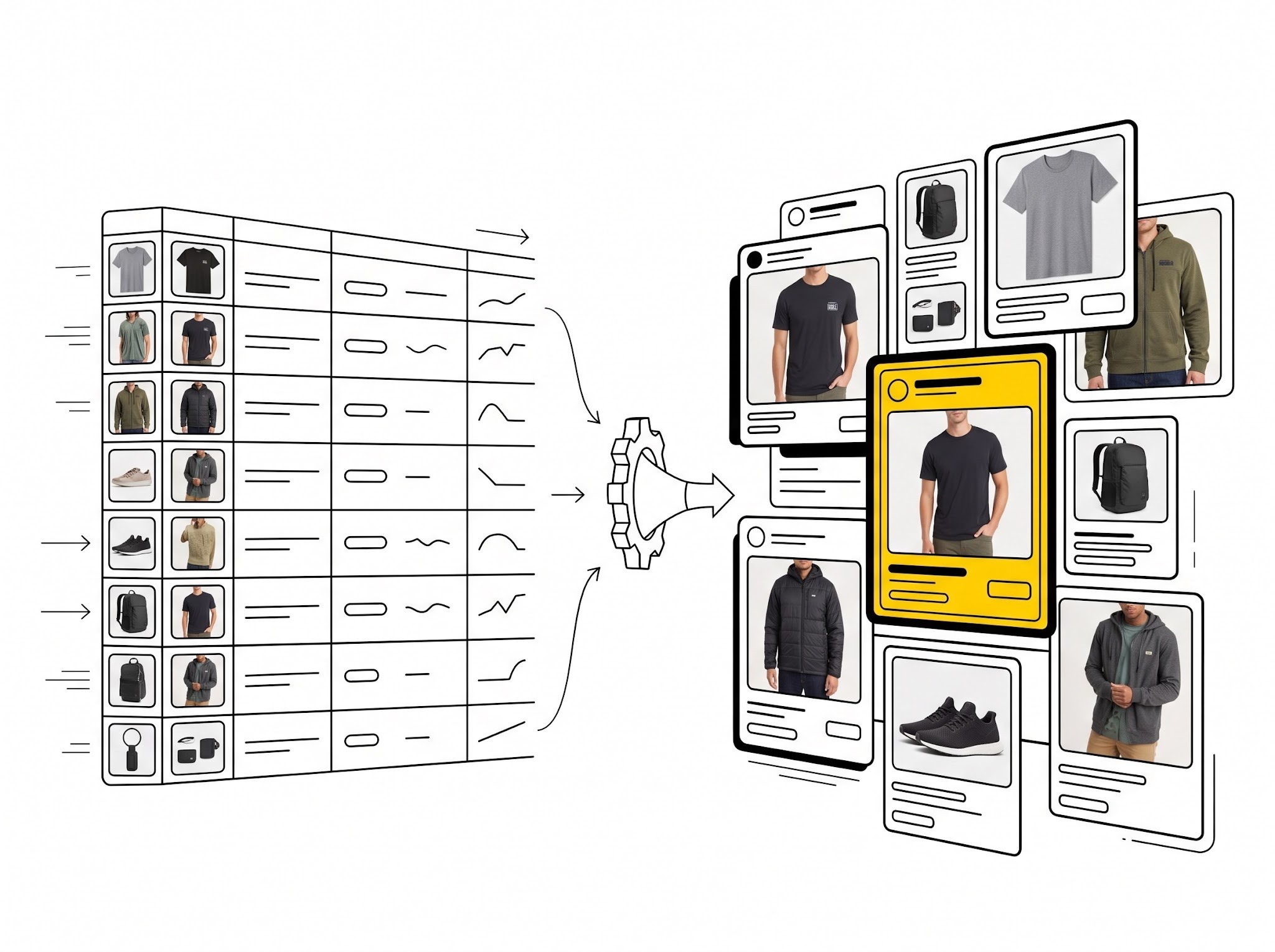
Most ecommerce brands treat their product feed as a technical afterthought, something set up once and forgotten. That works fine early on, but once SKU count and consideration complexity grow, simple conversion campaigns start to strain, usually right around the point a brand crosses into eight-figure revenue territory. Meta catalog ads flip that script, turning the feed itself into the primary creative and targeting mechanism. Brands that understand how meta catalog ads actually work, and why the underlying algorithm has changed so dramatically, tend to scale in ways that hold up. Brands still relying on manual optimization tactics tend to stall.

Meta Catalog Ads: Your Product Feed as a Performance Engine
Meta catalog ads pull product images, pricing, and stock status directly from a brand's Shopify feed through Commerce Manager, then assemble ads dynamically based on who's viewing them. As Avery Valerio (Aves), Creative Strategist at Pilothouse, explains in Ep 45: Platform-by-Platform Guide to Paid Social Ads, this lets brands surface a wide suite of products rather than just a single item in a placement. Instead of manually building creative for every SKU, the catalog turns into a living inventory that Meta's systems can recombine and re-target automatically.
This is also where Advantage+ Catalog Ads have replaced older manual DPA workflows. Legacy Dynamic Product Ads meta setups relied heavily on manual audience rules and retargeting logic. Advantage+ automates much of that targeting decision-making, letting the algorithm determine which products, users, and placements pair best. The feed becomes raw material for that process, not just a reference sheet sitting in the background.
Why High-SKU Brands See Outsized Results
Catalog marketing isn't equally valuable across every brand type. Avery Valerio (Aves), Pilothouse Creative Strategist, notes that Dynamic Product Ads (DPA) and catalog campaigns are particularly effective for brands with high SKU volumes or products that have a long consideration period (Ep 45: Platform-by-Platform Guide to Paid Social Ads). Catalog dynamic ads typically deliver CPAs 25 to 40% lower than non-dynamic retargeting for stores carrying 100+ SKUs, according to Pilothouse's internal research (MHI Growth Engine).
Performance climbs meaningfully once a catalog crosses the 50 to 100 product mark; below 20 products, standard conversion campaigns with manually built creative often outperform catalog structures. Brands under that threshold should think twice before over-investing in catalog infrastructure.
Inside Meta Andromeda: Targeting by Creative, Not Settings
The mechanics behind meta catalog ads performance changed substantially with Meta Andromeda, which rolled out fully across most objectives and placements by October 2025. Built on the NVIDIA Grace Hopper Superchip, Andromeda represents a 10,000x increase in retrieval model complexity, and Meta reported a 6% lift in recall along with an 8% improvement in ads quality on selected segments (Meta). Behind those numbers sits a fundamental shift in how targeting works.
As Abby Kohler, Strategist at Pilothouse, and Avery Valerio (Aves), Creative Strategist, put it in Ep 587: Meta Andromeda Strategy, targeting has shifted from manual media buyer settings to the creative itself; the algorithm now reads the content of an ad to infer which users it belongs to. Manual audience building is losing relevance; the creative asset itself has become the targeting signal.
How the Algorithm Infers User Intent From Feed Content
Andromeda narrows tens of millions of active ads down to a few thousand candidates per impression, clustering visually similar ads under a single Entity ID. Daniel Sendecki, VP of Brand and Performance at Pilothouse, frames this as a pursuit of "message-user fit" rather than broad demographics. Feed content, image composition, and overlay text all feed directly into how the system decides which users see which products. Volume matters too: Meta's internal testing found one ad set running 25 diverse creatives generated 17% more conversions at 16% lower cost than five ad sets running five creatives each. Fewer, over-engineered ad sets lose to breadth and diversity.

Your Product Feed as an Intent Resolution System
This shift changes what a product feed is actually for. Instead of functioning as a static catalog of items, it becomes a database the algorithm consults to match products to unspoken user needs. Pilothouse describes this evolution directly: Creative is evolving into an intent resolution system where the goal is to build a living library of answers that resolve real human concerns, which the algorithm then routes to matching user states. Pilothouse builds its catalog strategy around exactly that idea, treating each feed entry as an answer to a specific customer question instead of a static SKU listing.
From Keywordless Search to Paragraph-Long Queries
Search behavior itself has moved away from short keyword strings toward conversational, paragraph-long queries. AI-driven discovery systems need contextual richness to bridge a shopper's intent with the right product, so feed attributes now carry more interpretive weight than they used to. A thin title and generic description don't give the algorithm enough to work with when a query reads like a full sentence rather than two keywords.
Resolving Shopper Anxieties at the Point of Decision
Every shopper approaching a purchase decision carries some friction, whether that's uncertainty about fit, price, shipping timelines, or return policy. Catalog content that speaks directly to those anxieties, through clear availability, transparent price fields, and specific condition details, builds the trust needed to convert at the bottom of the funnel. Feed quality and creative overlay strategy intersect right here.
Feed Hygiene and Metadata: Fueling AI Relevancy
None of the intent-resolution potential matters if the underlying feed is messy. Dougie Bedell, Head of Google at Pilothouse, put it plainly in Ep 623: Your Google Product Feed Is the Most Overlooked Lever in AI Shopping: The product feed is one of the most overlooked and undervalued levers for performance; maximizing the relevant information in each field provides more detail for AI systems to digest and determine relevancy. That statement applies just as directly to Meta as it does to Google's Shopping Graph.
Required feed attributes include id, title, description, availability, condition, price, link, image_link, plus at least one identifier among brand, mpn, or gtin. Google allows up to five custom labels for additional segmentation. Missing GTINs are the single most common cause of item disapproval, and HTML tags embedded in descriptions are the most frequent feed error advertisers make. Both are hygiene problems with real margin consequences: disapproved or poorly matched items translate into wasted impressions and inflated CPMs.
Maximizing Every Field for Machine Readability
Treating every available field as an opportunity, rather than an obligation, separates high-performing catalogs from mediocre ones. A description field written with material, use case, and sizing detail gives the machine more surface area to match against a paragraph-long query. It's a low-cost change with outsized returns, the kind of small adjustment that ends up driving a disproportionate share of results.
DPA Frames and Overlays: The Most Underused Tactical Lever
Feed hygiene is the foundation. Overlays are the amplifier sitting on top of it that most brands never bother testing. Avery Valerio (Aves), Pilothouse Creative Strategist, calls DPA frames and overlays the most underutilized tactical lever for seasonal performance, allowing brands to superimpose transparent backgrounds, badges, or sale copy over product images. Because catalog placements typically sit deep in the funnel, Avery adds that overlays, can provide the final context or 'friction breaker' needed to drive a conversion (Ep 45: Platform-by-Platform Guide to Paid Social Ads).
Seasonal Badges and Sale Copy as Friction Breakers
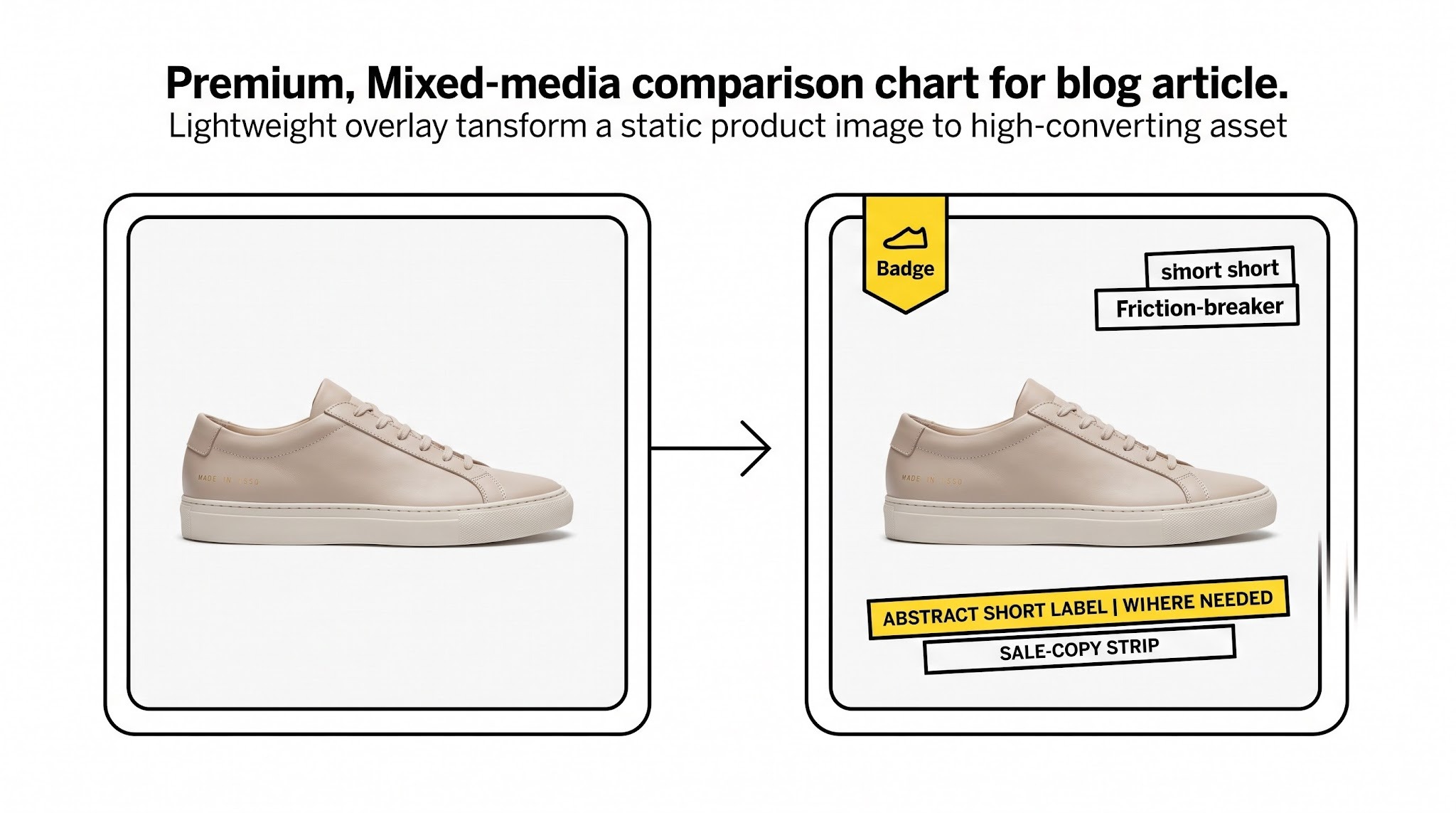
A "20% off" badge, a "back in stock" flag, or a limited-time seasonal graphic layered onto a standard product image costs little to produce but can resolve exactly the hesitation keeping a bottom-funnel shopper from clicking buy. These overlays work because they don't require touching the base creative or the feed itself. They're a fast, testable layer that most catalog marketing programs never experiment with systematically.
Structuring Your Account for Scale
Tactical execution only pays off inside a sound account structure. Taylor Cain, Senior Ecommerce Strategist at Pilothouse, lays out the standard in Ep 611: Velocity Isn't Strategy – Pilothouse on the Andromeda Creative Trap: a standard best-practice account structure for scaling brands includes a dedicated catalog campaign alongside a scale campaign and a testing campaign. Each has a distinct job. The catalog campaign automates product surfacing. The scale campaign protects proven top-of-funnel performance. The testing campaign isolates new creative concepts before they earn broader budget.
Dedicated Catalog Campaign, Scale Campaign, and Testing Campaign
Keeping these separate gives you diagnostic clarity. When catalog, scale, and testing budgets sit in one blended campaign, it becomes nearly impossible to tell which lever drove a result, which makes performance hard to defend when stakeholders ask why ROAS moved.
Avoiding Wastage: Persona-Based Structure Over Product-Based Structure
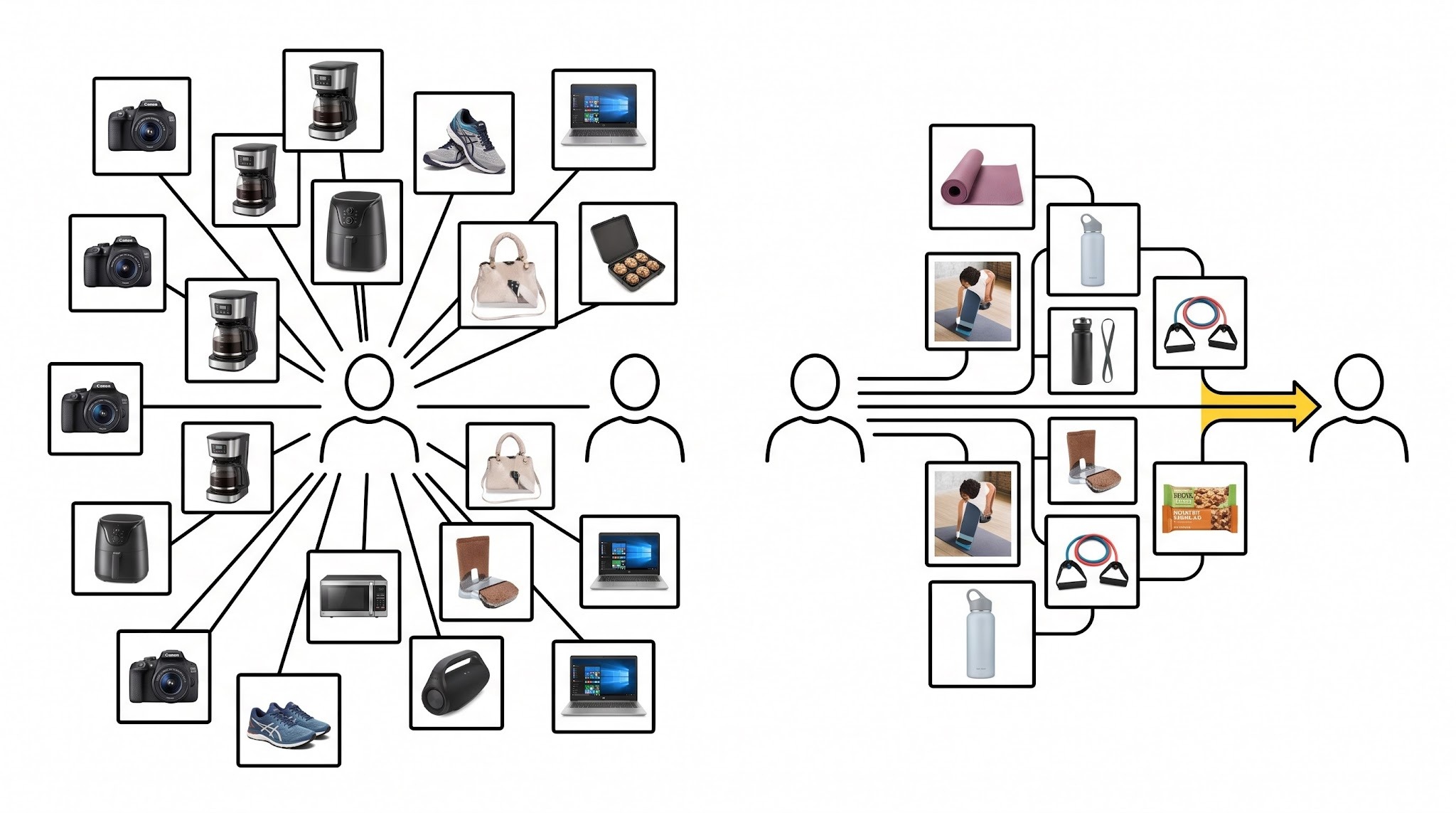
A more subtle structural issue shows up when accounts are organized by product rather than by audience persona.
Rafael Gi, Head of Strategic Growth & Partnerships at Pilothouse, identifies this as a root cause of wasted spend: structuring Meta accounts by product rather than by persona often results in wastage, as new customers may receive 14 to 20 impressions of different products before forming a cohesive opinion of what the brand actually does (Ep 625: Brand Salience for DTC: Turning Creative Into Your Targeting Layer). A shopper who sees a dozen unrelated SKUs never builds a clear mental model of the brand; a shopper who sees consistent messaging aimed at their specific need does. Advertisers testing 20 or more new ads per month see 65% higher ROAS than those testing fewer than 10, according to Pilothouse's research, and the top third of advertisers run roughly 395 live ads compared to 296 for the bottom third, a 33% gap (ChatterBuzz). Volume matters, but only when it's organized around who the customer is, not just what's in stock.
Training the Algorithm: Every Asset Builds a Smarter System
Every catalog asset published, a base product image, an overlay variant, a fresh description, becomes training data. The algorithm uses that accumulated signal to learn which messages resolve which user states, building exactly the kind of living answer library Sekki describes. Meta recommends consolidating catalog efforts into a single catalog for Advantage+ Catalog Ads for this reason: a new catalog restarts the learning process from zero, erasing accumulated relevance signal for no real benefit.
This is also why generic, low-effort creative actively works against a brand's own algorithm training. Abby Kohler, Strategist, and Daniel Sendecki, VP of Brand and Performance at Pilothouse, caution against "AI slop," or generic mass-produced creative, since the algorithm rewards high-quality, strategically aligned assets that actually answer consumer questions (Ep 587: Meta Andromeda Strategy). Feeding the system shallow content doesn't just underperform in isolation, it muddies the relevance signal the algorithm needs to place future assets correctly.
Partner With Pilothouse to Scale Your Catalog Strategy
Catalog ads are a powerful lever, but they're still just one piece of a larger customer journey and P&L system. Feed hygiene, creative overlays, account structure, and algorithm training interact with each other, and isolated fixes rarely produce results that hold up under stakeholder scrutiny.
A Track Record Built on Connected Systems
In Pilothouse's work with VSSL, Meta purchases grew 1,138%, ROAS improved 456%, and platform-attributed revenue grew 496%, all without adding incremental ad spend. That result came from connecting these systems rather than optimizing any single tactic in isolation.
Why Brands Choose Pilothouse Digital
Pilothouse Digital brings strategists with deep platform expertise, in-house media buyers covering Meta, Google, TikTok, Amazon, and YouTube, and full creative production capability under one roof. That integration lets catalog decisions get evaluated against contribution margin and incremental lift, not just surface-level ROAS or CTR.
Brands hitting that eight-figure ceiling and ready to figure out what's actually limiting catalog performance should have a conversation with Pilothouse.

