The Simple Facebook Ad Account Structure That Outperforms Complex Builds
.png)

The Simple Facebook Ad Account Structure That Outperforms Complex Builds
Most nine-figure DTC brands are still running Meta accounts built for an algorithm that no longer exists. Layered audience segments, dozens of ad sets, campaign trees built over years, that used to pass for sophistication. Today it just means a brand hasn't updated its Meta ad account structure since Andromeda changed the rules. The teams winning right now stripped their builds down. They consolidated, simplified, and let creative do the targeting work the algorithm used to handle.
How Meta's Andromeda Update Changed Facebook Ad Account Structure
Andromeda is Meta's rebuilt ad retrieval engine, introduced in late 2024 and rolled out globally across most objectives and placements over the following year. Built on the NVIDIA Grace Hopper Superchip, it delivered a 10,000x increase in retrieval model complexity, and Meta has reported a 6% lift in recall along with an 8% improvement in ads quality on selected segments (Meta Engineering).
As Rafael Gi, Head of Strategic Growth & Partnerships at Pilothouse, explains, Meta has quietly deprecated interest stacks and most of the manual targeting levers advertisers used to lean on (Episode: Ep 625: Brand Salience for DTC: Turning Creative Into Your Targeting Layer). Account structure now depends on the creative assets themselves to signal who an ad is for. Creative is the targeting layer now, and structure built around manual audience segmentation was built for a system Meta stopped running.
Why Simple Account Structures Now Outperform Complex Builds

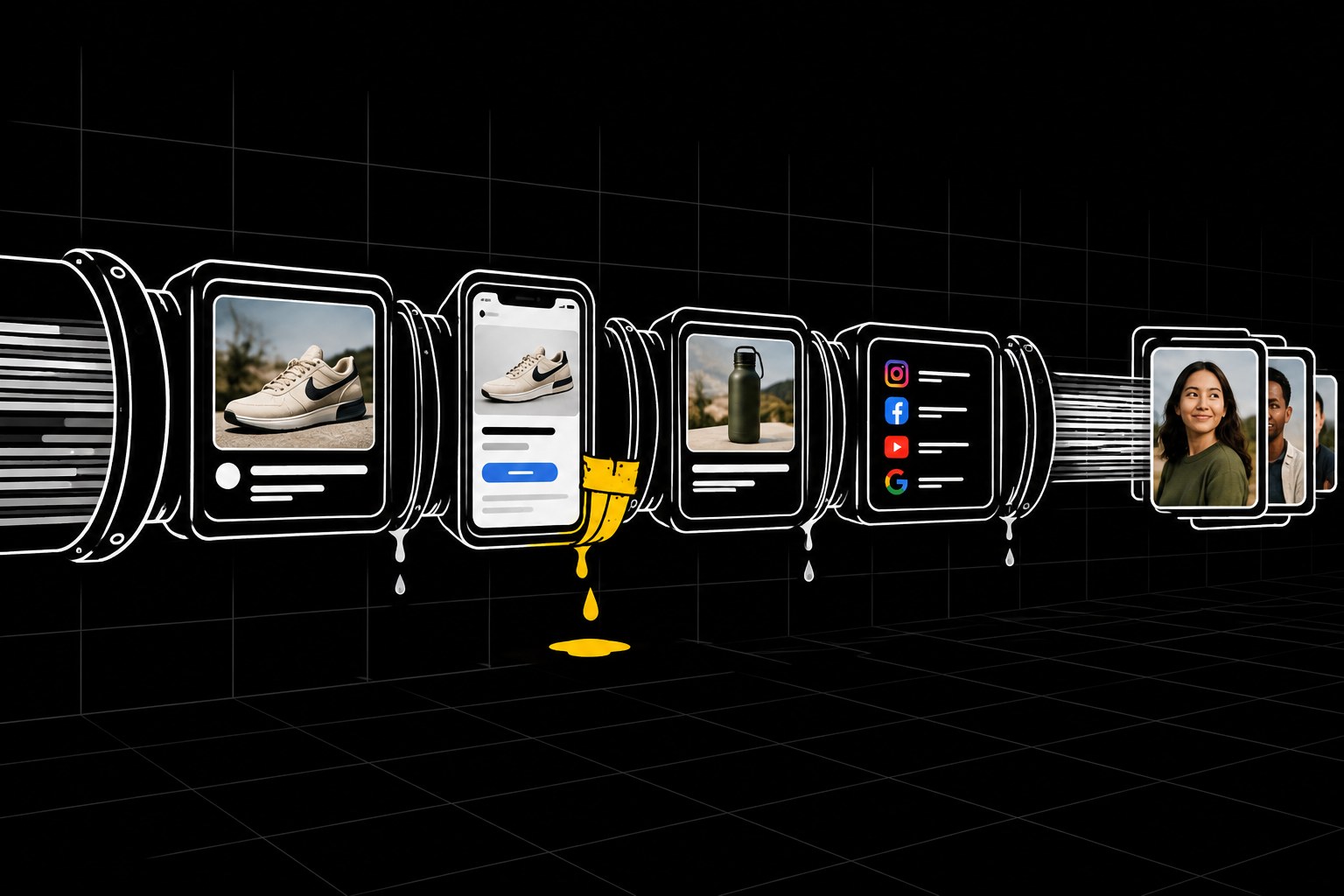
A fragmented account, eight or more campaigns, each with its own tightly-sliced audience and modest daily budget, used to pass for rigor. Under Andromeda, that same setup starves every individual campaign of the signal density it needs to optimize. A leaner build pools that signal instead, running one scale campaign and one testing campaign, with a catalog campaign alongside them.
The diagnostic value matters as much as the performance lift. When budgets are blended across a dozen ad sets, nobody can tell a CFO with confidence why CAC moved or which message drove it. Taylor Cain, Senior Ecommerce Strategist at Pilothouse, frames the best-practice model as three campaigns with three distinct jobs (Ep 567: Ecom CMOs: How Pilothouse Used Meta's Update to Drive 30% Higher CTR with Fewer Campaigns). A catalog campaign automates product surfacing. A scale campaign protects proven TOF performance. A testing campaign isolates new concepts. That separation is what makes results defensible to stakeholders instead of just plausible.
Extreme Consolidation: One Scale Campaign, One Testing Campaign
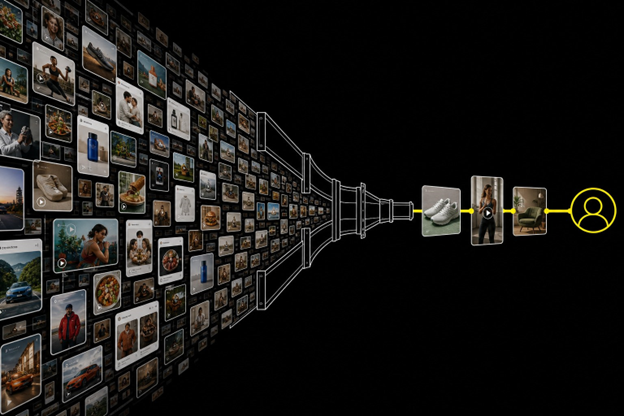
The consolidated model concentrates spend into a single scale campaign carrying proven winners and a single testing campaign isolating new concepts, with the catalog campaign running dynamic product ads on autopilot underneath both. An account might go from eight-plus fragmented campaigns, with ad sets competing against each other in the same auction, down to two or three campaigns with pooled signal and a clear line of sight between spend and outcome.
Every campaign still needs roughly 50 purchase events per week to exit the learning phase, a function of budget, not structure. If consolidating drops a campaign below that threshold, the fix is combining further, not layering in more budget without more signal.
Why Micro-Iterations Get Punished by the Algorithm
Andromeda collapses similar creatives into a single Entity ID, so near-identical ads compete against each other for the same delivery slot rather than expanding reach. A new headline, a different button color, a swapped background image: none of that counts as genuine creative diversity. Meta exposes this directly through the Creative Similarity Score inside Ads Manager.
As a practical benchmark, agencies recommend keeping each new ad at least 70% different: with a different format, hook, persona, or journey stage, so it registers as a distinct input rather than a micro-iteration of something already running. Rafael Gi also notes that Andromeda evaluates how ads affect the on-platform user experience, so accounts built around pushing repetitive or low-quality creative get demoted in deliverability (Ep 625). What gets rewarded is genuine variation, not sheer volume of iteration.
The Triangle Framework: Mapping Angles Across the Funnel
Once creative carries the targeting burden, the question becomes which messages to build and where they belong in the funnel. Pilothouse's Triangle Framework, developed by Aves Valerio, Host of Ad-venturous and Creative Strategist at Pilothouse, maps three distinct angles across three funnel levels, matching persona and message to funnel stage with an actual system instead of a guess (Ep 575: The Angle Audit: How to Break Out of the $5M “Vibes Plateau).
Three Angles x Three Funnel Levels Explained
A single product usually solves three to five distinct problems for different customer segments, so one hero message will never carry the whole funnel. Say a brand sells a recovery supplement. One angle might address sleep quality. Another could tackle muscle soreness. A third might focus on stress management. Each angle then needs its own treatment at the top, middle, and bottom of the funnel rather than one generic ad running everywhere.
Aves Valerio also flags a common mistake: abandoning an angle after a single failed creative iteration instead of testing it across different formats or awareness stages. An angle that flops as a static image might perform well as a UGC video lower in the funnel. The framework exists precisely to stop that kind of wasteful angle abandonment.
Building Broad Appeal, Curiosity, and Community by Stage
At the top of the triangle, creative variations need to be relatable to virtually anyone in the broad target demographic, since this is zero-awareness territory introducing the category or problem. The middle level speaks to two audiences at once: it makes the problem or benefit immediately clear to people already inside the fold, while sparking curiosity in people who aren't yet. The bottom of the triangle is hyper-specific, community-building content best suited to owned and organic channels like email and social rather than paid performance ads. Consolidating around angles that have already been strategically verified, rather than defaulting to aesthetic lifestyle B-roll, lets brands scale past a plateau instead of circling it.
The Cautionary Tale of Structuring by Product Instead of Persona
Plenty of large, established brands still structure their Meta accounts by SKU or product line instead of by persona. Rafael Gi calls this the failure of product-based account structure, and it shows up constantly in nine-figure accounts: a prospect can receive 14 to 20 conflicting impressions of different product messages before ever forming a single, coherent opinion of the brand. A related mistake is over-allocating spend based on platform-reported efficiency alone, pouring 80% of budget into a product that converts cheaply on Meta but represents only 20% of actual revenue, rather than structuring around the real shape of the business (Ep 625).
The '12 Cars, One Gas Tank' Problem
Rafael Gi's analogy captures the problem precisely: spreading media spend across dozens of disjointed, product-first messages is like dividing one gas tank of fuel among 12 cars. None of them reach the destination. Signal density gets split so thin across unrelated messages that Andromeda never accumulates enough data on any single one to learn reliably. Consolidating spend around a single salient message, or a small set of verified angles under the Triangle Framework, gives Andromeda something it can actually optimize against.
Combined Awareness and Sales Campaigns (CASC) Explained
CASC, or Combined Awareness and Sales Campaigns, is a Meta campaign type currently being tested with select advertisers, with broader availability expected in the coming months, that runs awareness and sales ads together under one structure, with budget optimized across both objectives toward a lower-funnel goal. Jacob, Head of Meta at Pilothouse, describes CASC as a consolidation tool in its own right: by combining reach and video-view objectives with sales optimization, brands can run fewer campaigns at meaningfully higher budgets instead of managing separate top-funnel and bottom-funnel structures (Ep 591: Meta Andromeda Updates: CASC + AI Assistant + Creative Testing).
That matters for direct-response brands that have historically treated awareness spend as a luxury they couldn't justify. CASC lets a brand build its engaged-audience pool with genuine upper-funnel reach without sacrificing short-term sales performance or running a separate purchase-only campaign to protect it. Pure window-shopping segmentation as a standalone strategy is effectively done.
Testing Creative at the Ad Level Without Losing Social Proof
The old model of testing meant launching new ad sets, which meant every winning ad started from zero likes, comments, and shares. Meta's newer ad-level testing tools solve that by letting variation happen inside a single ad unit instead of across a growing pile of duplicate campaigns.
Testing Multiple Hooks Under One Ad
Meta's newer ad-level Creative Testing feature lets advertisers compare multiple creative variants inside a single ad unit. Jacob points out that this lets advertisers test different hooks in the first three seconds without spinning up additional ad sets or campaigns, cutting out the duplicate structures that used to clutter an account (Ep 591). Separately, Meta's Flexible Ad Format lets a single ad hold up to 10 images or videos with multiple text and call-to-action variations, though Meta has announced that format will no longer be available in Ad setup starting March 2026 (Meta Business Help Center). With roughly 80% of Pilothouse brands' creative output now video, that hook-testing capacity inside a single video ad handles a lot of what used to require separate campaigns entirely (Ep 591).
Split-Testing Landing Pages While Preserving Engagement
Landing page testing follows similar logic. Best practice is separate ad sets with identical creative and audience but different landing page URLs, avoiding redirect-based splits that muddy the signal, typically run for 7 to 14 days or until each ad set accumulates around 50 conversions. Jacob notes that testing at the ad level, rather than duplicating the ad itself, means a brand can split-test a homepage against a collections page or a pre-sale page while the original ad keeps every like, comment, and share it has already earned. Social proof stays intact while the underlying funnel gets optimized (Ep 591)..
From Platform Knob-Fiddling to Customer-Centric Strategy
This isn't a checklist of settings to flip. The brands seeing real gains didn't stumble onto a clever manual targeting trick; they invested in understanding their market and building messaging with real depth. Success under Andromeda comes down to understanding personas and angles well enough that creative can carry the targeting job the algorithm used to handle. Pilothouse's approach pairs bottom-up creative strategy with precise persona targeting specifically to maximize how Andromeda delivers that creative, a fundamentally different exercise than tweaking bid caps or audience overlaps inside Meta Ads Manager.
A brand stuck in a knob-fiddling mindset tends to show a few consistent warning signs. Audience-overlap alerts keep firing. Ad sets never clear the learning phase. Budget spreads across too many near-identical variants, and the Creative Similarity Score flags most of the account as redundant (Ep 591). Each of those is a symptom of structure built for a targeting model Meta has since replaced.
Partner With Pilothouse Digital to Rebuild Your Meta Ads Account Structure
Why Pilothouse
Pilothouse Digital works with DTC brands at the $10M+ inflection point who need Meta performance they can actually explain to stakeholders, not just report on. The agency's proprietary Triangle Framework and 3-3-3 creative testing structure, along with its catalog-scale-testing campaign model, were built specifically for the post-Andromeda environment where creative carries the targeting load. With more than 160 specialists producing over 5,000 creative assets a month, and more than $1B in attributable revenue driven for clients over the past 7 years, Pilothouse has the operational depth to rebuild an overbuilt Meta account without losing the data history that makes it defensible.
Get Started
Brands running fragmented, product-first, or over-segmented account structures don't need more campaigns. Fewer, sharper ones do the job better. Pilothouse can help map that rebuild from the ground up.