Instagram Ads for Ecommerce: Reels, Stories, and Feed Strategy


Instagram Ads for Ecommerce: Reels, Stories, and Feed Strategy
Instagram advertising for ecommerce brands doesn't reward the tactics that worked three years ago. Interest-stack targeting has lost its edge, attribution windows have tightened, and the algorithm now reads creative signals to decide who sees an ad. For DTC brands running instagram ads for ecommerce at scale, that shift changes what "optimization" actually means. Here's what's working right now across Reels, Stories, and Feed, and why the brands winning treat creative, media, and measurement as one connected system instead of three separate jobs.
Why Instagram Ads Demand a New Strategy in the Meta Andromeda Era
Meta's Andromeda update changed how the platform decides who sees an ad. Instead of leaning primarily on declared interests and demographic data, the algorithm now uses creative signals to infer user intent and route ads accordingly. Building a campaign around a tight interest stack and calling it "targeting" doesn't work the way it used to. The creative itself has become the targeting mechanism.
For brands running Instagram ad placements built on broad audiences, this cuts both ways. It removes some of the guesswork around audience segmentation, but it also puts far more pressure on creative teams. Ads now have to signal the right context, to the algorithm and to real users, within the first few seconds.
Creative as the Primary Targeting Lever
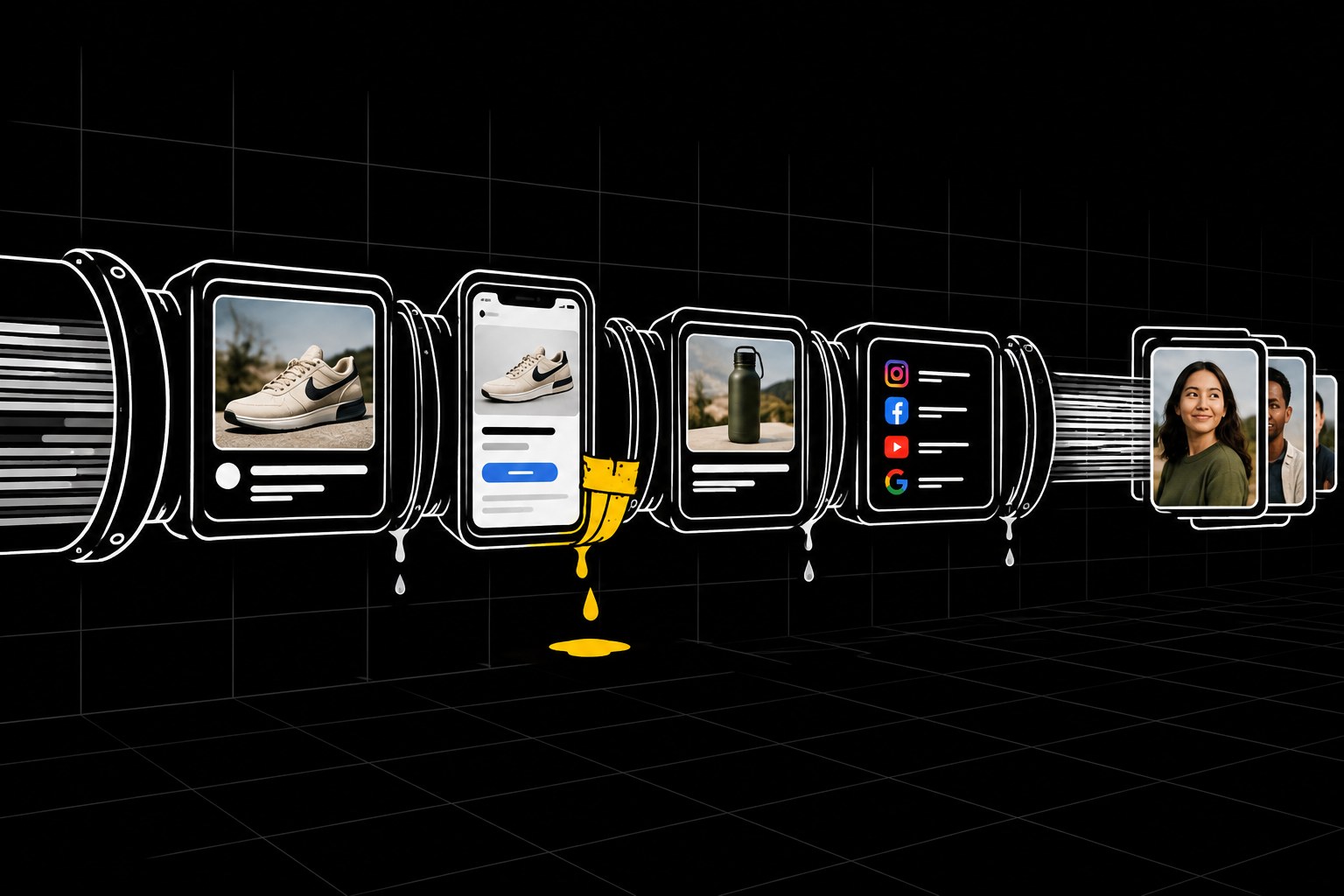
With Andromeda reading creative to infer who an ad is for, brands can no longer separate media strategy from creative strategy. A visually strong ad that fails to signal the right context, tone, or use case will struggle regardless of budget. Pilothouse Digital treats creative production and media buying as a single function rather than a handoff between teams, and brands producing distinct creative variants for different funnel stages and placements consistently get more efficient delivery than those running one asset everywhere.
Why Instagram's Millennial Audience Matters for Ecommerce
Some marketers still write Instagram off as an older platform, but that read is outdated. As Aves, Creative Strategist at Pilothouse, notes on Ep 45: Platform-by-Platform Guide to Paid Social Ads, over 50% of the user base sits between 25 and 44 years old, putting the platform squarely in the millennial wheelhouse. Instagram's 25-34 age group is the largest worldwide, with 18-24 close behind; together they make up around 63% of the global audience. Roughly 34% of users fall between 25 and 34 with another 16.6% between 35 and 44 as of April 2026 (Statista). That matters for ecommerce ads because this cohort has both spending power and a strong expectation of authenticity from brands. Polished, corporate messaging tends to underperform against content that feels native to the feed and honest about the product experience.
Understanding Instagram User Intent: Passive Scrolling vs Active Discovery
Instagram isn't a discovery engine in the way some marketers assume. As Aves explains, user intent on Meta platforms is fundamentally different from a platform like Pinterest (Ep 44: Stop Running the Same Ad on Every Platform). People open Instagram to be entertained. Active shopping intent at the moment of login is minimal.
That distinction should shape every DTC Instagram advertising strategy. Ads competing for attention in a passive-scroll environment need to earn engagement before they can earn a click. Forcing a hard sell into that moment usually just gets scrolled past.
Affinity-Based Plays and Engagement-Forward Content
Because users aren't actively searching, brands need to lean on affinity-based plays and engagement-forward content that meets people where their attention already is. Build ads around relatable moments, shared interests, or entertainment value first, and weave the product in rather than front-loading it. Ads that ask for a small interaction, a reaction, a comment, a save, tend to get more algorithmic distribution because they signal relevance faster than a static product shot ever could.
Instagram Ad Placements: Reels, Stories, and Feed Strategy

Each Instagram ad placement behaves differently, and treating them identically is one of the most common mistakes brands make. The table below is a quick reference for how creative specs and viewer behavior differ across the three main placements.
Placement
Best Aspect Ratio
Viewer Behavior
Creative Priority
Reels
9:16
Fast, rapid scroll
Punchy, front-loaded hook
Feed
4:5
Slower, more deliberate
Larger visual footprint
Stories
9:16
Tap-through, UI-heavy
Safe zone compliance
Understanding these differences is the foundation of any solid Instagram ad placement strategy, and it's where a lot of media spend gets wasted when brands run one asset across every placement without adjustment.
Reels: Fast, Punchy, and Shareable Creative
Viewers move fast on Reels, so the creative has to move faster. As Aves notes on Ep 44, content for Reels should be fast, punchy, and shareable, delivering entertainment quickly to match the pace of scrolling. A slow build or a long setup loses viewers before the message lands. That rule loosens on desktop feeds, though, where users are often more willing to sit with longer-form video. Brands shouldn't assume mobile Reels specs are the ceiling for every placement; desktop feed viewers give creative more room to breathe.
Feed Ads: Why 4:5 Aspect Ratio Outperforms 1:1
Feed placements reward format decisions that maximize screen real estate. Per Aves on Ep 45, the strongest-performing brands on Instagram are testing 4:5 aspect ratio assets instead of the standard 1:1 square. The larger frame occupies more of the screen, which makes video content "pop" significantly more in a crowded feed. For brands still defaulting to 1:1 because it's easier to repurpose across placements, this is a straightforward test worth running before the next creative refresh.
Stories: Safe Zones and UI-Aware Design
Stories placements come with a technical constraint that trips up a lot of creative teams: the interface itself covers part of the screen. Profile icons, comment fields, and action buttons sit on top of the creative, and if key messaging lands in those zones, it won't be seen. Sticking to safe zones is a technical requirement, not a nice-to-have. All pertinent text and product information needs to live in the part of the frame that stays clear of UI overlays. Meta's own Safe Zone Guardrail tool is a useful check before any Stories asset goes live.
Winning Creative Styles for Ecommerce Funnels
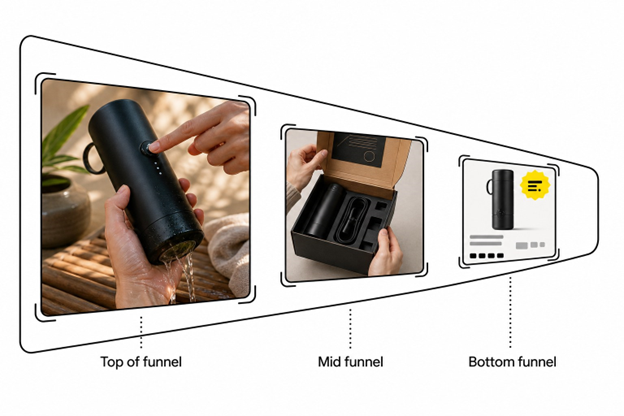
Different creative styles do different jobs across the funnel, and matching the right format to the right stage is where a lot of the performance gains actually come from.
Unboxing Videos for Mid and Bottom Funnel
Unboxing videos remain one of the most reliable creative styles for mid and bottom-funnel content. As Aves explains on Ep 48, the format naturally lets creators address specific friction points, like shipping speed or product quality, in a way that feels authentic rather than defensive. A brand that's had complaints about slow shipping can use an unboxing video to show a fast, well-packaged delivery experience without ever mentioning the complaint directly. That's a far more persuasive fix than a customer service email.
Lifestyle, ASMR, and Functionality Shots for Top-of-Funnel Reach
Top-of-funnel creative needs to feel like content first, ad second. Per Aves, lifestyle-focused videos, especially those using ASMR or pure functionality shots, work as excellent top-of-funnel reach drivers because they offer a non-aggressive entry point into the brand. They don't feel like a traditional performance ad, which is exactly why they earn more attention from cold audiences who haven't shown purchase intent yet (Ep 48: Unboxings, B-Roll, and 3 More Video Styles That Scale).
Gifting content deserves a specific note here. Aves' guidance on Ep 48 is to feature the giftee, the person receiving the gift, rather than the gifter. This resonates more directly with the brand's core persona and gives the ad longer tenure in the account outside of narrow holiday windows, rather than getting shelved the day after a gifting occasion ends.
Dynamic Placement Ads and DPA Frames for High-SKU Brands
For brands with large catalogs, Dynamic Product Ads (DPA) remain underused relative to their potential. As Aves notes on Ep 45, DPA works especially well for ecommerce brands with high SKU counts, and adding DPA frames, transparent overlays with sale badges or welcome offers, can break conversion friction right at the bottom of the funnel. DPA targets prior site visitors, while Dynamic Ads for Broad Audiences (DABA) extends similar logic to reach new users who haven't yet interacted with the brand. This pairs naturally with retargeting flows, giving high-SKU brands a way to personalize creative at scale without producing a unique asset for every product.
Measuring Success After Meta's Attribution Changes
Meta's attribution model changed how click and engagement events get counted, and brands that don't adjust their measurement expectations will misread their own performance.
From Click Attribution to Engaged-Through Metrics
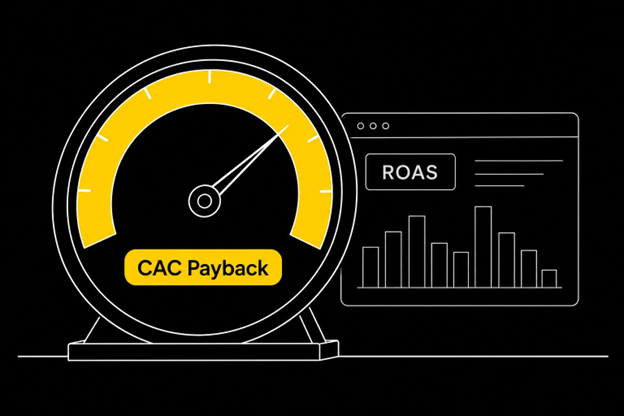
Under the updated model, click-through attribution now requires an actual link click rather than a broader interaction. Likes, shares, saves, and comments have moved into a separate "engage-through" category with a tighter one-day attribution window, and the video engaged-view threshold dropped from ten seconds down to five. For ecommerce purchase campaigns specifically, keeping engage-through attribution active still makes sense, since it captures real intent signals without over-crediting passive views. Reported platform numbers will look different than before, even if actual sales performance hasn't shifted at all, which is why relying on in-platform ROAS alone can be misleading right after a change like this.
Why MER Matters More Than Platform ROAS
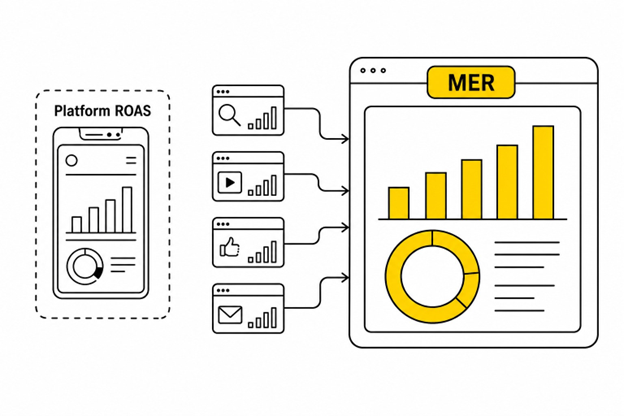
Marketing Efficiency Ratio (MER) matters more at scale than in-platform ROAS. MER is total revenue divided by total marketing spend across every channel, not just Meta. It's channel-agnostic, which makes it far more reliable in a high-signal-loss environment where individual platforms are undercounting or overcounting their own contribution. Think of MER as the companion to ROAS rather than its replacement: it gives brands a grounded view of overall marketing efficiency, factoring in contribution margin and LTV, that a single platform's dashboard simply can't provide.
Building a Full-Funnel Instagram Ad Strategy
A full-funnel approach matches creative style, placement, and measurement to where a customer actually is, instead of running the same asset everywhere and hoping the algorithm sorts it out. Top-of-funnel lifestyle and functionality content builds reach and affinity. Mid and bottom-funnel unboxing videos and DPA frames convert that attention into purchases. Measurement needs to sit above any single platform, using MER alongside ROAS, to reflect what's actually happening to the business.
Pilothouse's work with VSSL is a clear example of this in practice: a unified approach to creative and media drove 41% YoY growth without added spend (VSSL Case Study). The Rag Company saw a similar effect from aligning acquisition and conversion rate optimization into one system, growing 101% YoY (The Rag Company Case Study). In both cases, the gains came from treating Instagram ads as one piece of a larger, connected growth engine rather than an isolated channel to optimize in a vacuum.
Partner With Pilothouse Digital to Scale Your Instagram Ads
Running Instagram ads well at the $10M+ stage takes more than platform know-how. It takes a system where creative, media, and customer journey insights move together instead of in separate lanes.
What Sets Pilothouse Apart
Pilothouse builds an integrated creative, media, and journey system instead of running siloed platform tactics. The team has deep experience scaling DTC brands well past the $10M mark toward $50M and beyond, with media strategy built around contribution margin and defensible growth rather than surface-level metrics.
Get Started
Pilothouse Digital builds this system for DTC brands, producing thousands of creative assets monthly and pairing them with performance brands can actually explain to stakeholders. Brands that have outgrown single-channel tactics can review more results across Pilothouse's case studies or reach out to talk through what a full-funnel Instagram strategy could look like for their business.