AI Ad Creative That Doesn't Look Like AI: How to Scale to 50+ Variants Without the Slop
Scaling ad creative with AI sounds like the dream: more variants, faster turnaround, lower production costs. And it can deliver all of that. But most brands using AI ad creative are shipping content that looks, reads, and performs exactly like what it is: rushed and hollow. The problem isn't the technology. It's how teams are deploying it.

Getting to 50+ high-quality ad variants means building a system where volume is AI's job and taste is a human's job, with every asset that goes live pressure-tested against real conversion logic. Scaling smart looks very different from scaling slop.
Why Most AI Ad Creative Looks Like AI (And Why It's Costing You Conversions)
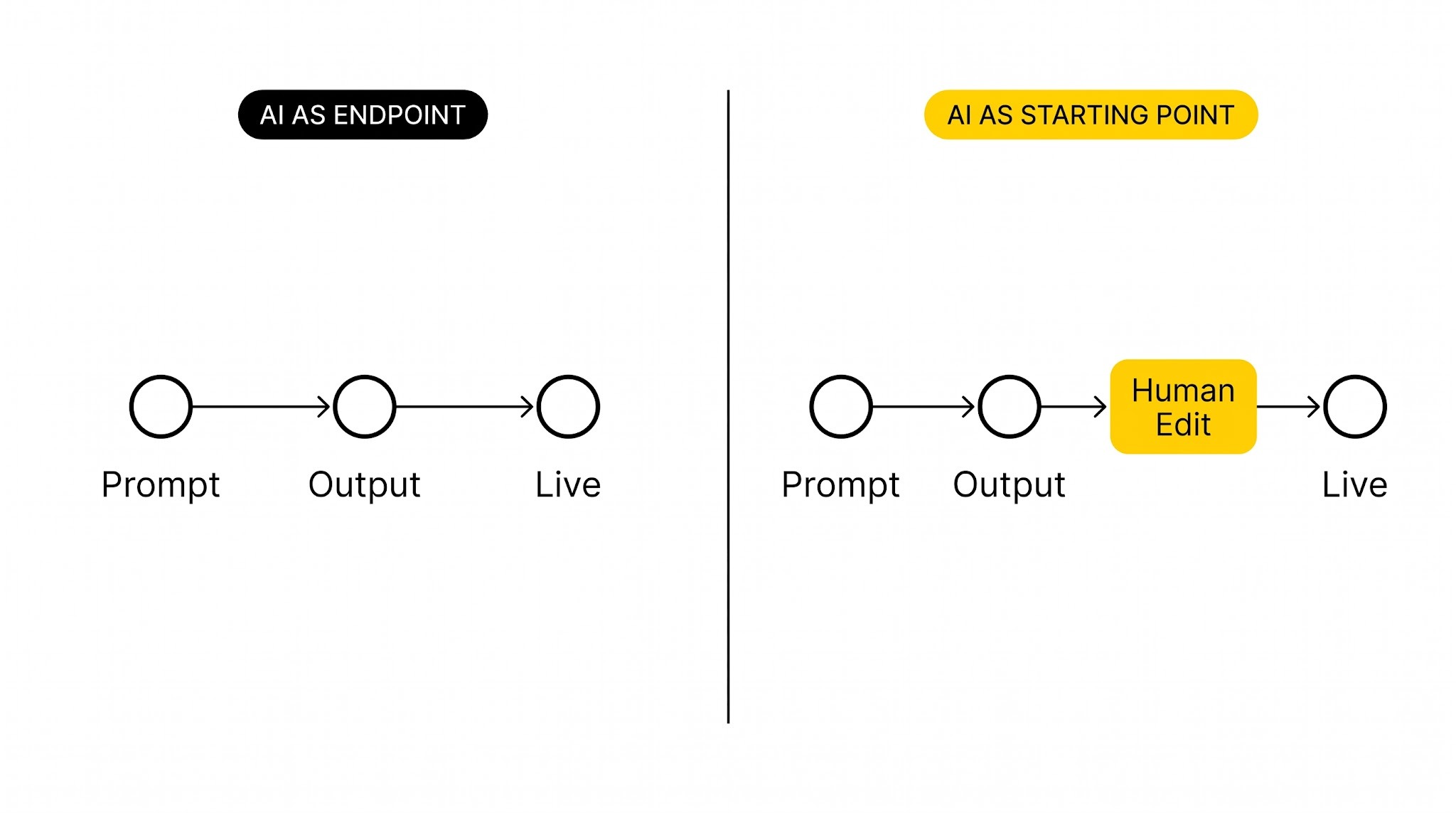
AI-generated ads fail for a specific, fixable reason: teams treat AI as an endpoint rather than a starting point. They prompt a model, accept the output, and push it live. What gets served to audiences follows the same predictable patterns, leans on the same tired phrases, and carries no signal of genuine human thought. People are pretty good at detecting when something feels manufactured, and when that suspicion attaches to a brand's ad, trust takes the hit.
Generic messaging is the core problem. When AI ad creative produces content optimized to sound "good" without being grounded in a specific brand, product, or audience, it defaults to average. Average gets ignored.
AI-generated ads fail for a specific, fixable reason: teams treat AI as an endpoint rather than a starting point. They prompt a model, accept the output, and push it live. What gets served to audiences follows the same predictable patterns, leans on the same tired phrases, and carries no signal of genuine human thought. People are pretty good at detecting when something feels manufactured, and when that suspicion attaches to a brand's ad, trust takes the hit.
Generic messaging is the core problem. When AI ad creative produces content optimized to sound "good" without being grounded in a specific brand, product, or audience, it defaults to average. Average gets ignored.
The 'AI Slop' Tells That Kill Trust Immediately
There's a shortlist of patterns that signal low-effort AI ad creation: awkward over-punctuated phrasing, headlines that sound enthusiastic without saying anything, visuals that feel stock in composition and subject, and copy that gestures at emotion without earning it. These aren't minor stylistic preferences. They're trust signals audiences read almost instantly, even without consciously realizing it.
Linguistic Red Flags: Why LLM Copy Sounds Like LLM Copy
Language models are trained to produce plausible, readable text. That doesn't mean persuasive, specific, or on-brand text. Common tells include repetitive sentence cadence, transitions lifted from formal essays, and enthusiasm that never connects to anything concrete. The copy says "transform your routine" when it should say "five minutes in the morning, and you won't need the third cup of coffee." One is air. The other is a hook.
LLMs also over-rely on specific punctuation patterns that readers recognize as machine-generated. The fix is editing backwards: having humans rewrite LLM output to sound the way the brand's best copywriter actually speaks. As Braydon Germain from Pilothouse noted on the DTC Podcast (Ep 589: 9 Static Ads in 2.5 Hours), pressure-testing the output and forcing it past generic defaults is where the value gets added. When brands skip injecting their voice, customer language, and offer logic into the generation process, the output reflects nobody in particular and converts accordingly.
The Intent Resolution Model: Winning Creative Answers, Not Interrupts
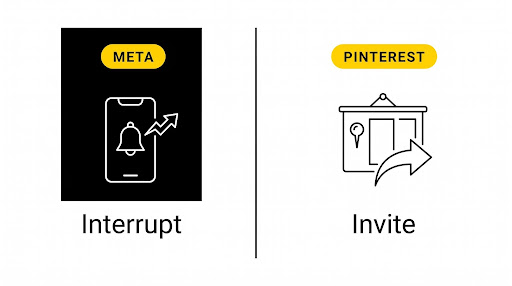
Most ad creative is built around interruption. Today, the better model is one where the ad feels like an answer rather than an intrusion.
Pilothouse's Intent Resolution lens starts with a simple question: what is this person actually trying to resolve when they see this ad? Start with what problem or friction exists in that person's life that this product genuinely addresses, not what the brand wants to say. When AI ad creative is built around that question, the output changes dramatically. The headline shifts from product feature to customer outcome. The visual puts the audience in a situation they actually recognize.
This requires real audience data: behavioral signals, purchase patterns, support ticket language, review mining. When those inputs feed the AI generation process, the ads that come out speak directly to specific people rather than vaguely to everyone (Ep 581: Meta Ads Aren't About Targeting Anymore).
Meta's Andromeda Update Changed the Rules on Creative Variety
Meta's Andromeda update shifted how the platform evaluates and distributes creative. Where the old model leaned heavily on audience targeting, Andromeda places more weight on creative quality and genuine variety as signals of relevance. Andromeda buckets similar-looking creative together unless they are roughly 70% different, rewarding genuinely different ideas over minor design tweaks. Changing a button color doesn't register as a new concept. A fresh hook, a different emotional angle, a new visual format, those register.
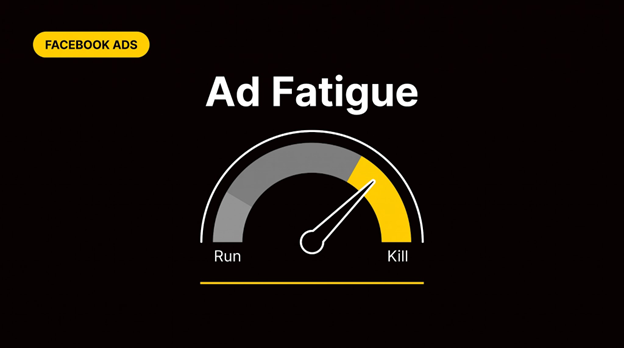
Top advertisers now run 15 to 50 ads per ad set, and the effective lifespan of an individual ad has compressed from 6 to 8 weeks pre-Andromeda down to 2 to 4 weeks, because precision matching exhausts optimal audiences faster. Brands that respond with a handful of creatives per campaign get outpaced quickly. Meta's GEM compounds this further by using Large Multi-Modal Models to suggest text, image variants, and formats based on predicted performance across placements. The creative pool available to the algorithm directly shapes what gets optimized (Ep 587: Meta Andromeda Strategy).
This is why AI-powered ad production has become a volume requirement, not just a productivity play. The output needed to feed Andromeda's appetite isn't achievable with traditional creative production cycles.
AI as a Variation Engine: Scaling With the Five-Message Framework
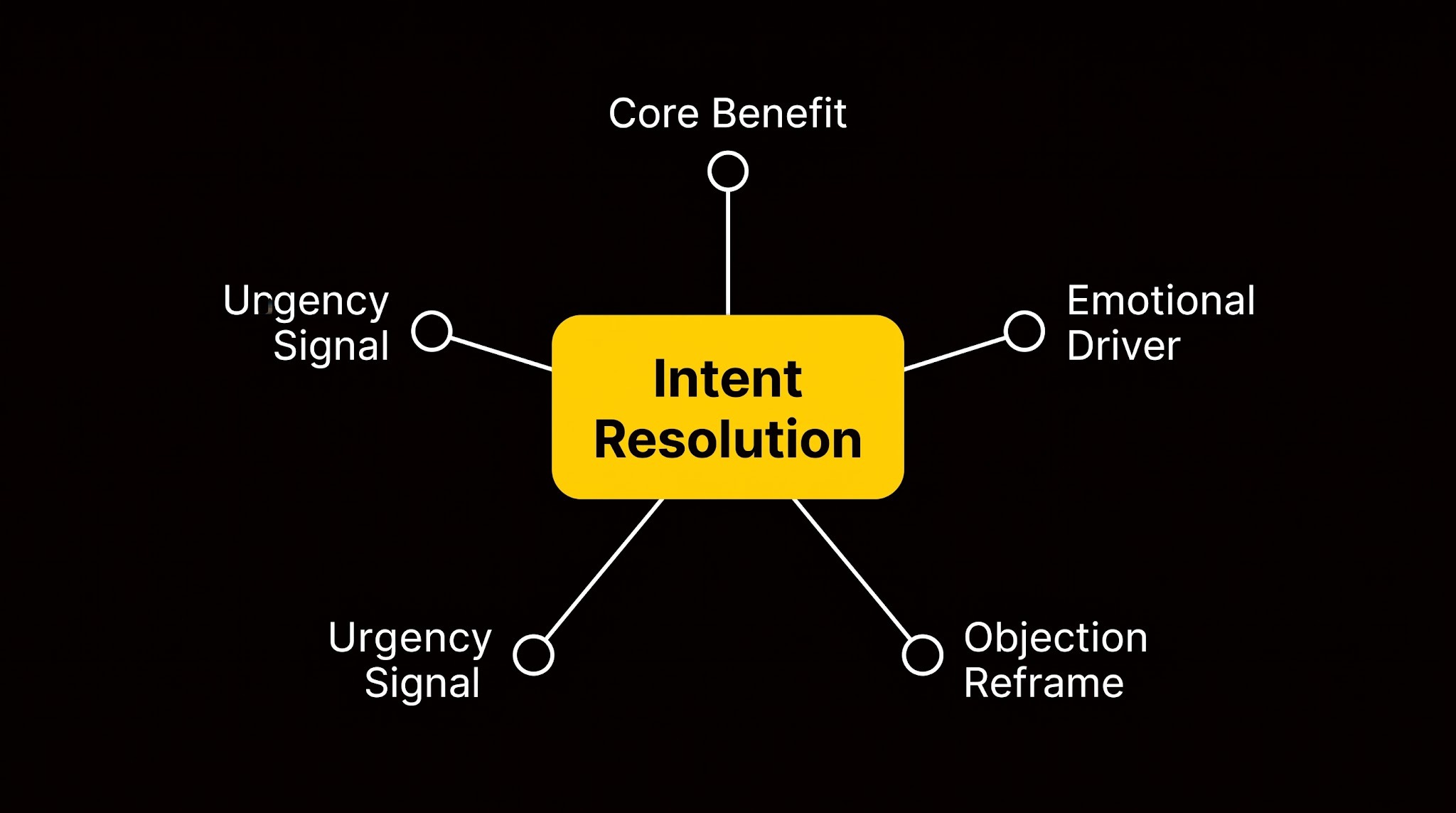
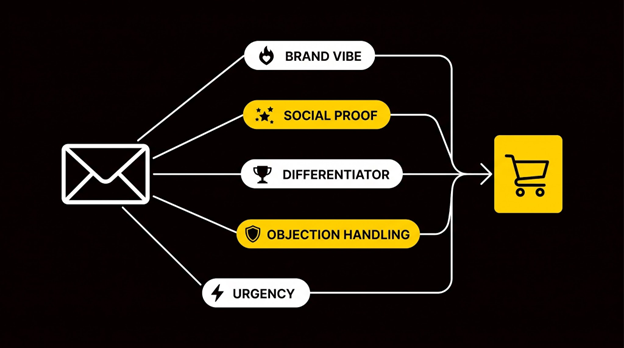
The most practical approach to high-volume AI ad creation is building from a core messaging architecture. Pilothouse's Five-Message Framework organizes creative output around five foundational pillars mapped to the customer journey: core product benefit, emotional driver, social proof angle, objection reframe, and urgency or scarcity signal. Every ad variant traces back to one of these pillars, which means 50+ variants aren't random. They're structured, intentional, and collectively cover the full range of reasons someone might convert (Ep 595: 5 Messages That Scale DTC Growth).
A variant matrix makes this concrete in production:
Working within this framework means the creative team isn't starting cold. The approach gives AI a specific pillar, a defined format, a target emotion, and brand voice parameters. The five-pillar structure also makes performance analysis cleaner: when each variant maps to a specific message type, the data shows which pillars are connecting, not just which individual ads performed. That insight shapes future briefs.
Feeding Brand Guidelines Into AI for High-Volume On-Brand Output
AI tools for ads don't know a brand unless they're taught. The inputs that matter most go well beyond a logo and a color palette. Tone descriptors with examples, customer language pulled from real reviews and support conversations, product truth statements that are specific and defensible, competitor language to actively avoid, all of this needs to be in the prompt environment consistently.
When this information is embedded into prompts consistently, AI ad output starts to sound like it actually belongs to the brand. This brand-training step is treated as foundational work, not optional prep. Producing 9 high-quality static ads in 2.5 hours is achievable when the AI has been properly configured with brand guidelines upfront (Ep 589: 9 Static Ads in 2.5 Hours).
The Taste Intervention Workflow: Who Does What
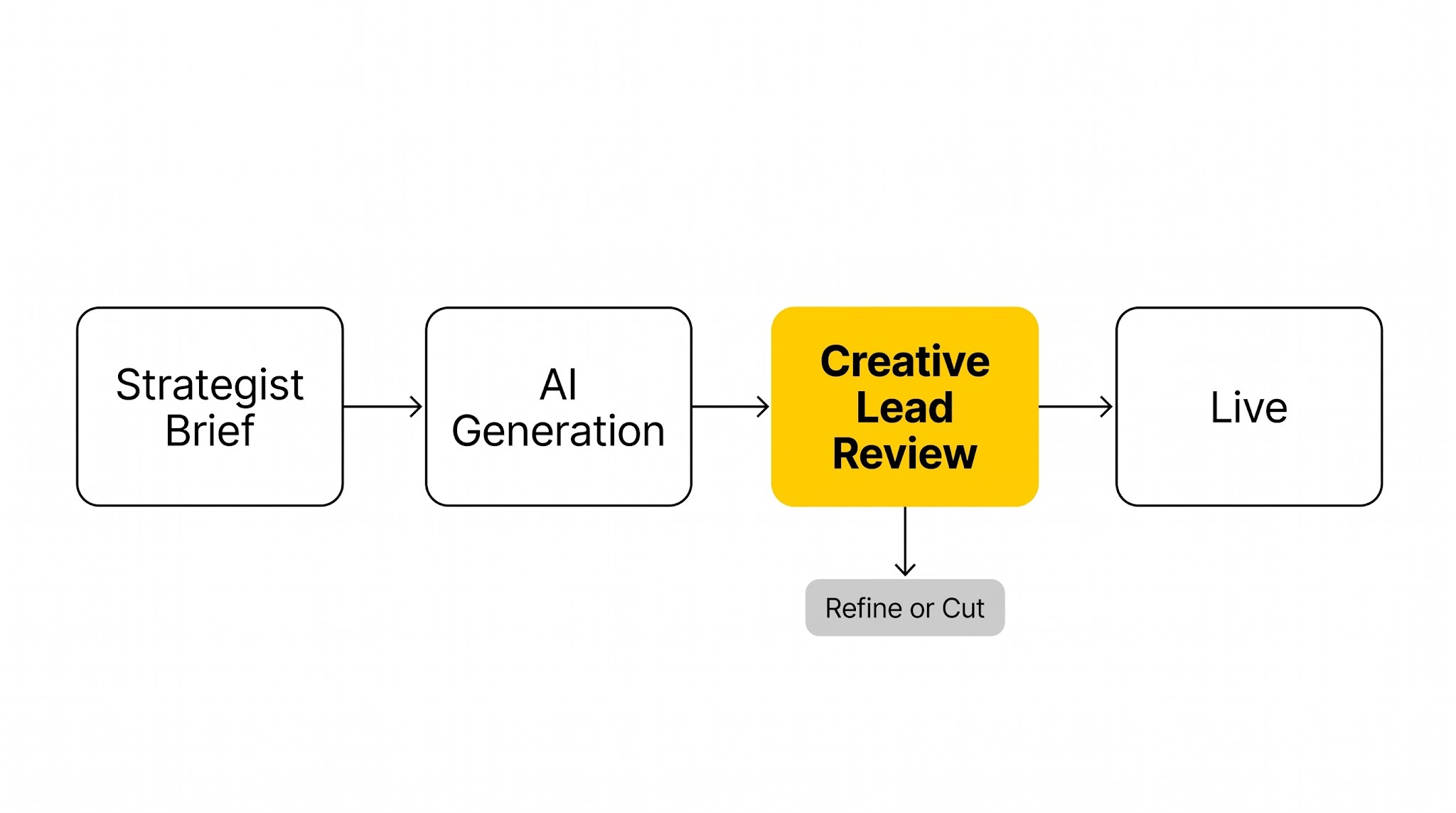
High-volume AI ad creative doesn't eliminate human judgment. It changes where that judgment is applied. The workflow Pilothouse recommends structures creative production as a layered workflow, where AI handles generation and variation while humans intervene at the points where taste and strategic thinking actually matter.
Strategists define the brief: the pillar, the audience, the format, the objective. That brief becomes the structured input. Output is then reviewed by a creative lead whose job isn't to rewrite every line, but to filter with a trained eye. Does this feel real? Does this sound like the brand? Would a customer believe this? Using LLMs in "hardcore mentor mode" to pressure-test weak angles before launch adds an additional layer of quality control. Anything that doesn't pass that filter gets refined or cut.
This workflow scales because it's explicit about who owns what. Volume goes to AI, strategic direction goes to strategists, and taste goes to creative leads. Blurring those responsibilities is where most teams get into trouble, either over-trusting AI output or under-using it out of skepticism. To go deeper, listen to Braydon Germain from Pilothouse on Ep 599: 3 Claude AI Workflows DTC Marketers Can Use.
Recognition Hooks: How to Make AI Ad Creative Feel Personal
The ads that feel personal aren't necessarily personalized in a technical sense. A Recognition Hook is a creative element that makes someone feel seen before they've consciously processed why. It might be a visual that mirrors their life, a phrase they've said out loud, or a situation that maps precisely to a frustration they carry.
Building Recognition Hooks into AI ads requires audience specificity at the brief level. A brief targeting "fitness enthusiasts" is too broad to generate anything that lands. A brief targeting "runners training for their first half marathon who are hitting a plateau around week six" gives the AI a narrow enough pattern space to produce language and scenarios that actually click.
Recognition also extends to format and visual cues. UGC-style creative, lifestyle imagery that reflects the audience's actual aesthetic, and "first frame/last frame" references from real content ensure AI-generated motion feels organic to the platform.
QA at Scale: Pressure-Testing Creative Before It Goes Live
Shipping 50+ variants without a quality assurance process is how slop escapes into the wild. The QA step needs a defined checklist and clear ownership across three categories of failure: brand alignment, factual or claim accuracy, and creative execution problems that would tank performance.
Brand alignment checks confirm that tone, visual style, and messaging feel cohesive with the brand's identity. Claim checks verify that every product statement is accurate and compliant. Execution checks evaluate whether the hook lands in the first two to three seconds, whether the visual hierarchy is clear, and whether the CTA is specific and logical given the message.
Creating "skills" within LLMs like Claude, containing reference files of the brand's best-performing human-written copy, ensures AI-generated variants maintain a consistent, non-robotic voice across the full variant set (Ep 599: 3 Claude AI Workflows DTC Marketers Can Use).
Every Variant Is a Data Point: Treating Creative as Cumulative
The most underutilized asset in most ad programs isn't budget or creative capacity. It's the performance data already generated by prior creative work. When each ad variant is tagged, tracked, and analyzed against a consistent framework, patterns emerge across pillars, formats, audiences, and message types that would be invisible if creative were evaluated in isolation.
This is exactly the logic behind an insights engine: every variant that runs is a signal, and high-performing teams capture those signals and feed them into the next brief. Which emotional drivers consistently outperform rational benefit messaging with this audience? Which visual formats see stronger retention past the three-second mark? These are answerable questions when the creative data is organized and reviewed with intention.
Teams that build this feedback loop into their workflow get sharper with every campaign, drawing on everything already shipped. More ads is the byproduct. A faster feedback loop that improves targeting, messaging, and spend efficiency is the actual outcome. See how this approach performs at scale through Pilothouse case studies.



%20(1).jpg)









.png)



.webp)


.webp)