


The Creative Production Pipeline Challenge: Building at Andromeda Speed for DTC Brands

Your creative team isn't slow. Your system is. When scaling brands need dozens of diverse ads weekly, quality concepts that each genuinely test a distinct hook or angle, and teams can barely produce five, the gap isn't about effort or talent, the gap isn't about effort or talent. It's about infrastructure. The Friday scramble to fill next week's testing queue, the recycled hooks running in endless loops. These are symptoms of operating a high-volume game with low-volume tools.

The Andromeda Shift: Why Creative Is Now Your Primary Targeting Lever
Meta's Andromeda update fundamentally shifted the rules. Broad targeting replaced interest-based segments, and suddenly, creative carries the full burden of audience selection. The platform serves ads to massive pools and watches what resonates. The creative itself acts as the filter, signaling who should engage and who should scroll past.
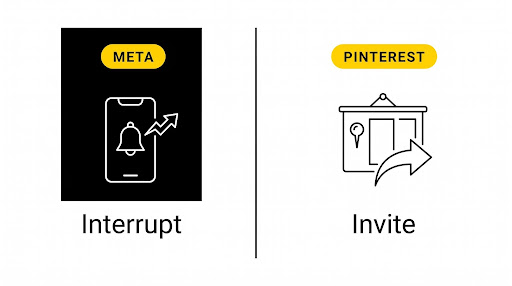
This transforms creative from a persuasion tool into a recognition mechanism. The algorithm asks, "Which answer fits this person right now?" rather than "Who should we show this to?" Brands that cling to old targeting logic struggle with this shift, optimizing creative for broad appeal and smoothing away the edges that create meaningful resonance.
Meta's machine learning system thrives on diversity. It needs multiple creative variants to test different angles, hooks, and formats simultaneously. Test five creative concepts weekly? Meta gains limited data. Scale to 80-100 diverse creatives weekly, and the algorithm gains exponentially more signal about what resonates with different audience segments. The system learns faster and scales more efficiently.
Reframing the Meta Creative Production Workflow as an Intent Resolution System
Designing Hooks for Recognition, Not Persuasion
The strongest creative hooks address unspoken questions audiences already carry. These aren't problems created through persuasion but existing tensions articulated clearly. When someone sees their internal question reflected in a hook, recognition happens instantly.
You need to step outside product-centric thinking. Audiences experience a gap, frustration, or aspiration they may not have fully named. The hook gives language to that feeling, creating the moment that stops the scroll.
Brands often bury their strongest hooks under layers of explanation. The impulse to educate dilutes the initial spark. Lead with the tension. Let the recognition moment land before unpacking how the product resolves it.
The Creative Leap: How Brands Answer Matters as Much as What They Answer
Once recognition occurs, the creative must bridge the gap between felt tension and a specific solution. This transition is where most creativity falls apart. The hook captures attention, but the resolution feels disconnected or overly generic.
The leap from problem to solution needs to feel inevitable, not forced. This comes from understanding not just what audiences need but how they mentally connect needs to solutions. Two brands solving identical problems can position their solutions very differently depending on how their audiences think about resolution.
Strong workflows map these resolution pathways before production begins. Teams identify the dominant mental models their audience uses, then design creative that moves through those models naturally. This strategic layer transforms production from output generation to systematic intent resolution.
Building Ground Truth with LLM-Powered Intent Clustering
Customer research traditionally segments by demographics or psychographics, but intent clustering focuses on the questions people carry. Large Language Models can process thousands of customer conversations, reviews, support tickets, and Facebook group discussions to surface patterns in how people articulate problems and evaluate solutions.
This creates a living map of audience intent. Instead of broad personas, teams work with clusters of specific questions and concerns. These clusters become the foundation of creative strategy, ensuring each piece addresses real tensions rather than assumed pain points.
The process involves feeding customer language into clustering models that identify thematic groups. What appears to be a single audience segment often contains three distinct intent clusters, each requiring a different creative approach. This granularity reveals white space in current creative coverage. Teams can audit existing assets against their intent map and identify which customer questions remain unanswered, turning creative planning from guesswork into strategic gap-filling.
Messaging angles emerge from this research across several categories. Problem-agitation-solution frameworks that build urgency. Identity-focused appeals that align with self-perception. Convenience resolutions that address friction points. Source material includes customer conversations, product reviews, and community discussions where audiences articulate concerns in their own language.
The Living Library: Scaling to 80-100 Diverse Creatives Weekly
The CGC, UGC, and EGC Content Mix for Algorithmic Diversity
A sustainable creative pipeline blends three content types, each serving distinct algorithmic and audience functions. Creator-Generated Content (CGC) provides polished, brand-aligned assets that clearly communicate core messaging. User-Generated Content (UGC) delivers authentic social proof and peer validation. Employee-Generated Content (EGC) establishes authority and educates on complex topics.
The mix matters because Meta's algorithm responds differently to each format. UGC signals authenticity and drives engagement through relatability. CGC delivers professional quality that builds brand credibility. EGC positions brands as trusted resources. Testing across all three formats gives the algorithm more diversity to work with.
Managing this mix requires parallel production streams, not sequential workflows. Teams can't produce 80 creatives per week if each format goes through separate approval processes. Successful operations build modular systems in which content types flow in parallel, meeting at strategic review points rather than bottlenecking in linear pipelines. The ratio between formats shifts based on brand stage and product complexity.
For more information on modern creator content, listen to Avery Valerio from Pilothouse on the DTC Podcast: Ep 538: How to Deploy UGC, CGC, and EGC in Your Paid Strategy.
Using AI to Multiply Assets Without Multiplying Effort
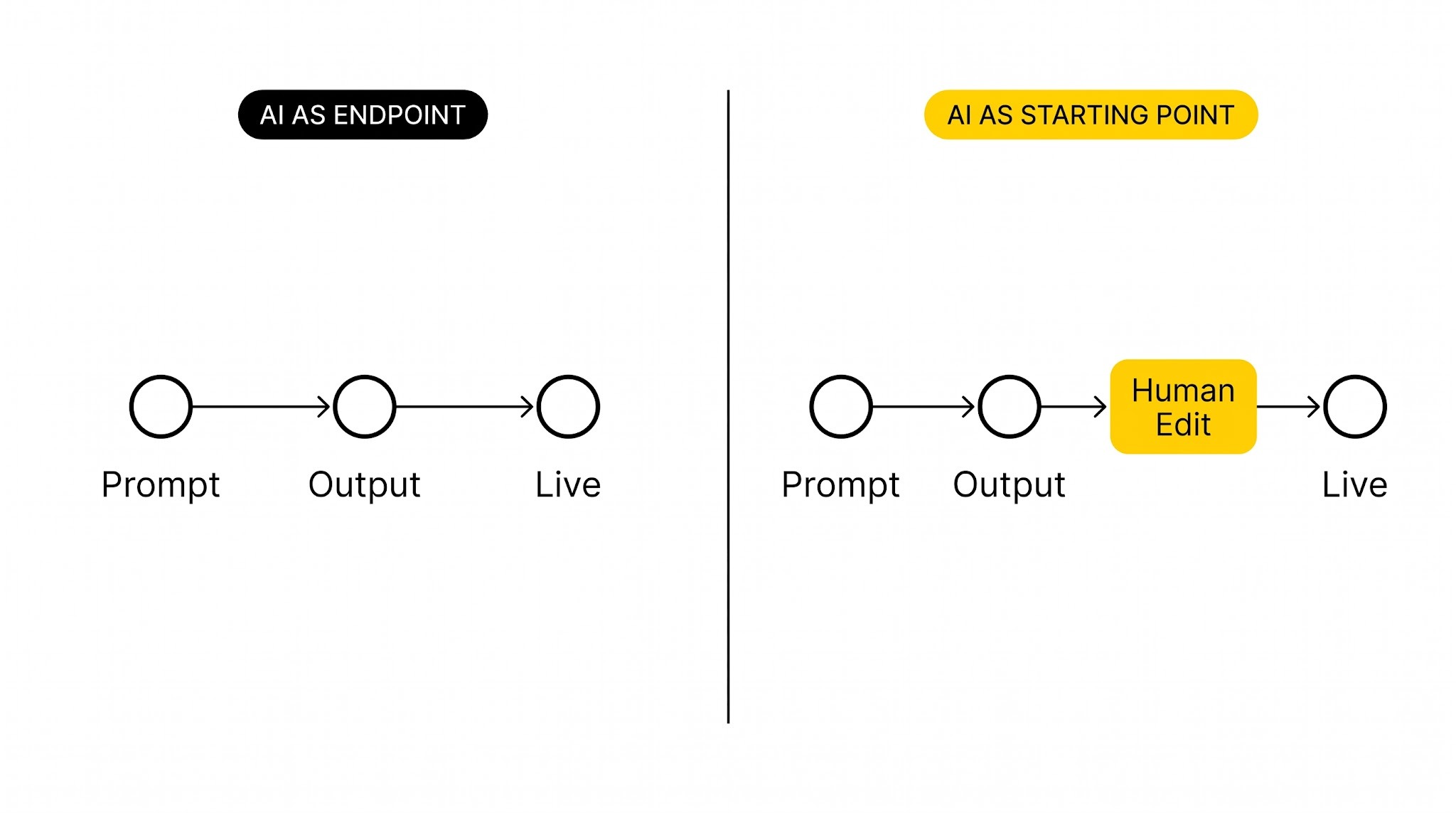
AI tools aren't the strategy. They can help serve it. The brands that get this wrong use AI to generate volume and hope something sticks. The brands that get it right use AI to execute a strategy that's already been defined.
That distinction matters. Strategic hooks, messaging angles, and intent frameworks have to come from genuine customer research and human judgment. Once that foundation exists, AI can help scale execution, adapting proven concepts across formats, generating script variations from a validated framework, or testing visual treatments without a full production cycle. The output is only as good as the strategic input driving it.
This is also why early AI experiments so often disappoint. Generic prompts produce generic creative. When teams bring clear intent frameworks, specific customer language, and well-defined constraints to AI tools, the output becomes genuinely useful rather than a starting point that needs to be rebuilt from scratch.
The goal isn't to produce more ads. It's to test more meaningful hypotheses, faster, without letting speed become an excuse for skipping the strategic work that makes creative perform.
The Rubik's Cube Method: Shuffling Hooks to Maximize Meta's Weighting
Meta's algorithm assigns different weights to various creative elements. The hook typically carries the most weight because it drives initial engagement, with the first 3 seconds weighted more heavily than almost any other component. Body copy, visuals, and CTAs matter but often contribute less to overall performance than the opening seconds.
This creates an opportunity. If a brand has 20 strong hooks grounded in different intent clusters, each hook can pair with multiple body styles, visual treatments, and offers. The combinations multiply quickly. Twenty hooks, five visual styles, and four offers yield 400 unique creative variants, each testing different algorithmic signals.
The Rubik's Cube Method treats creative elements as modular components that shuffle strategically rather than randomly. Teams maintain creative cohesion while maximizing testing surface. Each combination addresses a different intent cluster with varied resolution pathways, giving Meta more signal to optimize against.
Variation plans systematically cover hooks, captions, thumbnails, and offers to create high-contrast conceptual variations rather than minor tweaks. This approach requires an organized asset management system, such as Notion, ClickUp, Airtable, or Google Sheets. Teams need systems that track which combinations have tested, performance by hook regardless of body copy, and visual styles that consistently outperform others.
From Tactical Spin Cycle to Strategic Creative Intelligence
Surface-level personas built on demographics and fundamental interests don't provide enough insight for effective creative strategy. Deep persona research uncovers the mental models audiences use to understand their problems and evaluate solutions.
This research happens through long-form customer interviews focused on decision-making processes, not just pain points. The goal is understanding how someone moves from problem awareness to solution evaluation, which information sources they trust, and what language they use to describe their journey.
The output should be rich narrative personas that capture thought processes, not just bullet points of characteristics. When creative teams understand how a persona thinks, they can design hooks and resolution pathways that feel native to that mental model. The creative becomes an extension of the customer's own thinking rather than an act of external persuasion.
This depth transforms production quality. Teams stop guessing which angles might work and start building creative ideas that systematically address known thought patterns. Testing becomes more strategic because teams can hypothesize which intent clusters will respond to specific creative approaches. Performance tracking focuses on metrics like First Pass Approval Rate (FPAR), outbound click-through rate (oCTR), hold rate, thumbstop rate, and conversion lift to validate these hypotheses.
Learn more from Dave Steele (Co-founder and CEO at Pilothouse) and Duncan Ferguson (Strategy Lead at Pilothouse) on how we ensure growth for our DTC clients: Ep 561: Unwinding the Tactical Spin Cycle: How Pilothouse Builds Strategy That Scales by DTC Podcast.
Building an Intent-Driven Creative Production Pipeline
The Complete Workflow System
Shifting from tactical output to strategic creative intelligence requires systematic workflows that connect intent research to performance optimization. The complete pipeline flows through distinct stages:
The workflow sequence moves from creative brief through asset production, variation plan development, QA/preview, launch with tracking, and finally reporting with iteration. Each stage feeds insights back into the planning phase, creating a continuous improvement loop.
Implementation at Scale
Building intent-driven workflows requires three foundational changes. First, invest in continuous intent research that feeds creative strategy. Customer language and mental models evolve, and creatives must evolve with them.
Second, build modular production systems that separate strategy from execution. Core intent frameworks and hooks should drive multiple asset variations without requiring complete creative restarts. This separation allows volume without sacrificing strategic coherence.
Third, create feedback loops that connect performance data back to intent research. When specific hooks consistently outperform others, teams dig into why. Often, high-performing creatives reveal intent clusters that hadn't been fully mapped, creating opportunities to expand strategic coverage.
Pilothouse's Approach to Intent-Driven Creative at Scale
Pilothouse Digital, with $1B+ in attributable revenue and 160+ specialists, works with DTC brands navigating this transition from tactical creative production to systematic scaling. The agency manages 5,000+ creative assets using these intent-driven frameworks, treating creative production as an answer to specific human concerns rather than a persuasion exercise.
The Path Forward
The shift requires both strategic thinking and operational discipline. Brands that build intent-driven workflows don't just produce more content. They produce smarter creative that compounds over time as learning feeds back into strategy.
The creative production challenge facing DTC brands isn't fundamentally about speed or volume. It's about building systems that translate customer intent into an algorithmic signal at scale. When meta creative production workflows operate as Intent Resolution Systems rather than asset factories, brands gain the strategic leverage of modern performance demands.



%20(1).jpg)








.png)



.webp)


.webp)