


Meta Ads Strategies for Valentine's Day Promotions

Valentine's Day is one of eCommerce's biggest opportunities, but standard Meta ads tactics often fall flat. CPMs spike in February, competition intensifies, and shoppers shift from careful research to impulse buying.
Winning requires a different approach: letting creative do the targeting work, speaking to gift-buyers rather than recipients, simplifying offers, building retargeting audiences before costs spike, and optimizing landing pages for mobile speed.

Why Valentine's Day Demands a Different Meta Ads Strategy
Valentine's Day creates temporary market dynamics unlike regular promotional windows. Shoppers hunt for solutions to relationship pressure and social expectations, becoming gift buyers with completely different worries and decision triggers than year-round customers. A guy shopping for his girlfriend acts nothing like a typical product browser.
Meta's algorithm loves these strong purchase signals when campaigns align with the seasonal buyer mindset. The platform rewards advertisers who grasp this behavior shift with lower costs and better returns. But here's the catch: every brand spots this opportunity. CPMs climb as February nears because spending jumps across all competitors simultaneously.
Brands that build audience pools before the rush grab attention while costs stay reasonable and create retargeting audiences that convert smoothly during peak shopping moments. This timing edge separates profitable Valentine's campaigns from budget-draining generic attempts.
Creative as Targeting: Building Persona-Driven Ad Concepts
Meta's advertising world shifted power from interest-based targeting toward creative-driven audience discovery. Ad creative now actively draws and filters perfect buyers based on visual and message patterns, not chosen interest categories. A romantic couple pulls different viewers than a woman's self-care moment. Each creative concept signals who should see the ad.
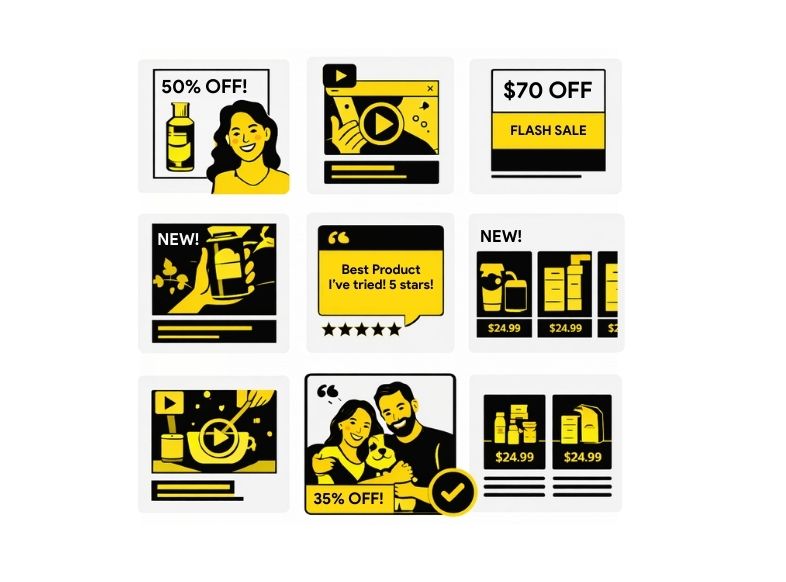
Smart advertisers roll out multiple creative concepts at once, each connecting with different buyer motivations. Classic romantic imagery targets men buying gifts for partners. Self-care messaging hits women shopping for themselves. Friendship celebration content reaches non-romantic buyers. This visual variety creates options that manual targeting never could.
Deploying Diverse Visual Concepts for Specific Buyer Motivations
When brands launch campaigns with varied creative concepts, Meta's algorithm automatically tests different audience segments. The platform spots which visuals drive engagement and optimizes delivery toward receptive users.
Valentine's Day covers multiple emotional spaces. Traditional romance represents one segment, but self-love and personal treats have grown as cultural attitudes shift. Friendship celebrations create extra purchase chances. Each motivation needs a distinct visual language that speaks directly to that buyer's emotional state.
Lifestyle imagery works incredibly well because it helps buyers picture outcomes rather than just products. Show products in context: romantic dinner setups, luxury enjoyed solo, friends celebrating together. These scenarios trigger emotional responses that product shots alone can't achieve. Meta's data shows that advertisers who diversify their creative see measurable improvements: campaigns with image-generation features achieve 11% higher click-through rates and 7.6% higher conversion rates, while text-generation tools deliver a 3% higher CTR. This creative diversity enables Meta's AI-powered delivery system to better match specific visuals to receptive audience segments in real time (Social Media Today).
Deploy the "Big Three" content mix: User-Generated Content (UGC) for social proof, Creator-Generated Content (CGC) for professional angle-testing, and Employee-Generated Content (EGC) to humanize brands. Persona-specific hooks that combine recipient, budget, and urgency (e.g., "For him under $50" or "Arrives by Feb 14") effectively filter audiences during high-CPM periods.
Testing Creative Variations to Let the Algorithm Find Your Audience
Systematic creative testing represents the strongest optimization tool during Valentine's campaigns. Launch multiple variations across different ad sets, changing one element at a time. Test different imagery while keeping the copy the same, then test copy variations with winning visuals.
Urgency messaging gets increasingly powerful as Valentine's Day nears. Early campaigns focus on planning ahead and thoughtful selection. As deadlines approach, shift messaging toward last-minute solutions and guaranteed delivery. This staged approach keeps campaigns fresh while maintaining pressure.
Recommended ad formats include Reels and Stories at 15-30 seconds for persona-specific hooks, carousels for gift guides, and static images for deadline-focused messaging. The creative timeline should rotate through discovery, proof, urgency, and last-minute phases, matching buyer psychology throughout the shopping cycle.
The Gifting Lens: Designing Ads for the Purchaser, Not the Recipient
Most brands design Valentine's ads for gift recipients instead of purchasers. If men buy women's necklaces, ads need to speak to male concerns about gift-giving, not showcase features appealing to eventual wearers.
The purchaser's concerns differ dramatically from recipient preferences. Delivery timelines matter more than product details. Gift appropriateness creates anxiety that needs direct addressing. Price justification becomes important when buyers won't personally experience products. Messaging must acknowledge and solve these purchase barriers.
Female-Focused Content Targeted at Male Gift Buyers
Creating female-focused content for male buyers requires understanding the dynamics of a dual audience. Visuals should feature products on or for women, establishing desirability and appropriateness. The copy should speak directly to male buyers, addressing their concerns and simplifying decision-making.
Testimonials from women praising received gifts carry huge weight with male buyers, providing social proof that reduces purchase anxiety. Phrases like "She'll love this" or "The perfect gift she actually wants" address male uncertainty while maintaining product appeal.
Gift guides and curated collections reduce decision paralysis. Instead of overwhelming buyers with full catalogs, present pre-selected options organized by relationship stage, budget, or recipient personality. This curatorial approach positions brands as experts guiding uncertain buyers toward successful choices.
During peak sales windows, "scrappy" content (iPhone shots of product packaging or warehouse shipping boxes) often beats high-production studio ads because it feels more authentic and urgent. Clear delivery timelines, straightforward checkout, and gift-wrapping services prominently highlighted eliminate friction between purchase intent and the completed transaction.
Shifting the Creative Brief for High-Intent Gifting Periods
Creative briefs should evolve as Valentine's Day approaches, reflecting changing buyer psychology. Early campaigns educate and inspire. Mid-cycle campaigns emphasize selection and decision-making support. Final push campaigns focus entirely on urgency and last-minute solutions.
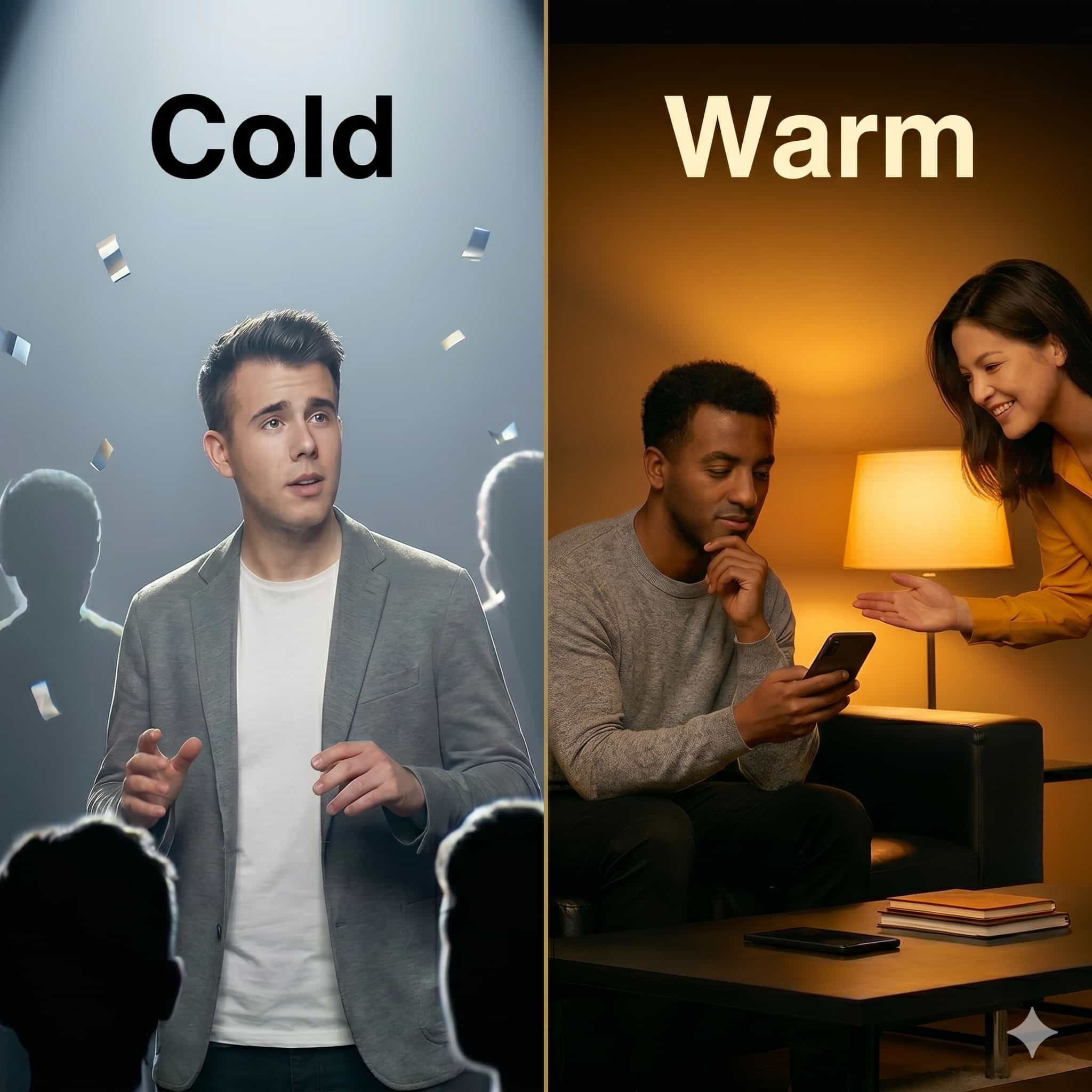
Use Meta for different funnel temperatures: cold audiences get discovery content that drives video views and engagement, warm audiences receive proof through UGC and reviews, and hot audiences emphasize urgency and delivery certainty. This layered approach aligns the message with readiness at every stage of the purchase journey.
Offer Simplicity: Why Momentum Is Your Money Maker
Valentine's Day shopping happens under emotional pressure in compressed timeframes. Buyers lack patience for complex promotions requiring calculations or comparisons. Offers need immediate clarity, removing decision friction rather than adding mental load.
Complicated tiered discounts create hesitation at the worst possible moment. When buyers must determine qualification, compare threshold values, or calculate final prices, doubt creeps into high-intent purchase moments. That doubt kills conversions, especially on mobile, where attention spans collapse.
Flat Discounts and BOGO Deals That Reduce Cognitive Friction
Flat percentage discounts communicate value instantly. Twenty percent off requires no calculation and applies universally across catalogs. Buyers understand immediately and can decide whether it meets expectations.
Buy-one-get-one offers work exceptionally well for Valentine's because they naturally suggest gifting plus personal enjoyment. Buyers justify purchases by splitting the value between gift and self-purchase. The offer structure feels generous without requiring complex rules.
Free shipping eliminates major purchase barriers without discount fatigue. Many Valentine's shoppers care more about convenience than price reduction. Consider offering free expedited shipping as the primary promotion for maximum impact. Additional effective options include simple bundles, gift wrap services, and personalization (all with single calls to action and clear delivery windows).
Avoiding Complex Tiered Structures That Kill Conversions
Tiered discounts sound sophisticated, but often underperform simple offers. Structures like "15% off $50, 20% off $100, 25% off $150" force buyers to calculate optimal purchase amounts, interrupting emotional buying momentum.
Minimum purchase requirements create negative friction. While they boost average order values for converting customers, they cause abandonment among buyers who do not meet thresholds. During Valentine's season, brands need maximum conversion volume, not just higher individual orders.
For pre-orders, consider small discounts, bonus items, or free early delivery to build early momentum. Avoid putting "speed bumps on a runway" during peak days. Once ads start scaling, maintain consistency in account structure and offers throughout the shopping window.
Stock the Pond: Your Pre-Valentine's Lead Generation Strategy
Smart Valentine's campaigns begin weeks before February's advertising surge. Building warm audiences during January positions brands to dominate during peak shopping days when CPMs spike and competition intensifies. Brands need people already familiar with them when the buying frenzy begins.
Early lead generation identifies interested prospects at low cost, builds retargeting pools that convert efficiently later, and generates social proof through engagement. This foundation makes peak-season campaigns dramatically more effective by enabling advertising to reach warm audiences rather than cold traffic.
Building Retargeting Pools Before February CPMs Spike
January traffic costs significantly less than February traffic for most eCommerce brands. Use this window to build large retargeting audiences through engagement campaigns, traffic objectives, and catalog browsing. These pools of interested users become the highest-converting audiences when Valentine's shopping reaches peak intensity.
Retargeting converts three to five times better than cold prospecting because it reaches people already familiar with brands. During Valentine's week, when every impression costs more, this efficiency advantage directly translates into profitability.
Engagement campaigns during January cost pennies per interaction compared to conversion-focused campaigns. Brands can build massive awareness pools by promoting content, encouraging video views, and driving profile visits. These engaged audiences see conversion-focused ads later with much higher receptivity.
Generating Social Proof and Engagement at Low Cost
Social proof accumulates over time and becomes increasingly valuable as holidays approach. Posts with high engagement attract more attention and generate credibility. Reviews, comments, and shares from early campaigns provide validation, influencing later buyers' decisions between multiple brands.
User-generated content campaigns in January provide material for February's ads. Encouraging customers to share photos and testimonials creates authentic content that outperforms branded creative because it provides peer validation that emotional buyers trust more than corporate messaging.
Simple contests with entry requirements, such as email submissions or profile follows, create owned audiences that brands can activate through paid advertising. This approach "stocks the pond" so higher-cost paid ads in February can focus on new customers while email and retention flows handle returning purchasers more efficiently.
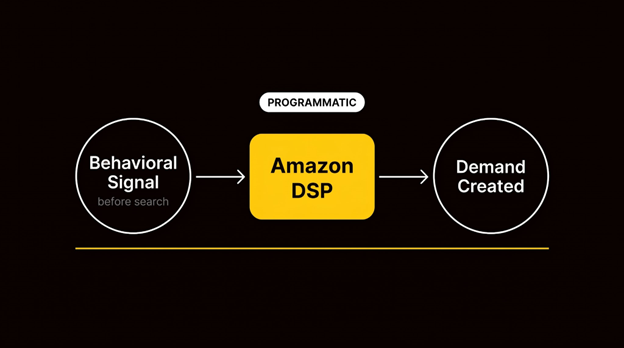
Brands should also recognize that high Meta spend drives branded search spikes on platforms like Amazon. Make sure Amazon listings optimize with "gift" keywords to capture shoppers who see Meta ads but prefer Prime shipping checkout.
Post-Click Optimization: Funnel Congruency and Mobile Speed
Converting clicks into sales requires flawless post-ad execution. Landing page experience must deliver on ad creative promises. Gaps between ad messages and landing pages undermine conversion rates because buyers feel misled or confused.
Mobile optimization becomes non-negotiable during Valentine's because mobile shopping dominates seasonal purchase behavior. If mobile experiences frustrate buyers, they simply move to competitors whose sites work better. Speed and simplicity determine whether clicks become customers.
Matching Your Landing Page to Your Ad Hook
"Funnel congruency" means complete alignment between ad creative and landing experience. When ads promote specific products or collections, clicks should deliver that exact experience. Generic homepage traffic creates confusion and reduces conversion because buyers must re-navigate to find what initially interested them.
Dedicated landing pages for specific ad campaigns consistently outperform generic product pages. Brands control narratives, eliminate distractions, and guide buyers toward conversion with purpose. Landing page copy should echo ad messaging while expanding on key benefits and addressing purchase objections.
Visual consistency reinforces trust and reduces bounce rates. If ads feature specific product imagery, colors, or lifestyle photography, landing pages should reflect that aesthetic. Dramatic visual shifts create subconscious doubt about whether buyers reached the right destination.
For high-value or technical products, use long-form presell pages to overcome objections and build an emotional case before revealing prices. If ads sell the "sizzle" of romantic rituals, landing pages must explain those rituals in detail before requesting purchases.
Why Your Store Must Load in Under Two Seconds on Mobile
Page speed directly impacts conversion rates, with delays of even 1 second causing measurable increases in abandonment. Research from Google shows that 53% of mobile visitors abandon pages that take longer than 3 seconds to load (Think with Google). Valentine's shoppers under time pressure have zero tolerance for slow-loading pages.
Technical optimization requires systematic attention to image compression, code efficiency, and server response times. Heavy images, unnecessary scripts, and slow backend processes all contribute to load delays, costing sales. Google's Core Web Vitals provide clear benchmarks: Largest Contentful Paint within 2.5 seconds, Interaction To Next Paint under 200 milliseconds, and Cumulative Layout Shift below 0.1 (Google Search Central).
Website elements like countdown timers (24-hour resets) and stock counts ("Only 50 left") capitalize on high intent and drive immediate action, but only when pages load fast enough to display them.
Pilothouse Digital specializes in comprehensive eCommerce optimization, including technical performance alongside media buying and creative development, addressing speed issues as critically as any advertising optimization.
Launch Your Valentine's Day Meta Ads Strategy Today
Valentine's Day success requires integrating persona-driven creative, simplified offers, pre-holiday audience-building, and optimized post-click experiences into a cohesive system. These five strategies function as an interconnected approach: timing ("stock the pond") enables creative testing, which feeds the "gifting lens" approach, supported by simple offers, and captured by optimized landing experiences.
Start immediately. Early campaigns cost less, build valuable audiences, and generate learning to improve peak-season performance. Brands that dominate Valentine's advertising begin strategic execution weeks in advance, not in February.
Creative diversity matters more than ever in Meta's current algorithm environment. Deploy varied visual concepts speaking to distinct buyer motivations through the "Big Three" content mix. Test systematically to identify winning combinations. Let the platform's machine learning find the best audiences based on creative signal quality.
Pilothouse Digital has driven over $1B+ in attributable revenue through strategic seasonal campaigns that transform Valentine's chaos into systematic growth. Contact the team to build meta ads strategies for Valentine's Day promotions that capitalize on this high-intent seasonal opportunity.


%20(1).jpg)








.png)


.webp)


.webp)