Sequence Learning: How Meta's GEM Predicts the Path to Purchase

Meta's advertising infrastructure has shifted from simply showing ads to predicting what consumers will do next. At the heart of this transformation sits GEM, the Generative Ads Recommendation Model, a system that treats every click, view, and conversion not as random moments but as connected steps in a journey. This approach, powered by sequence learning, fundamentally changes how brands should think about advertising on the platform.
GEM maps the messy patterns of customer behavior, learning which sequences of interactions actually lead to conversions. For brands scaling from $5M to $30M and beyond, this shift from reaction to prediction creates entirely new opportunities for growth.

What Is Meta's GEM and Why Sequence Learning Matters
The Machine Learning Super Brain Behind Modern Ad Delivery
GEM functions as Meta's decision engine for ad delivery, processing billions of user interactions to understand what drives conversions. According to Meta's engineering documentation, GEM represents a new foundation model that delivers 4x the efficiency of Meta's previous generation of ad recommendation ranking models (Engineering at Meta). Unlike older systems that evaluated single actions in isolation, GEM considers the full context of user behavior to predict what users will do next.
This machine learning architecture operates continuously, refining its understanding of consumer patterns across Meta's entire ecosystem. Industry analysis describes GEM as "central intelligence," identifying patterns across interactions to predict resonant content.
From Single Actions to Full Path-to-Purchase Prediction
Traditional advertising systems focused on immediate response. GEM breaks this binary thinking by treating purchase as the culmination of a sequence of actions. The model tracks how users progress through awareness, consideration, and intent. A user might watch your video ad today, engage with a carousel three days later, then convert after seeing a testimonial next week. GEM learns these sequential patterns across millions of users, identifying which sequences most reliably lead to conversions.
This sequence-to-sequence learning borrows concepts from natural language processing, where context matters as much as individual words. For brands, this means early-funnel content plays a bigger role than traditional metrics suggest. That educational video that doesn't directly drive conversions may still be shaping purchase behavior weeks later. Meta's published data shows GEM delivered a 5% increase in ad conversions on Instagram and a 3% increase on Facebook Feed following its broader rollout.
The Interconnected Ecosystem: Lattice, Andromeda, and GEM
Meta's ad delivery system operates through three interconnected components. Lattice serves as Meta's unified ad ranking architecture, replacing numerous smaller models that were previously optimized for individual campaign objectives and surfaces. Meta's official documentation describes Lattice as generalizing learnings across campaign objectives and surfaces, enabling larger models to learn more about the steps people take in their purchase journey. This architecture increased ad quality by almost 12% and ad conversions by up to 6% (Meta).
Andromeda functions as Meta's personalized ads retrieval engine, determining which advertisements are eligible to be shown to specific users. Meta's documentation describes Andromeda as using deep neural networks to evaluate creative content, historical engagement patterns, and user behavior to predict ad performance, and as shifting to a creative-first matching approach that evaluates creatives before audiences. GEM then acts as the central intelligence layer, feeding insights into Andromeda and Lattice to continuously improve ad performance.
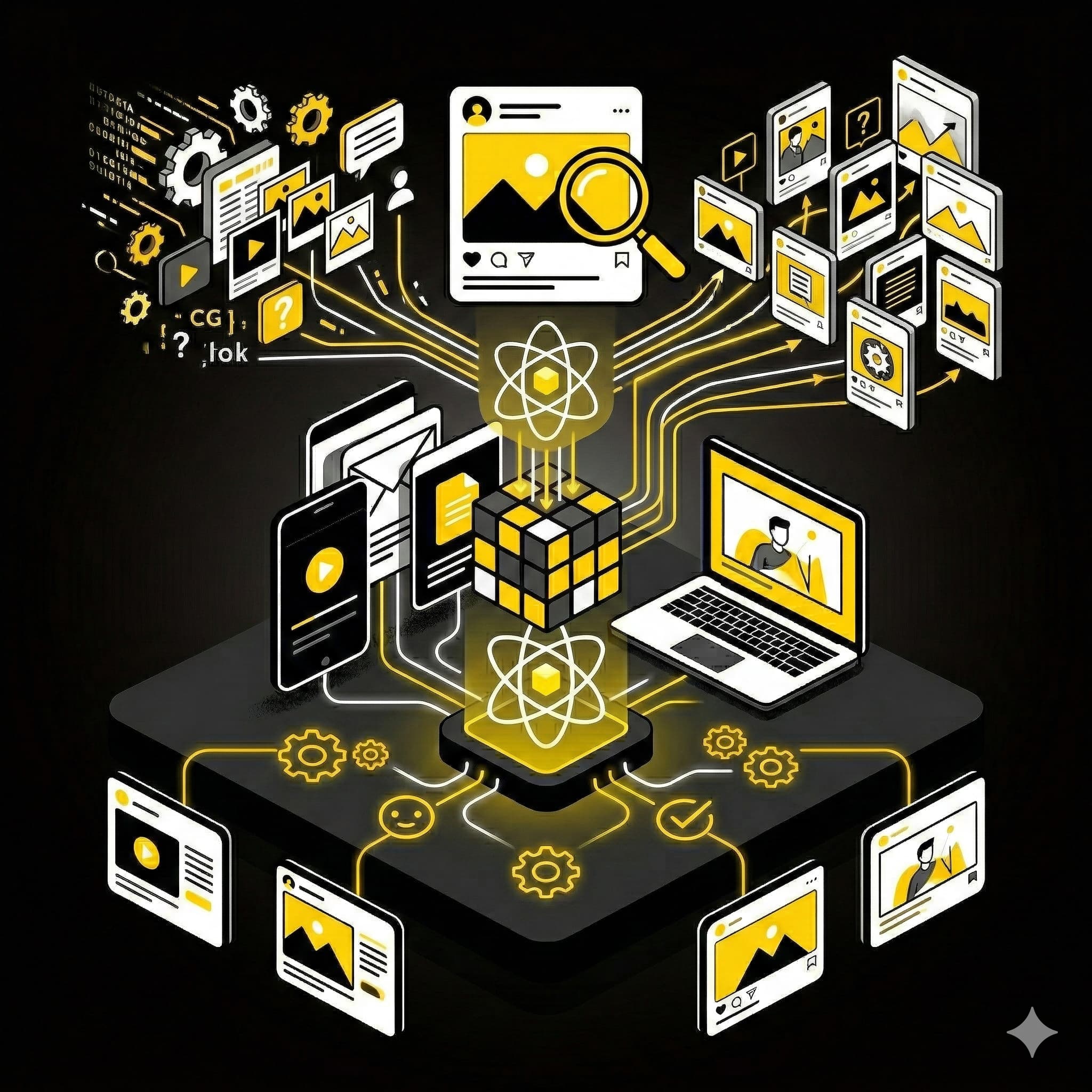
GEM provides the intelligence layer, analyzing interaction sequences to determine user intent and journey stage. If GEM indicates a user is in early consideration based on their sequence, Andromeda prioritizes educational content. Users showing intent signals see more direct-response messaging. The relationship creates a feedback loop: Andromeda's creative choices generate interaction data, which GEM uses to refine sequence predictions.
Why Creative Is the New Targeting
Platform changes have shifted power from audience targeting to creative strategy. Privacy updates limited tracking, and iOS changes reduced data granularity. In response, Meta's algorithms doubled down on creative analysis as the primary signal for finding customers.
GEM uses computer vision to analyze every frame of video content, identifying products, settings, people, emotions, and visual styles. Text analysis goes beyond keyword matching to understand message tone, value propositions, and calls to action. The system tracks creative performance across different contexts, learning which formats work in feed versus Stories or with different demographics.
Meta's platform sees millions of active ads at any moment. GEM and Andromeda narrow this inventory to the handful most likely to resonate with each user through multiple filtering stages. Within milliseconds, they select a specific ad to show. This process explains why creative diversity matters. Meta's Creative Diversity metrics reveal that similar creatives sharing the same Entity ID share learnings and limit reach to new audiences. A campaign with ten distinct creative approaches outperforms one with ten minor variations because it offers genuine optionality for matching against different user profiles and journey stages.
Best Practices for Feeding the Sequence Learning Algorithm
Prioritize Creative Diversity and Big Swings Over Minor Iterations
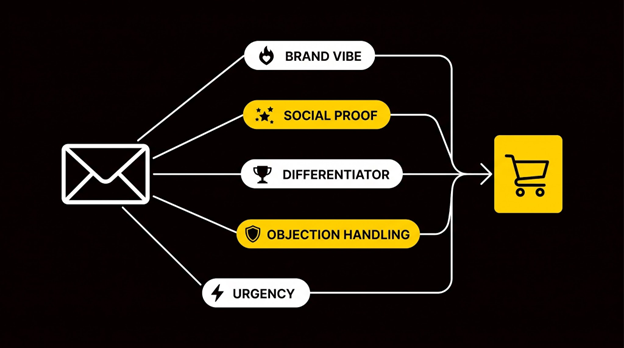
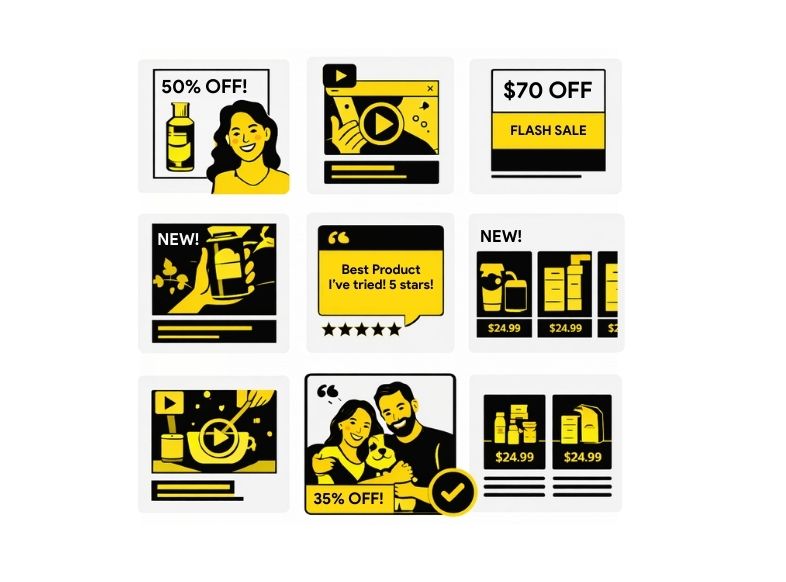
Launch campaigns with meaningfully different creative approaches rather than slight variations. Test fundamentally different messaging angles, visual styles, and information structures. One ad might lead with social proof, while another emphasizes product benefits, and a third creates an emotional connection. This diversity gives GEM data about which approaches work for different user sequences.
Creative sets should serve different journey stages: awareness content that introduces the brand, consideration content that educates on benefits, and conversion content that addresses objections. Providing creative for each sequence stage gives GEM the inputs needed to construct complete customer journeys.
Creative sets should include a meaningful mix of images, videos, and headlines to provide sufficient diversity without overwhelming the algorithm.
Why Your Video Hook Determines How Far Your Ad Travels
Meta's advertiser documentation consistently identifies the opening seconds of video as the highest-leverage creative moment, the point at which the algorithm registers engagement signals that influence delivery. Creative that fails to capture attention early generates weaker engagement data, which feeds back into how broadly the system distributes the ad.
Structure video content to deliver value immediately. Lead with your strongest visual, most compelling message, or clearest product demonstration. Introductory sequences and gradual reveals waste the most valuable seconds. Users decide whether to keep watching almost instantly. When users consistently watch for more than 3 seconds, the algorithm interprets this as a positive signal and increases delivery. Videos that lose viewers immediately are quickly deprioritized.
Persona Alignment: The Strategic Shift to Who and Why
Traditional marketing focused on demographic targeting: age, gender, location, and income level. Sequence learning shifts focus toward psychographic understanding and behavioral patterns. GEM doesn't just ask who your customers are; it asks why they buy and how they progress toward purchase.
Developing persona alignment starts with mapping customer journeys. Identify common sequences that lead to conversion. Build a creative that speaks to motivations rather than attributes. Someone might buy your product because it saves time, enhances status, solves a persistent problem, or aligns with values. These motivations drive behavior more powerfully than demographics.
This approach expands addressable audiences. GEM can find new customers who exhibit similar sequential reasoning patterns and respond to the same motivational messaging, even if they differ demographically. Test creative that speaks to different motivational drivers: efficiency, quality and craftsmanship, environmental impact, or social responsibility. Users will self-select based on what resonates, and GEM will learn which motivational messages predict strong sequences for different segments.
What Sequence Learning Requires (And When It May Not Work)
Minimum Data and Budget Thresholds
GEM's sequence learning requires a significant volume of conversions to identify meaningful patterns. Brands spending under $10,000 monthly or generating fewer than 50 weekly conversions may see extended learning periods. The algorithm needs sufficient data to distinguish signal from noise in sequential patterns. Expect 4-6 weeks of learning before optimization gains traction at lower volumes, compared to 2-3 weeks for higher-volume accounts.
Budget scaling also matters. Gradual budget scaling, typically in incremental steps rather than sudden jumps, helps maintain algorithmic stability during high-demand periods, preventing the system from resetting its learned patterns. Sudden budget jumps reset the learning phase, forcing the algorithm to reestablish patterns.
The Learning Period Trade-Off
Introducing new creative concepts triggers a learning period where performance typically dips before improving. Expect 2-4 weeks of suboptimal results as the algorithm maps sequential patterns for the new creative. However, this trade-off compounds positively over time. Rebuilding campaigns with creative optimization and tracking improvements can dramatically boost conversions while reducing cost per result, but results compound most significantly after the initial learning period stabilizes.
When Traditional Approaches Still Work
Direct-response brands with single-session purchase journeys may see less dramatic improvements from sequence learning. Products under $50 with impulse-purchase characteristics often perform adequately with traditional optimization. Sequence learning delivers the biggest gains for considered-purchase categories, subscription models, and higher-ticket items, where customers naturally progress through awareness, evaluation, and decision stages over days or weeks.
The Technical Infrastructure Requirements
Proper tracking infrastructure is non-negotiable. Implementing Pixel combined with the Conversions API for server-side tracking improves data match quality and stabilizes ROAS by providing cleaner signals to Meta's algorithm. Without accurate event tracking, GEM can't connect sequences to outcomes. The algorithm also requires consistent conversion events. Switching conversion objectives mid-campaign disrupts the learning process.
Putting Sequence Learning to Work for Your Brand
Audit Your Creative Library First
Implementing a sequence learning strategy requires coordinating creative, campaign structure, and measurement. Start by auditing your current creative library. Do you have genuinely diverse creative or variations on a single theme? Can you map your creative to different journey stages?
Build a Testing Framework Around Learning
Develop a creative testing framework that prioritizes learning over immediate performance. Launch new concepts against proven controls, giving the algorithm time to optimize delivery. Shifting from boosted posts to a full-funnel Meta strategy with precise tracking and high-impact creatives can generate substantial revenue growth, with brands commonly reporting ROAS improvements of several multiples once sequence learning stabilizes.
The transformation required upfront investment in creative development and tracking infrastructure, but the compounding returns justified the initial costs.
Structure Campaigns to Support Sequence Optimization
Structure campaigns to support sequence optimization. Don't use overly narrow targeting that limits GEM's ability to find sequential patterns across broader audiences. Use Advantage+ campaigns where appropriate, allowing the algorithm maximum flexibility. Feed the system with conversion data through proper pixel implementation so it can connect sequences to outcomes.
Measure Performance Through a Sequential Lens
Measure performance through a sequential lens. Track metrics across the full funnel, not just last-click conversions. Users who engage with awareness content today might convert next week, but traditional attribution misses this connection. GEM sees the full sequence; your reporting should too.
Why Expertise in These Systems Pays Off
For brands serious about growth, partnering with teams that understand these systems creates a competitive advantage. Working with Pilothouse and their expertise in modern Meta advertising helps brands structure campaigns, develop creative, and interpret data in ways that align with how algorithms actually work. The complexity of modern advertising platforms rewards expertise in properly feeding sequence-learning systems.
The Bottom Line
Sequence learning represents a fundamental shift in how advertising works. The path forward requires diverse, creative, and sequential thinking, along with patience during learning periods. It demands proper tracking infrastructure and acceptance of short-term performance dips in exchange for long-term gains. Meta's GEM has already changed how advertising works. The question is whether your strategy has caught up.


%20(1).jpg)





.png)



.webp)


.webp)