Ecommerce Growth Strategy: Acquisition, Retention, and AOV Levers

Ask any marketing director at a $10M+ DTC brandwhere growth will come from this year, and the answer often reveals theproblem. If the response centers on fixing attribution, tweaking ad accounts,or adding a new channel, that's tactical spin dressed up as strategy, and it'sthe reason so many brands plateau right at the moment they need to scalefurther. A true ecommerce growth strategy doesn't live inside a singleplatform. It governs everything the platform touches.

Why Ecommerce Growth Demands a Strategic Framework, Not Random Tactics
Most brands that cross the $10M+ mark got there through hustle and trial and error. That approach stops working at scale. Channels multiply, creative volume grows, and without a governing framework, teams end up optimizing in isolated silos, defending spend with vague metrics instead of a system tied to P&L outcomes.
An effective ecommerce growth strategy replaces that chaos with structure. It forces a brand to define who its customer is, how that customer moves toward a purchase, and where the real leverage points sit in the business. This is what separates brands that compound growth year over year from those stuck rerunning the same tactics with diminishing returns.
The Three Core Levers: Acquisition, Retention, and AOV
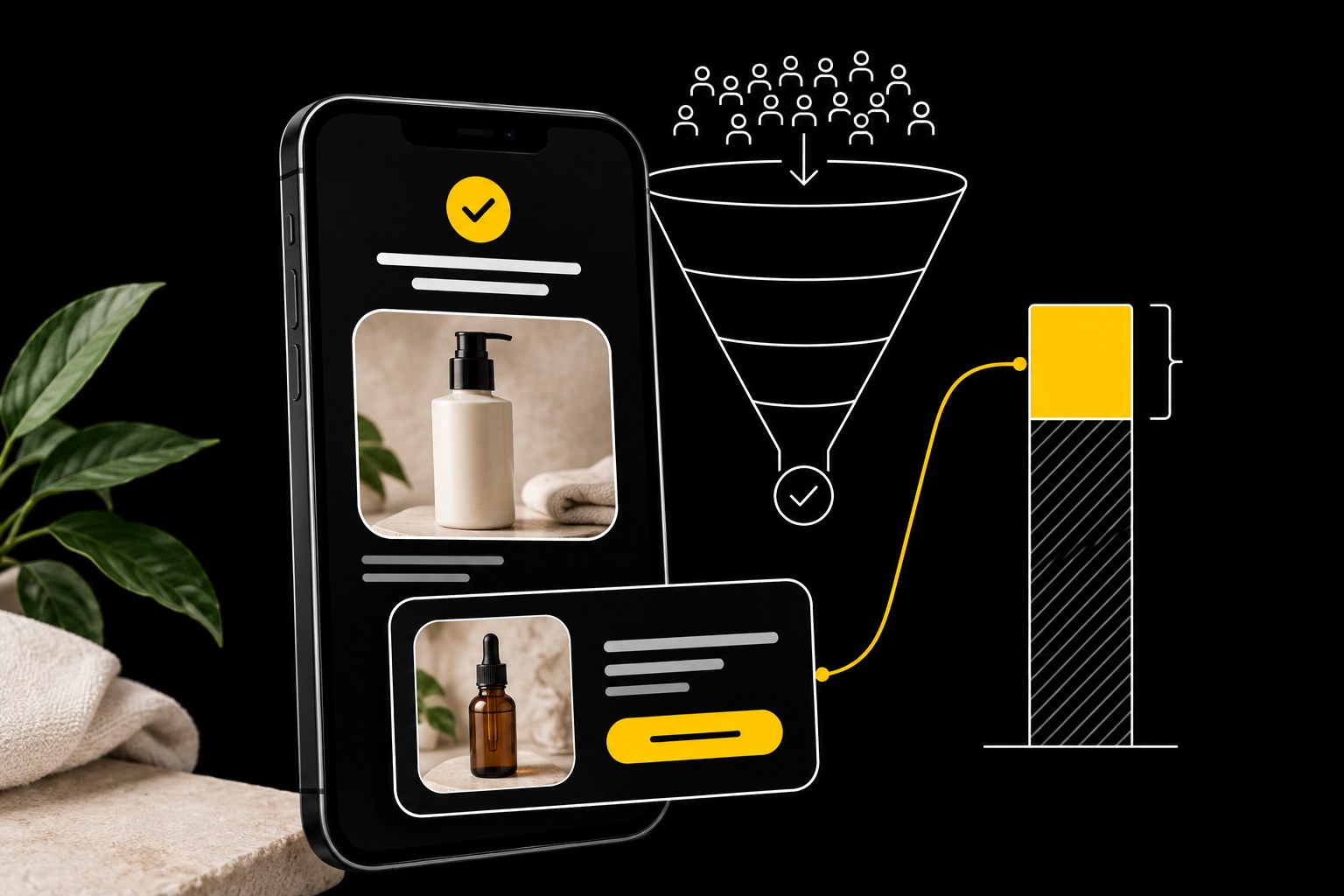
Every ecommerce growth strategy, regardless of category or channel mix, comes down to three levers. Acquisition brings new, qualified customers into the funnel, AOV increases what each transaction is worth, and retention extends the relationship and multiplies LTV. Brands that treat these as separate departments, each with its own KPIs and no shared logic, tend to make progress on one lever while quietly eroding another.
The brands that scale past the plateau treat these three levers as interconnected parts of a single system, one where a decision in the acquisition funnel has downstream effects on AOV and retention, and vice versa.
Acquisition Efficiency: Building a Customer-Centric Message Strategy
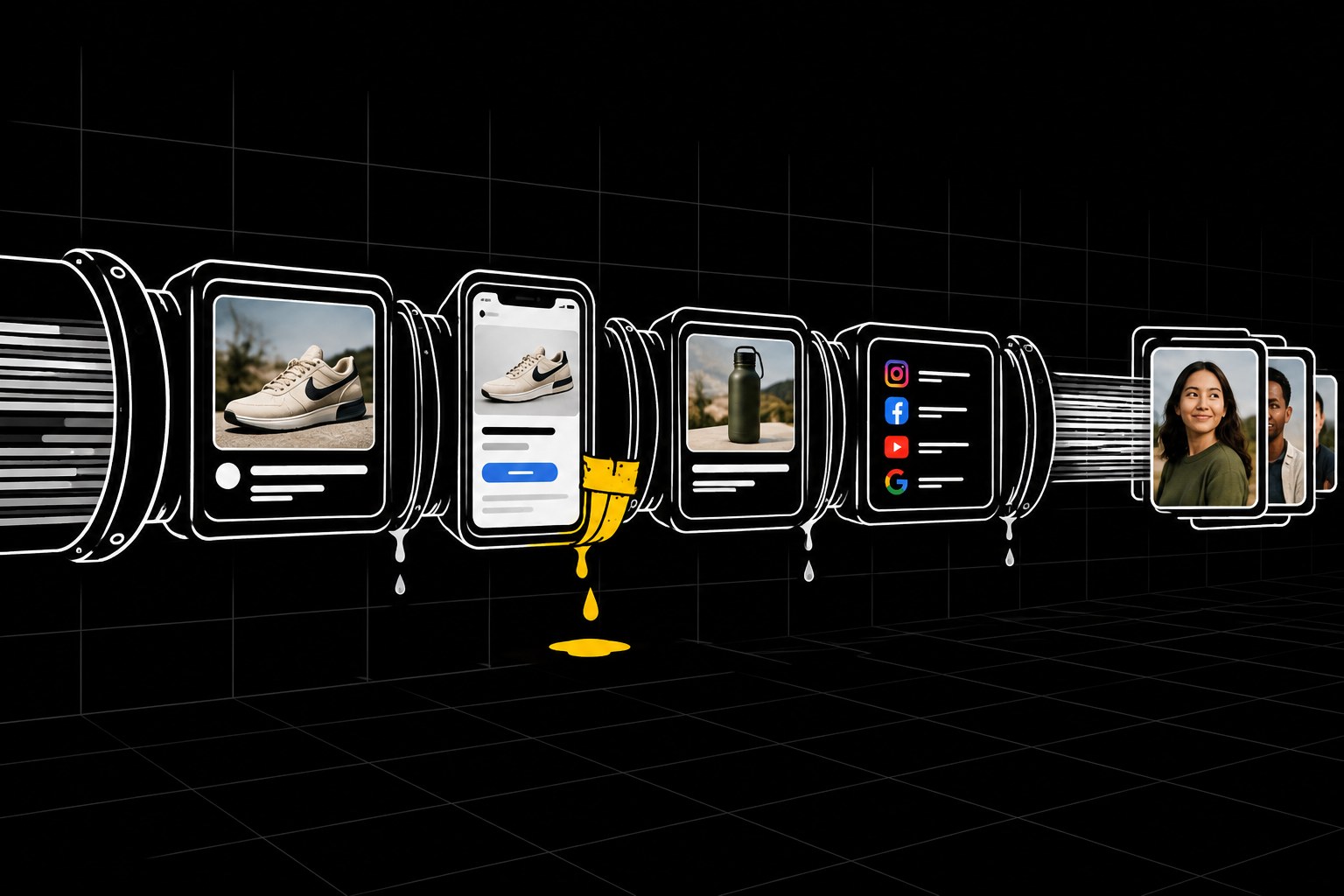
In-platform ROAS and channel-isolated optimization tell a brand how a specific ad performed inside a specific auction, but they say nothing about whether the underlying message actually moves a stranger toward becoming a customer. Brands chasing marginal ROAS gains channel by channel usually end up iterating endlessly on creative without ever validating the message doing the heavy lifting.
Duncan Ferguson, Strategy Lead at Pilothouse, laid out a different approach on Episode 595 of Pilothouse's podcast, "5 Messages That Scale DTC Growth," alongside host Eric Dick. Their core thesis: brands cannot growth-hack or iterate their way into sustainable scale. They need a governing customer-centric engine directing every channel, not a collection of channel-specific hacks competing for budget.
Mapping the Customer Journey
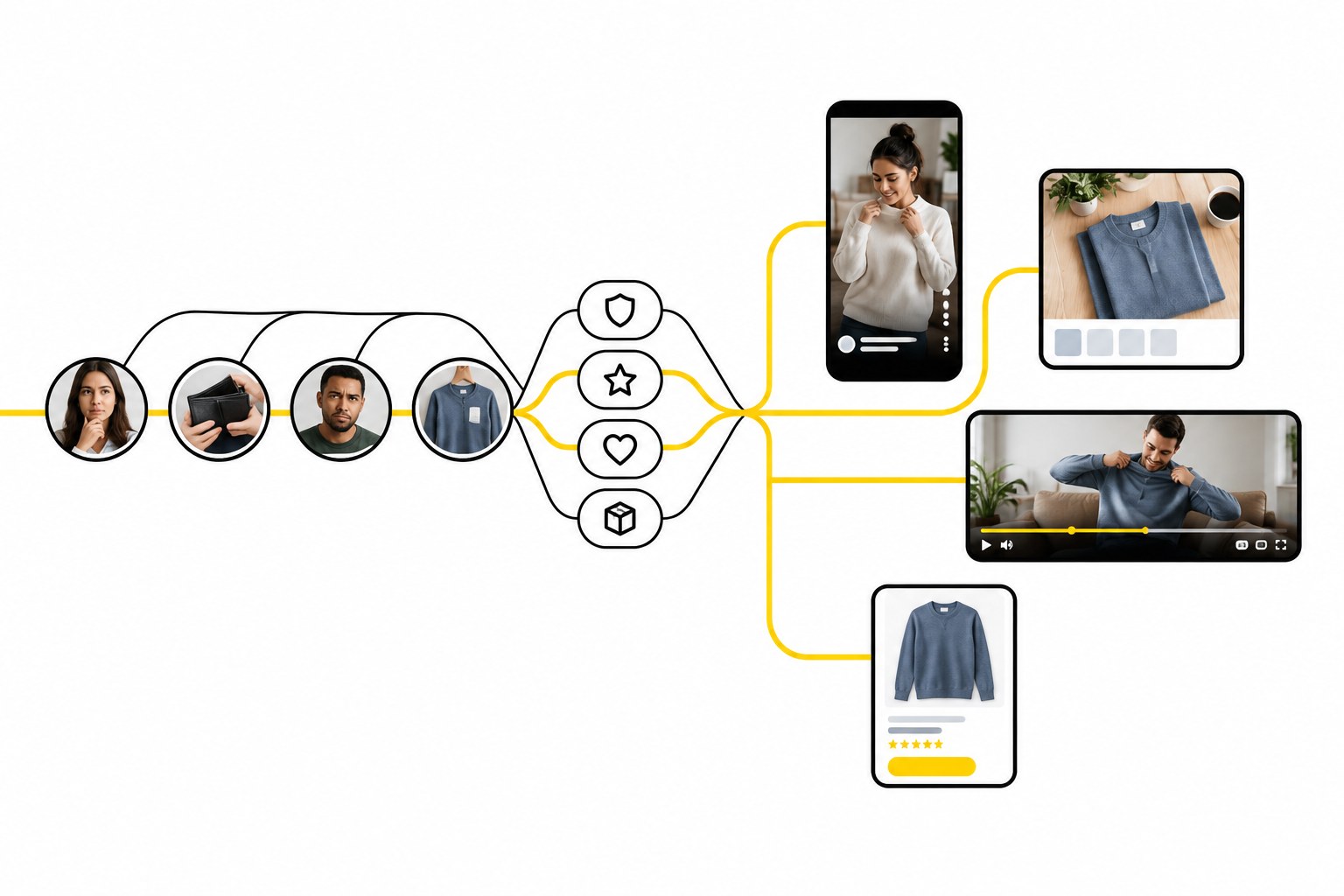
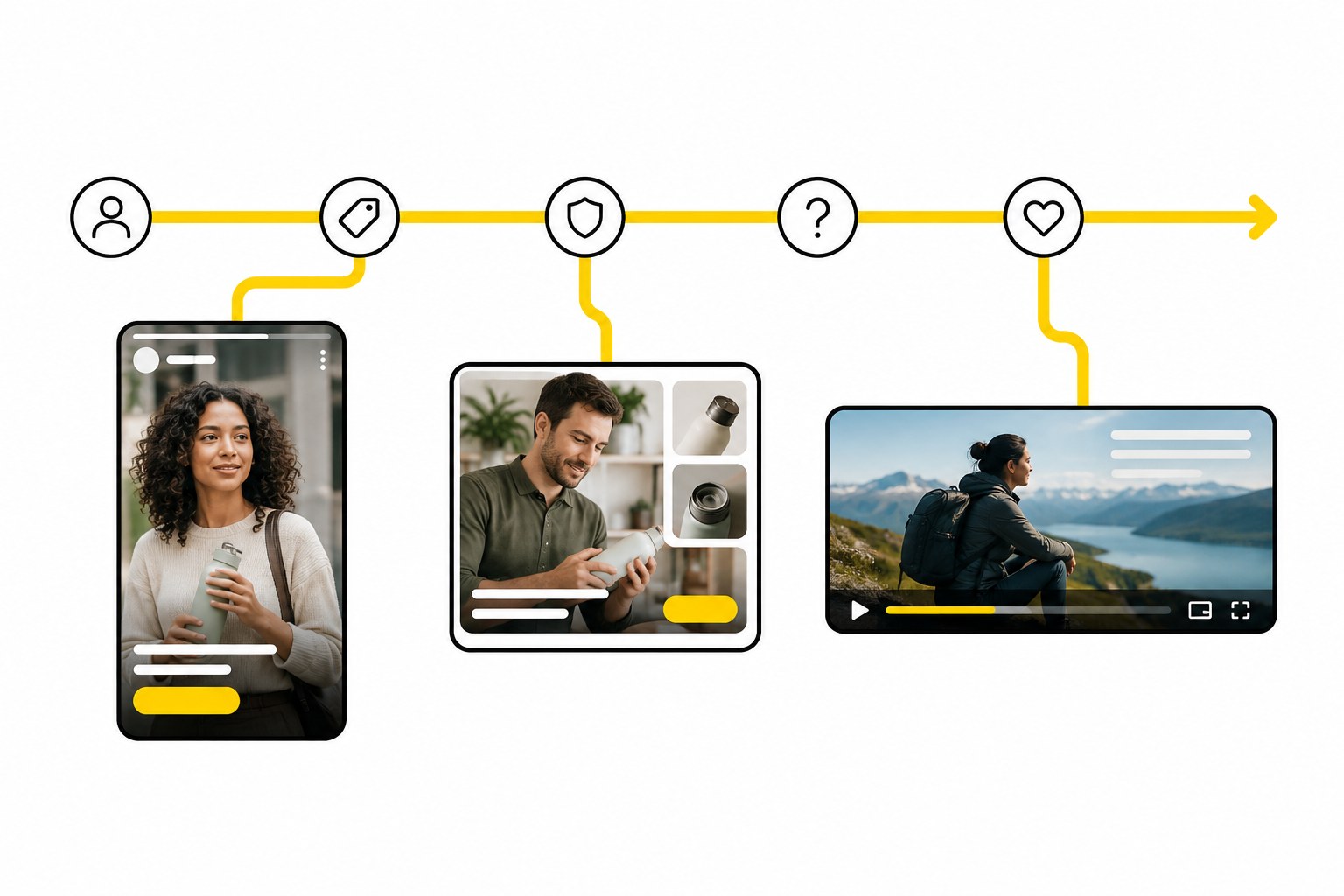
The mechanism starts with identifying the ideal customer, then mapping the journey that customer takes toward a purchase. That journey typically surfaces a handful of objections that need to be cleared before a purchase happens, things like price sensitivity, skepticism about product claims, and plain uncertainty about fit. Mapping this journey turns abstract personas into a concrete sequence of moments a brand's marketing needs to address, so every creative and media decision downstream is more defensible.
Defining the 3-5 Core Messages That Scale Across Channels
Once the journey is mapped, the next step is distilling it into the three to five core messages that address the biggest objections standing between awareness and purchase. This is a deliberately narrow list. Pilothouse's framework holds that mastering a small set of validated, objection-clearing messages beats churning out a high volume of small ad iterations that never get tested against a real thesis.
These core messages become the backbone of creative production across every channel: Meta, TikTok, YouTube, Amazon. Instead of treating each platform as its own creative brief, the message strategy scales across all of them, adapted in format but consistent in substance. This turns marketing output into a long-term strategic asset rather than a pile of disposable ad tests.
The AOV Lever: Strategic Bundling for Sustainable Growth
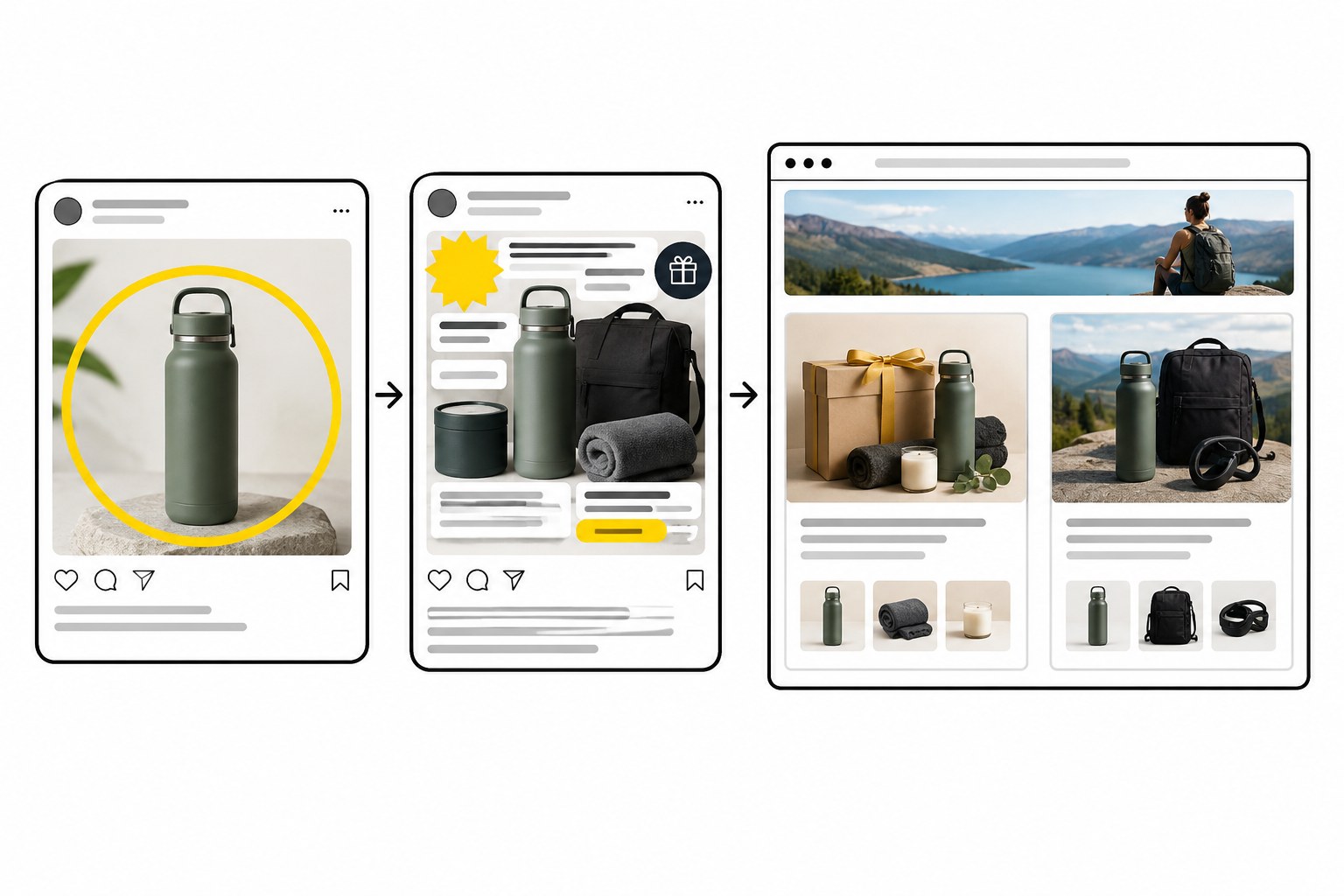
Once acquisition messaging is doing its job, the next lever to pull is AOV. Bundling is one of the most talked-about AOV tactics in ecommerce, and one of the most frequently misapplied. Done well, it increases order value without discounting the brand's core offer. Done poorly, it adds friction exactly where a brand can least afford it: the first interaction with a new, unproven customer.
Why Bundling Cold Traffic Can Backfire
Avery Valerio, known as Aves, Host and Creative Strategist at Pilothouse, addressed this directly on Ep 39: Bundles Aren't Discounts. They're Strategy" episode. Pushing a multi-item bundle on cold, top-of-funnel traffic carries real risk, because it overloads a viewer with too much context inside the roughly three-to-five second attention window of a video ad impression. A stranger scrolling past a video ad hasn't yet decided they trust a single product, let alone three of them packaged together.
There's a notable exception: categories that are naturally sets-based or lower-AOV by default, like jewelry or fashion socks, where multi-piece bundles match what buyers already expect. Outside those categories, first-time buyers generally need a simpler decision.
Mastering the Hero Product Before You Bundle
The sequencing rule Pilothouse applies is straightforward: a brand has to master selling a single, autonomous hero product before it attempts to bundle for cold traffic. As Avery Valerio put it on Ep 39, "If you don't know how to sell a single product, you shouldn't even think about bundling." Skipping this step confuses first-time buyers and adds friction to a decision that should be simple.
Once that hero product converts reliably on its own, bundling can move to a dedicated landing page built specifically for the promotion, offering first-time buyers something exclusive, like tiered discounts or a bonus add-on, without touching or diluting the core PDP's conversion path.
Persona-Driven Bundles for Returning Customers
Returning customers are a different story, and this is where bundling turns into a real AOV lever instead of a risk. Pilothouse builds these bundles around the persona, not a generic template. Gift-buyers respond to multi-item packs, gift wrap, or engraving options, while functional shoppers respond better to a core product paired with accessories or an extended warranty. Segmenting returning customers by intent, rather than bundling the same way for everyone, is what turns this AOV strategy into consistent, incremental revenue.
The Retention Lever: Maximizing Email List Net Present Value
A lot of brands leave real money on the table here, largely because email gets treated as a secondary channel for periodic discount blasts rather than a serious revenue engine. Jordan Gordon, Head of Email, Retention, and CRO at Pilothouse, discussed a different framing on Episode 583, "Counter Intuitive Ways to Maximize Net Present Value from Your Email List," alongside Eric Dick from DTC Podcast.
Turning Email into a Bottom-of-Funnel Revenue Engine
The core mechanism: email and retention work as the bottom-of-funnel engine that drives low-cost revenue, which improves overall MER and frees up capital to redeploy into acquisition testing. Because email revenue comes at a lower marginal cost than paid acquisition, a healthy list effectively subsidizes the acquisition experiments a brand needs to run to keep growing.
Pilothouse's own client data illustrates the scale of this effect: multi-channel Pilothouse brands using its email service show median year-over-year Shopify revenue growth 3.3 times higher than brands that don't, alongside lower MERs. That's a self-reported result specific to Pilothouse's client base rather than an industry-wide benchmark, but it points to how much value sits in a well-managed list.
Balancing Educational Content with Promotional Sends
Getting that value requires the right content mix. Non-promotional, educational or craft-focused sends build habit and raise open and click-through rates across all campaigns over time, even though they tend to generate lower immediate revenue per send than a straight discount email. Managing the list this way means thinking in terms of a multi-year customer lifecycle and a growing mailable audience, not just the next campaign's revenue number.
High-Velocity Funnels: From Email Click to Cart
The other half of the equation is what happens after the click. Pairing high-engagement content emails with high-velocity site funnels, ones that move a subscriber from entry point to cart in as few clicks as possible, keeps the goodwill built by educational content from getting lost in a clunky path to purchase.
There's also a valuation angle worth noting: a larger, engaged email list paired with an optimized funnel is widely viewed as a durable, owned asset that can support a brand's valuation even when top-line revenue stays flat.
VSSL's work with Pilothouse illustrates what this can look like in practice. Growth came from an integrated retention approach, one that treated the existing list as a genuine revenue engine rather than a secondary channel, without leaning on incremental ad spend to drive the gains. The full VSSL case study breaks down how that engine was built.
How the Three Levers Work Together to Compound Growth
None of these levers works in isolation. Validated acquisition messaging creates qualified traffic. Hero-product-first, persona-driven bundling then upsells that traffic without adding the conversion risk that comes from bundling on cold audiences. NPV-maximizing email revenue improves MER and generates the capital needed to fund further acquisition testing. Each lever feeds the next.
In Pilothouse's experience, brands that over-index on one lever, usually acquisition, are the ones that hit a plateau this framework is built to solve. Pouring more budget into paid media while ignoring AOV and retention is a common way brands try to force growth, and it's a large part of why growth stops scaling efficiently past $10M. Rebalancing across all three levers, governed by the same customer-centric engine, is what makes an ecommerce growth strategy defensible to stakeholders rather than a rotating set of bets on individual channels.
Partnering with Pilothouse Digital to Scale Your Ecommerce Growth Strategy
Pilothouse Digital is an integrated growth agency helping DTC ecommerce brands at the $10M+ inflection point scale with defensible growth. The agency works as a full-funnel performance marketing partner to brands including Benchmade, Hestan Culinary, Big Blanket, Sheertex, and General Mills, with over 160 specialists producing more than 5,000 creative assets monthly and $3B+ in attributable revenue driven across its client base.
What Makes the Approach Different
Pilothouse refuses to treat acquisition, AOV, and retention as separate mandates. Creative strategy, media buying, and lifecycle marketing get built around the same customer journey and the same objection-clearing messages, so growth stays connected to a system rather than a collection of channel wins. For brands stuck at the $10M+ plateau, the constraint usually isn’t effort. It’s the missing link between those three levers and real P&L outcomes, and that’s the gap an integrated partner closes where another point solution can’t.
Onboarding typically begins within 5 to 10 business days of signing, which matters for brands that have already lost time to tactical spin. More examples of how this plays out in practice are available on Pilothouse's case studies page.