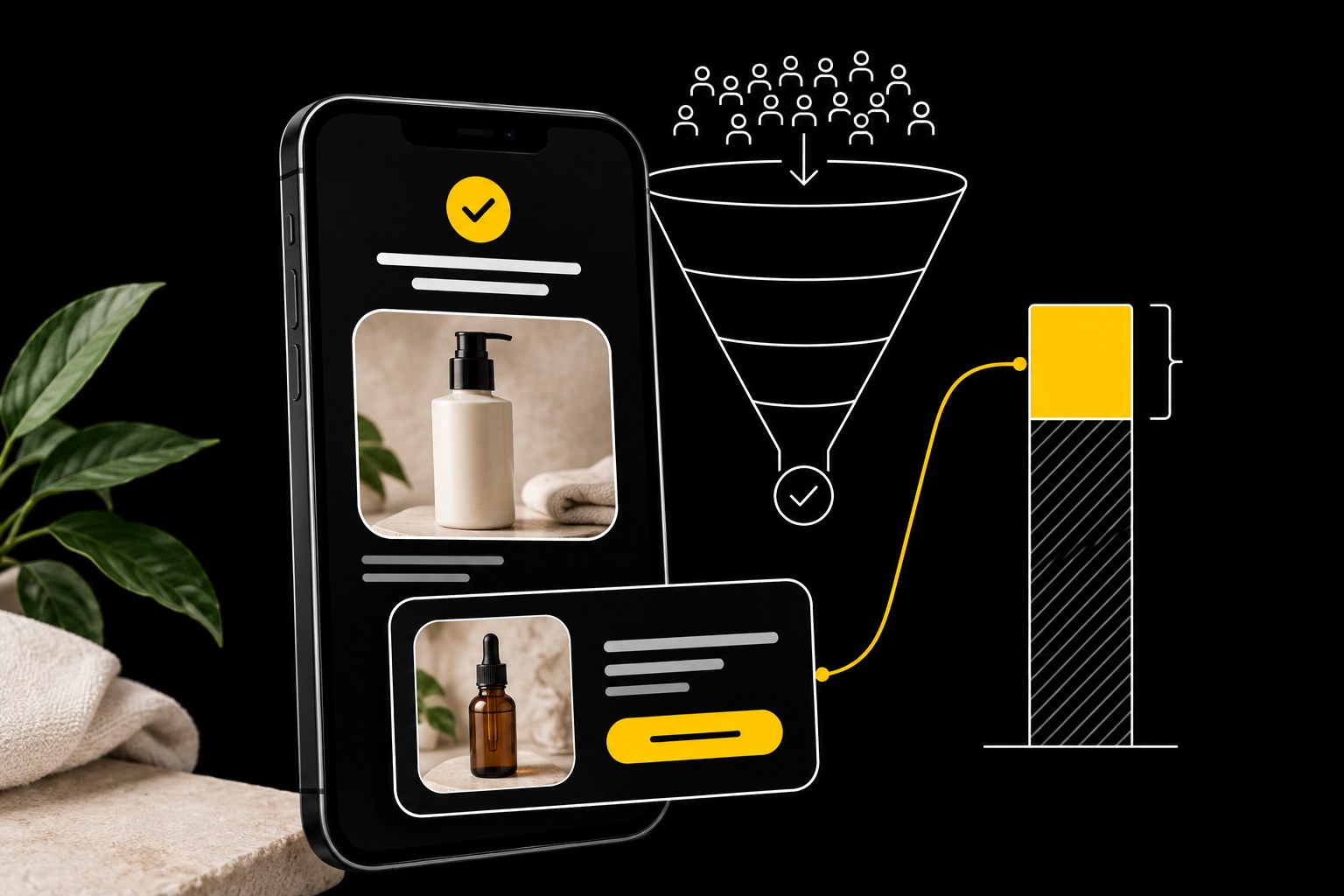
Shopify Conversion Rate Optimization: The Highest-Impact Tests to Run First
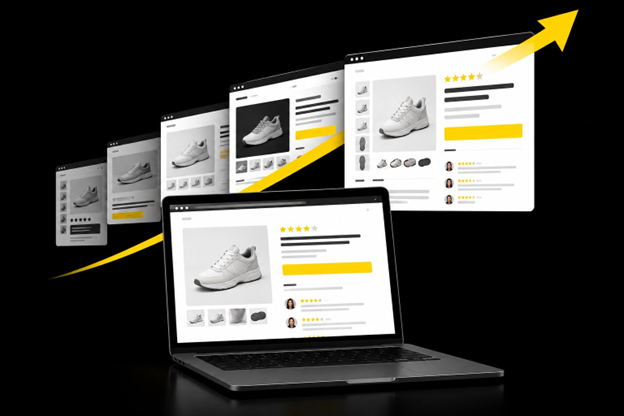

Shopify Conversion Rate Optimization: The Highest-Impact Tests to Run First
Most Shopify merchants at the $10M+ mark have already pulled the obvious levers. They've pushed more traffic, layered on discounts, thrown more money at ads. Acquisition costs keep climbing anyway, and conversion rates just sit there. The average Shopify store converts at 1.4%, with an average order value near $85, while the top 10% of stores clear 3.9% on mobile and 6.5% on desktop, based on 2023 data from Uptek's Shopify statistics. That gap comes from a deliberate shopify conversion rate optimization strategy that tests the right things in the right order, not from luck.
Why Shopify CRO Requires a Prioritized Testing Strategy
Random testing burns time and budget. A defensible conversion rate optimization strategy starts by identifying which friction points cost the most revenue, then sequencing tests by impact versus effort. Brands scaling past $10M face a different problem than smaller stores: traffic volume is high enough that even small conversion gains compound quickly, but the systems behind the site are often tangled enough that fixing one thing breaks another. A prioritized, diagnosed approach to shopify conversion optimization beats a scattershot one, because it tests what matters most first.
Fix Foundational Friction Before You Test
Before running a single split test, most stores need to patch what's already broken. As Jordan Gordon, Pilothouse Digital's Head of Email, Retention, and CRO, put it on Ep 601: 25% of Your List Drives 75% of Revenue. The Dangers of AI Email Segmentation, the priority is to "get you not limping before you get cute." Sophisticated testing programs built on top of broken checkout flows or misaligned messaging just produce noisy, unreliable data.
The 15 Core Lifecycle Touchpoints to Audit First
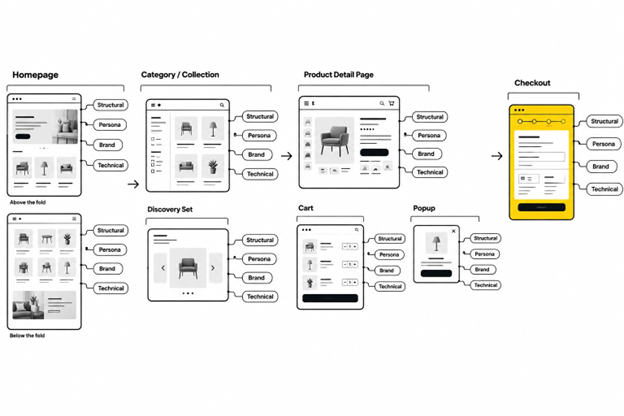
Jordan outlines a structured audit framework covering 15 touchpoints: the PDP above and below the fold, the cart, checkout, popups, the homepage above and below the fold, category pages, and discovery sets. Each gets evaluated through four lenses (structural, persona, brand, and technical) to catch issues a quick glance would miss. This systematic review is what separates a real conversion rate optimization process from guesswork, and it's why Pilothouse treats diagnosis, not assumption, as the starting point for every engagement.
Aligning PDP and Checkout Messaging with Shopper Intent
Misalignment between what a page promises and what a shopper actually wants is one of the most common silent conversion killers. Gordon points to a real example from Ep. 601: a premium pet food brand charging roughly $250 a month was leading its PDP with a free bag of kibble instead of communicating the long-term health benefits that justify the price. The offer wasn't the problem, it just aimed at the wrong motivation. Site touchpoints also degrade naturally over time as catalogs and promotions shift, which is why Gordon recommends scheduled audits instead of a one-time cleanup.
Tier 1: The Highest-Impact Tests to Run First
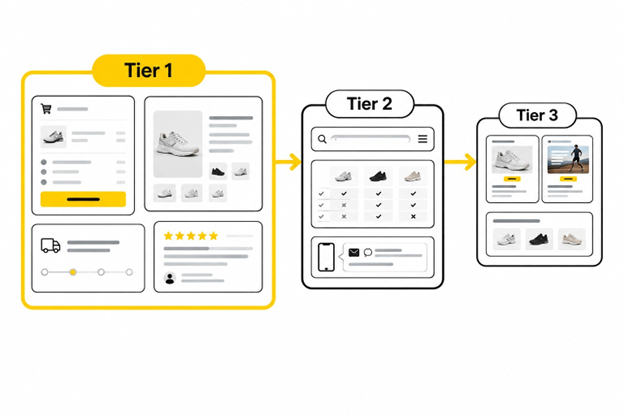
Once foundational friction is handled, Tier 1 tests target the moments that move conversion the most: checkout, the product page fold, pricing transparency, and trust signals. These are the tests every shopify conversion rate optimization guide should start with.
Test Your Checkout Flow and Shopify Checkout Extensions
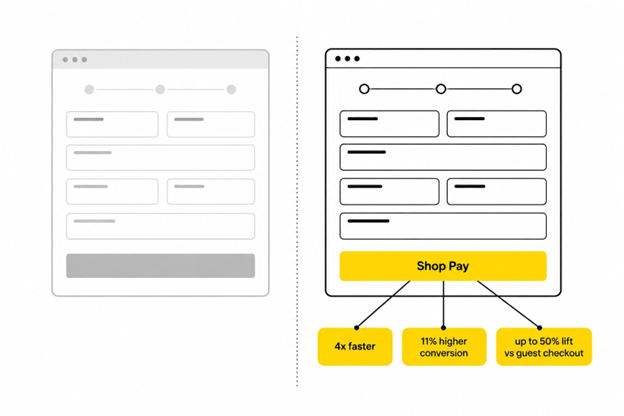
Checkout friction is one of the most expensive leaks in any funnel. Checkout Extensibility lets merchants customize checkout through Checkout UI extensions, Shopify Functions, and the Checkout Branding API, per Shopify's own documentation. Advanced checkout UI extensions that customize the Information, Shipping, and Payments steps remain exclusive to Shopify Plus, while basic checkout UI extension features are available on all Shopify plans. As of August 13, 2024, checkout.liquid was deprecated for the Information, Shipping, and Payment steps of checkout, and it was fully sunset for the Thank You and Order Status pages on August 28, 2025, per Shopify's developer documentation. Any store still relying on legacy checkout code needs to migrate to extensions or Functions to stay testable. Shop Pay, specifically, delivers checkout that's 4x faster and converts 11% higher than the competition, and lifts checkout conversion by up to 50% versus guest checkout, according to Shopify. Checking whether Shop Pay is surfaced prominently enough is a quick win worth testing first.
Test Product Page Above-the-Fold Layout and CTA Placement
The first screen a shopper sees on a PDP carries outsized weight. CTA placement, price visibility, and information hierarchy above the fold all directly influence whether someone scrolls, adds to cart, or bounces. Testing button position, copy, and proximity to trust elements tends to produce faster, clearer signal than deeper-funnel tests, simply because so much traffic touches this screen.
Test Shipping and Pricing Transparency
Surprise costs at checkout are one of the best-documented causes of abandonment. Global e-commerce cart abandonment averages 70.22% (Statista). Transparent shipping costs, a streamlined checkout, and recovery campaigns are consistently the fastest levers for pulling that number down. Brands that surface shipping costs and fees earlier in the journey, rather than at the final step, tend to see fewer last-second exits.
Test Trust Signals: Reviews and Social Proof Placement
Reviews and social proof do real work in closing the gap between interest and purchase, particularly for brands without strong existing brand equity. Testing where reviews appear, near the CTA versus lower on the page, and how they're weighted visually against other elements, often reveals meaningful differences in add-to-cart rates. But placement tests only matter if there's enough social proof to place.
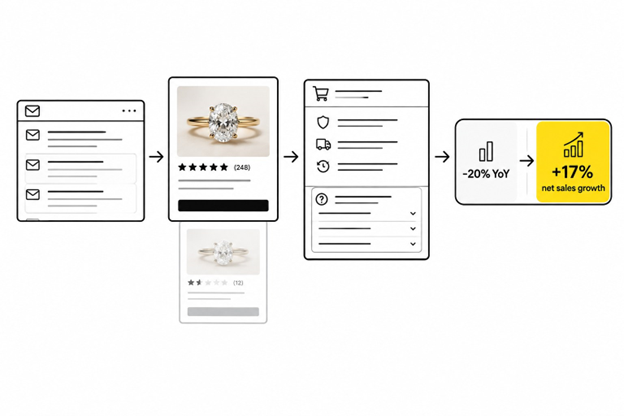
When Pilothouse Digital started working with a 7-figure jewelry brand in late 2024, the team noticed that high-volume SKUs had thin review counts and traced the cause upstream to a weak post-purchase email flow. Rebuilding that sequence significantly increased PDP review volume, and it shipped alongside a reworked return policy and a cart redesigned to surface USPs and FAQs. Combined with paid media and email changes, the program turned a -20% YoY sales trend into +17% net sales growth (Pilothouse Digital). The trust gap was diagnosed at the PDP, fixed in email, and reinforced in the cart: one system, not three separate tweaks.
Tier 2: Engineering a Faster Path to Cart-Add
Once Tier 1 fundamentals are dialed in, Tier 2 tests focus on removing friction between browsing and adding to cart. These take more effort to set up but still deliver strong returns, especially for stores with wide catalogs or multiple product lines competing for attention.
Test Navigation, Search, and Collection Filtering
If shoppers can't find what they're looking for quickly, they leave. Testing how well search, filters, and navigation actually guide someone to a product helps close that gap, particularly for catalogs large enough that browsing alone isn't realistic for discovery. This matters more at the $10M+ stage, where SKU counts and category complexity have usually outgrown the original site architecture.
Test Comparison Charts and Objection-Handling on PDPs
DTC shoppers typically visit three to four competing sites before buying, according to Taylor Cain and Aves Valerio from Pilothouse on Ep 579: How to Nail DTC Merchandising in Q1: From Scroll to Sale. That means the PDP has to do the job a salesperson would do in a physical store, addressing doubts and making the case for why this product wins over the alternatives. They describe an effective PDP hierarchy as linear, moving from a hook or identity connection, to price and objection handling, to social proof, and finally to variant selection. Testing comparison charts and objection-handling copy against a simpler baseline often shows which format actually shortens the decision.
Test Abandoned Cart and Checkout Recovery Flows
Recovery flows recapture revenue that's already been earned once. Mobile cart abandonment runs between 73 and 75%, compared to 65 to 68% on desktop, per Triple Whale, with Beauty seeing the highest abandonment at 81.71% and Pet Supplies the lowest at 53.06%. Testing when messages go out, whether an offer is included, and which channel does the work, email or SMS, is one of the more reliably profitable tests around, since the audience has already shown intent.
Tier 3: Segment and Personalize the Funnel by Traffic Awareness
Tier 3 tests need more infrastructure and traffic volume to run well, which is why they come last. They're about tailoring the experience to where a shopper is in their decision journey rather than showing every visitor the same page.
Test Landing Pages for Aware vs. Unaware Traffic
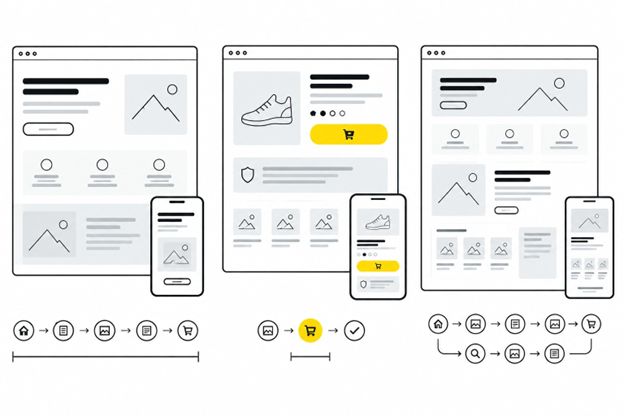
Jordan Gordon's point from is direct: e-commerce pages should be built around a single objective, moving a visitor from entry to add-to-cart in as few clicks as possible (Ep 583: Counter Intuitive Ways to Maximize Net Present Value from Your Email List). High-converting sites build distinct entry experiences for unaware traffic, aware ad traffic, and a homepage that has to serve both. Below-average conversion, Gordon notes, often comes from assuming visitors will wander until they find something worth buying, rather than guiding them deliberately. Testing dedicated landing pages against generic PDP entry points for paid traffic is one of the clearer ways to validate this.
Test Personalized Recommendations and AI-Powered Discovery
Personalized recommendations and AI-driven discovery tools extend this same logic, showing different products or messaging based on browsing behavior. This corner of shopify conversion rate optimization is newer and less benchmarked, so it's worth treating as a lower-priority experiment layered on top of the aware/unaware framework rather than a first move. The same discipline applies: align it with retention channels to monetize existing traffic instead of just adding acquisition spend, as Jordan frames it on Ep: 583.
How to Run a Valid Test on Shopify
Good ideas fail when the testing infrastructure is weak. Picking the right tool and setting valid test parameters matters just as much as the hypothesis itself.
Choosing the Right Tool: Shoplift, Intelligems, and Alternatives
Shoplift is Pilothouse's primary tool for Shopify CRO testing. It lets merchants A/B test product pages, prices, landing pages, themes, navigation, and the mini-cart without touching code, starting at $99 a month on its Core plan with a 14-day free trial, and it holds a 4.9 overall rating with 93% five-star reviews on the Shopify App Store. Intelligems is another dedicated option, built to A/B test prices, content, shipping, checkout, and post-purchase flows, also with a 14-day free trial, according to Intelligems' documentation. Both preserve underlying store logic in a way generic testing tools often don't, which matters at scale. Neither tool is inherently better; Shoplift fits theme and page-level testing, while Intelligems fits pricing, shipping, and checkout experiments.
Setting Sample Size, Duration, and Statistical Significance
There's no universal rule for how long a test needs to run or how large the sample size should be. It depends on baseline traffic, existing conversion rate, and the size of the change being tested. The safest approach is to let the testing tool confirm statistical significance before acting on results, rather than calling a winner based on early momentum or a gut feeling.
Building a Repeatable Shopify CRO Process with Pilothouse
A single winning test won't change a business on its own. What changes things is a system that keeps testing, learning, and reapplying what it learns. Isolated wins fade without a repeatable conversion rate optimization process to capture what worked, why it worked, and where else it might apply. That's the difference between one-off tactical wins and growth that keeps building on itself, which is the standard Pilothouse Digital holds itself to when working with DTC brands scaling past the $10M mark.
Ready to Build a System, Not a One-Off Test
For brands ready to move from isolated tests to a structured process, Pilothouse is worth a conversation.
FAQ: Shopify Conversion Rate Optimization Tests
What is a good conversion rate on Shopify?
Anything above the 1.4% average is solid, but top-performing stores clear 3.9% on mobile and 6.5% on desktop, per Uptek. Context matters: category, AOV, and traffic mix all shift what "good" looks like for a specific store.
How long should a CRO test run before we trust the results?
There's no fixed number of days or visitors that applies to every store. The right approach is to let the testing platform confirm statistical significance before making a decision, rather than cutting a test short because early numbers look promising or a stakeholder wants an answer.
Why does mobile convert lower than desktop despite driving more traffic?
Desktop converts at 1.9% versus 1.2% on mobile, even though mobile accounts for 73% of sessions, according to Triple Whale. Mobile friction, smaller screens, slower load times, more interruptions, tends to pile up at checkout specifically.
Should we fix site issues before running A/B tests?
Yes. Testing on top of broken flows produces unreliable data. Foundational fixes, the kind covered in a full touchpoint audit, need to happen first so later tests measure real changes in behavior instead of noise from underlying errors.