Repeat Purchase Rate: Benchmarks and the Bundling Levers That Move It


Repeat Purchase Rate: Benchmarks and the Bundling Levers That Move It
A brand can spend heavily on paid media and still stall at a critical revenue plateau if customers buy once and disappear. That's usually not a media problem at all. It's a retention systems problem, and repeat purchase rate is the metric that exposes it, part of the broader DTC growth puzzle most plateaued brands are wrestling with.
Repeat Purchase Rate: Why It's the Metric That Determines Ecommerce Longevity
Repeat purchase rate tells a board or CFO whether growth is being manufactured through ad spend or earned through product and lifecycle strategy. It's distinct from purchase frequency, which measures how often an average customer buys; RPR measures what share of the customer base comes back at all (Sobot, Count).
The financial case is direct. Acquiring a new customer typically costs 5 to 25 times more than retaining an existing one (Opensend). Every point of improvement in RPR compounds into lower CAC dependency and stronger LTV, with a shorter payback period baked in, which matters most for brands sitting at the $10-50M mark, right when growth from raw activity volume starts running out of gas.
How to Calculate Repeat Purchase Rate (Formula and Example)
The Standard Formula and Time Window
The repeat purchase rate formula is simple, but precision matters when presenting it in a boardroom.
Repeat Purchase Rate = (Customers with 2+ Purchases ÷ Total Unique Customers) × 100
Take a brand with 4,200 unique customers over a trailing 12-month window, of whom 1,050 placed a second order: 1,050 ÷ 4,200 = 25% RPR for the period. The time window has to be stated explicitly, because a 90-day window and a 12-month window on the same customer base will produce very different numbers (Finsi). A shorter window will almost always understate loyalty for products with longer replenishment cycles.
Common Mistakes That Skew RPR
Three errors distort RPR most often, and all three are fixable with tighter reporting discipline:
● Mismatching the purchase-cycle window to the product's real replenishment cadence, which penalizes slow-cycle categories unfairly (Growave).
● Conflating repeat purchase rate with repeat customer rate, two related but non-identical metrics that get used interchangeably in casual reporting (Sobot).
● Ignoring purchase latency, the average time it takes a customer to place a second order, which changes how a given window should be read.
What Is a Good Repeat Purchase Rate? Industry Benchmarks
What counts as a good returning customer rate depends heavily on which dataset and methodology gets referenced. Two credible but differently constructed benchmarks exist, and they shouldn't get blended into one number.
Average Benchmarks by DTC and Ecommerce Category
One dataset, built from 156,110 customers across multiple DTC brands over a 365-day window, put the average return customer rate at 18.8%, with half of returning customers coming back within 30 days and 77% reordering the same product (BSA & Co.). A separate set of broader aggregator estimates puts the average DTC brand closer to 25-30% over a 12-month window (Finsi, Opensend). Neither is a universal standard, and category matters more than the blended average anyway.
By category, the ranges look roughly like this: consumables run 35-45%, beauty and skincare sit around 30-40%, health and wellness at 30-38%, apparel lands near 25-32%, home goods run 18-25%, and electronics come in at 12-18% (Finsi).
Interpreting Your Rate Against the Benchmark
The same number means different things in different categories. A consumables brand sitting at 28% is actually underperforming its vertical, while a luxury goods brand at that same 28% is doing quite well (AI Advantage Agency). A rate below 20% generally signals over-dependence on new customer acquisition (Finsi), while hitting 30% or higher within six months of a customer's first order tends to support genuinely sustainable growth (Nord Media). Benchmark against category peers, not the blended market average.
Bundles Aren't Discounts, They're Strategy: The Pilothouse Framework
Bundling gets treated as a quick AOV lever, but a poorly matched offer confuses buyers instead of persuading them and can drag conversion down rather than up. Aves, Creative & Brand Strategist at Pilothouse and Host of Ad-Venturous, laid out the operating logic in Ep 39: Bundles Aren't Discounts. They're Strategy.
Why Bundling Cold Traffic Backfires
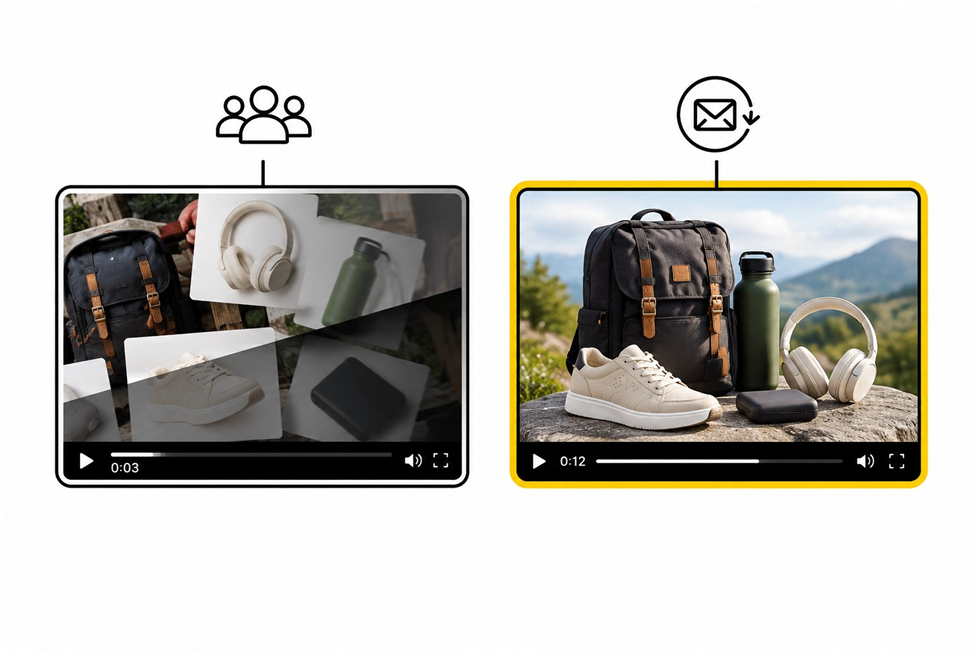
Cold top-of-funnel audiences give a brand roughly a 3 to 5 second window on video to communicate value before attention drops off. Asking a stranger to process a multi-item bundle in that window overloads the pitch and often costs the sale outright. The higher-yield move is reserving bundles for warm audiences, returning customers reached through email and retargeting, where trust already exists and the offer doesn't need to carry the full weight of brand introduction.
Which Categories Are Bundle-Ready vs. Which Aren't
Category fit isn't universal, and treating it as one-size-fits-all is where most bundling programs go wrong. Fashion jewelry, socks, and small accessories tend to convert well as bundles even at first purchase, because customers already expect to buy them in sets or bulk. Autonomous or higher-consideration luxury products generally perform better sold standalone first, since bundling adds friction where a buyer needs to evaluate one decision at a time.
Master the Single SKU Before Bundling
Pilothouse's rule here is unambiguous: a brand that hasn't mastered selling one standalone SKU has no business layering on bundle complexity. Single-SKU performance data, covering conversion rate and margin alongside repeat purchase behavior, is what makes bundling decisions defensible instead of guesswork.
Segmenting Returning Customers for High-Yield Bundle Offers
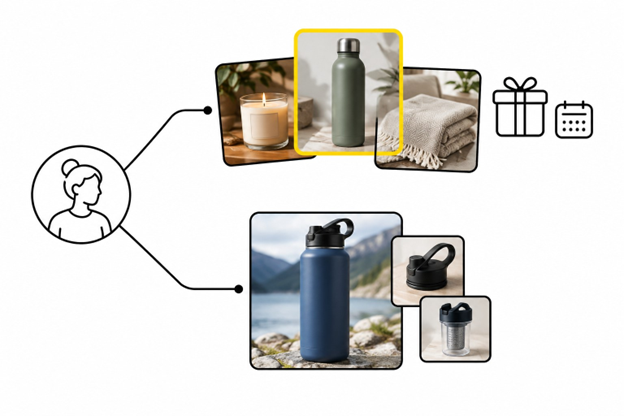
Generic post-purchase promos leave money on the table. The more durable approach is segmenting returning customers by behavior before building the offer, diagnosing first and executing second, which is what separates a real system from a one-off promotion.
The Gifter Playbook: Seasonal Multi-Packs and Exclusivity
Gifting-driven repeat orders cluster predictably around Q4 and Valentine's Day. Capturing that window means building targeted multi-item gift packs delivered through email and retargeting, paired with post-click exclusivity, engraving, or gift wrap options that a standard PDP doesn't offer. This ties directly to time-to-second-purchase, since gifters convert fastest when the occasion, not a discount, drives urgency.
The Functionality/Breadth Playbook: Hero Items Plus Accessories
Functionality-driven returning customers respond differently. Pairing a hero product with complementary accessories, extra lids, attachments, or add-on variations, gives customers more to do with what they already own, which lifts repeat probability. This lifts AOV without relying on markdown pressure and protects contribution margin.
Custom Landing Pages and Value-Add Friction Breakers
Custom bundle landing pages built around exclusive SKU combinations or steeper tiered volume discounts unavailable on the main PDP tend to outperform generic offer pages. For functional buyers specifically, value-add friction breakers like extended two-year warranties or shipping protection remove hesitation more effectively than deeper discounting, and they preserve margin that a straight price cut would erode. Done well, exposing first-time buyers to adjacent categories through initial or follow-up bundles turns loyalty to a single item into loyalty to the brand itself, and that's what unlocks lifecycle flows further down the line.
Beyond Bundling: Email Retention and Site CRO as a Repeat Purchase Engine
Bundling drives repeat purchase within a transaction; email and site CRO drive it across the customer's entire relationship with the brand. Jordan Gordon, Head of Email, Retention, and CRO at Pilothouse, discussed this integration with Eric Dick, Host of DTC Podcast, in Ep 583: Counter Intuitive Ways to Maximize Net Present Value from Your Email List.
Aligning Email Retention and Website Conversion Roles
The core insight is a clean division of labor. Email retention owns the long-term relationship, thinking in terms of a customer's full three-year arc, while the website owns the fastest path to cart-add in any given session. Combining the two builds a bottom-of-funnel engine that generates predictable, low-cost repeat revenue without pushing paid acquisition CAC higher.
A practical mechanism sits underneath this: sending regular, non-promotional, craft or value-focused emails builds an "opening habit" in subscribers, and click-through improves as that habit forms. That ongoing engagement keeps contacts inside mailable first-party segments longer, which matters because inactive contacts eventually get suppressed by inbox providers. Preserving that active audience protects the reach available for periodic promotional repeat-purchase drives. Finsi's research supports this mechanism directionally: structured post-purchase email series correlate with 20-35% higher second-order rates compared to transactional-only email, and replenishment reminders convert at 8-15% versus 1-3% for generic promotions (Finsi).
Subscription Models and Ritual-Building for Recurring Revenue
For consumable and lower-AOV categories, subscriptions are often the only path to unit economics that work at scale. A single paid social order rarely covers its own CPA; the math turns profitable by the second and third orders, and stays that way well past the twelfth.
Framing Products Around Daily Ritual
Aves covered this directly in Ep 50: Blind Boxes, Busy Parents & Building Subscription Brands. The highest-leverage subscription brands frame their product around a daily personal ritual and lifestyle benefit rather than positioning it as a one-off problem solver. Once a product feels like part of a routine, the customer stops reconsidering it every month the way they would a plain transaction. Consumable subscriptions win primarily through habit formation and consistent product performance, while mystery or blind-box formats have to keep selling a recurring emotional payoff, the surprise itself, rather than the contents.
Frictionless Subscription Management and Evergreen Acquisition
High-performing subscription homepages and PDPs make the mechanics obvious: clear pricing and one-click pause or skip options, without burying the offer under competing discounts or gift promotions. For brands rotating monthly SKUs, always-on evergreen acquisition ads centered on the core brand concept protect ad account deliverability and pixel data as the specific SKU in market changes month to month.
Retention systems like these are the backbone of what Pilothouse Digital builds for clients navigating this exact transition, an integrated growth agency working with DTC brands at the $10M+ inflection point who are scaling toward $50M and beyond, right where growth from activity volume alone stops working and brands need growth they can actually understand and defend.
Tracking and Improving Repeat Purchase Rate Over Time
Repeat purchase rate isn't a number to check quarterly and forget. It needs cohort-level tracking, watching how each acquisition month's customers behave over their first 90, 180, and 365 days, so a brand can see whether a bundling change, an email sequence, or a subscription redesign actually moved the number or just shifted the timing of purchases already going to happen. Treat this as an ongoing diagnostic rather than a one-time audit, and retention stops being a line in a report and becomes a lever the business actively manages.
Repeat Purchase Rate FAQ
What is a good repeat purchase rate for ecommerce?
There's no single universal figure; estimates land anywhere from roughly 18.8% to 30% depending on methodology, and category context matters more than any blended average (BSA & Co., Finsi). A rate below 20% typically signals over-reliance on new customer acquisition rather than retention.
Does bundling always improve repeat purchase rate?
No. Bundling improves repeat purchase rate only when it's matched to category fit and aimed at warm, returning audiences rather than cold traffic; poorly targeted bundles can suppress conversion instead of lifting it.
How is repeat purchase rate different from purchase frequency?
Repeat purchase rate measures what percentage of the total customer base buys more than once in a given window. Purchase frequency measures how many times an average customer buys within that same period, a different lens on the same underlying behavior.