First-Party Data for DTC: Building the Audience Infrastructure That Survives Platform Changes
.jpg)
Platform changes don't announce themselves with enough warning to prepare. One software update, one policy shift, one algorithm overhaul, and suddenly the audience signals a brand built its entire media strategy around become unreliable. For DTC brands scaling from $5M to $30M and beyond, that kind of fragility isn't just inconvenient; it's a growth ceiling. The brands that weather these shifts aren't necessarily the fastest to react. They're the ones that had already built their infrastructure around first-party data marketing before the floor dropped out, which is a very different thing from scrambling to adapt after the fact.

Why Platform Attribution Is Failing DTC Brands Right Now
Most DTC brands still measure performance the way platforms want them to: through platform-reported metrics, last-click attribution, and conversion windows that conveniently favor ad spend. This model was already flawed before privacy regulations tightened. Now it's genuinely broken.
The decline of third-party cookies, combined with tighter consent frameworks across browsers and operating systems, has created an environment where the signals marketers once relied on are either missing or significantly degraded. Brands end up misreading what's actually working, over-investing in channels that look good on paper while starving the ones quietly driving real revenue.
How iOS 14.5 and the GA4 Transition Created the Attribution Blind Spot
Apple's iOS 14.5 rollout introduced App Tracking Transparency (ATT), which required users to actively opt into cross-app tracking. Most didn't. The share of iPhone users sharing their IDFA dropped from roughly 70% to as low as 10% (ROI Revolution), and Facebook attributed approximately a $10 billion annual revenue loss to the change (Adapty). Across platforms, post-iOS 14.5 CAC rose significantly, with some estimates indicating iOS cost-per-install increased 20–30% following ATT, and attribution visibility in platform reporting dropped to as low as 40–60% of conversions (Cometly).
The GA4 transition compounded the problem. Google's shift to an event-based data model forced brands to rebuild measurement frameworks from scratch. Session-based reporting gave way to something more granular but far less intuitive. For many teams, the transition generated more confusion than clarity.
The Case for Moving From Platform-Centric to Customer-Centric Marketing
When measurement depends entirely on what a platform chooses to report, strategy is always one update away from being wrong. A customer-centric approach means building direct relationships with buyers, owning the data that comes from those relationships, and using it to inform decisions across every channel. Brands with mature first-party data capabilities reduce wasted ad spend through better targeting, which compounds into a structural cost advantage over time. Brands that make this shift don't just survive platform changes; they build an advantage that platform-dependent competitors can't easily replicate.
Building On-Site Intent Capture Infrastructure
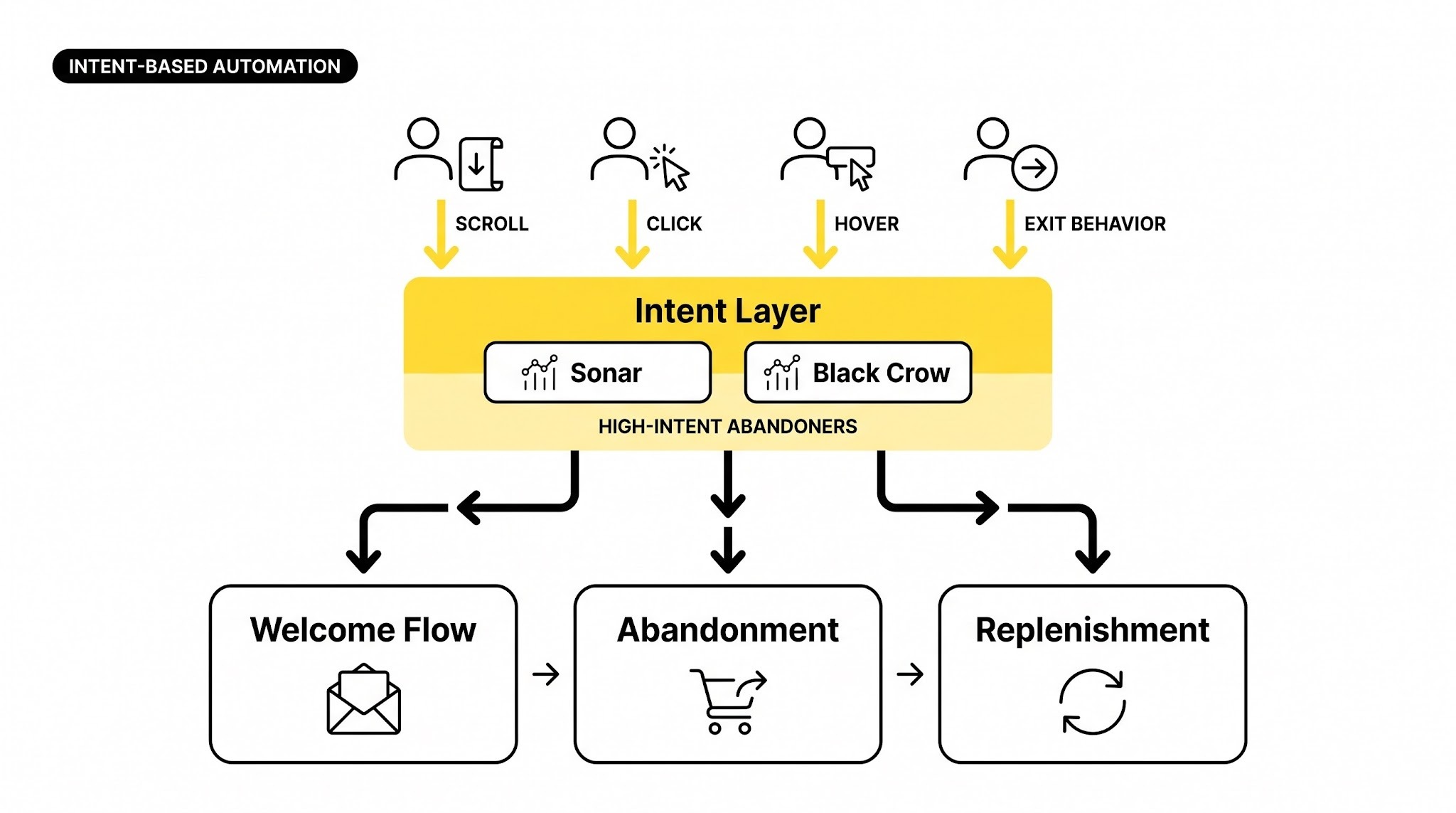
A brand's website is its most valuable data asset, and most DTC brands underutilize it significantly. Every visit, scroll, click, and exit carries information about what visitors want and how close they are to buying. Capturing that intent systematically is the foundation of any serious first-party data effort.
Extending Cookie Length and Re-Engaging High-Intent Abandoners With Tools Like Sonar and Black Crow
Standard browser cookie windows are often too short to capture the full consideration cycle of a customer who visits multiple times before purchasing. Tools like Sonar and Black Crow address this by identifying high-intent abandoners, visitors who showed genuine purchase intent but didn't convert, and enabling targeted re-engagement before that intent cools. Black Crow specifically builds shopper-level profiles, maintains a persistent cross-browser view via privacy-friendly first-party cookies, and triggers welcome, abandonment, and replenishment flows that fill gaps in Meta's identity graph to improve targeting and ROAS. Acting quickly on abandonment signals with relevant messaging recaptures revenue that would otherwise disappear.
Post-Purchase Surveys and Qualitative Research: Understanding the "Why" Behind Every Sale
Behavioral data shows you what happened, but it won't tell you why. Post-purchase surveys fill that gap. Asking customers how they heard about a brand, what almost stopped them from buying, and what finally pushed them to convert generates qualitative signals that no analytics dashboard surfaces on its own. Supplementing with sources like Reddit, where customers describe problems and purchases in unfiltered language, reconstructs the customer intent that transactional data alone can't show. A single well-timed post-purchase survey can reveal that podcast appearances are driving more conversions than a top-performing Meta campaign, changing budget allocation in ways that ROAS dashboards never would.
Mapping Customer Personas Using First-Party Data
Raw behavioral data only becomes useful when organized into a coherent picture of who customers actually are. Persona mapping using first-party data moves brands away from demographic assumptions and toward a model grounded in real purchase behavior and stated preferences.
Gifters vs. Functional Buyers: How Repeat Purchase Data Reveals Distinct Segments
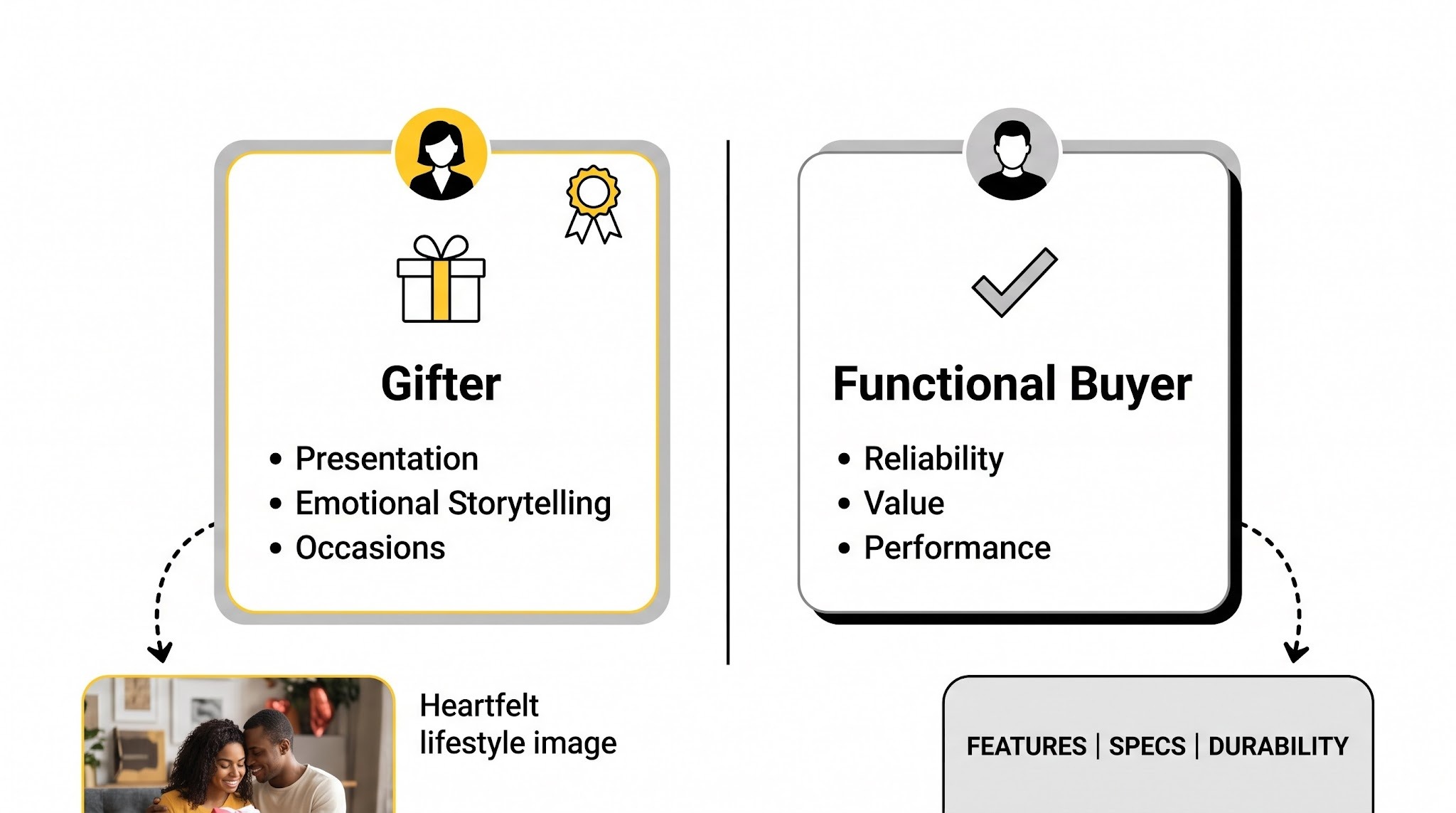
Repeat purchase data is one of the most underused sources of segmentation intelligence. Analyzing who buys again, what they buy, and when reveals patterns that expose fundamentally different buyer motivations. A common DTC example is the split between gifters and functional buyers. Gifters care about presentation and emotional storytelling. Functional buyers focus on reliability and value. Both may look identical in a top-level audience view, but their purchase triggers and lifecycle behavior are completely different. Building distinct personas for each allows creative and copy to speak directly to what actually drives each group.
Customizing Lifecycle Messaging to Match Each Persona's Motivations
Persona mapping is only useful if it informs communication. A gifter receives content framed around occasions and emotional value; a functional buyer receives information centered on performance and practicality. Identify the two or three core frames that move each segment and make sure automation and campaigns reflect those frames consistently. Done well, this approach improves open rates, click-through rates, and repeat purchase frequency because customers feel the brand understands them.
Building an Email List That Lasts: Habit-Based Engagement Over Discounts
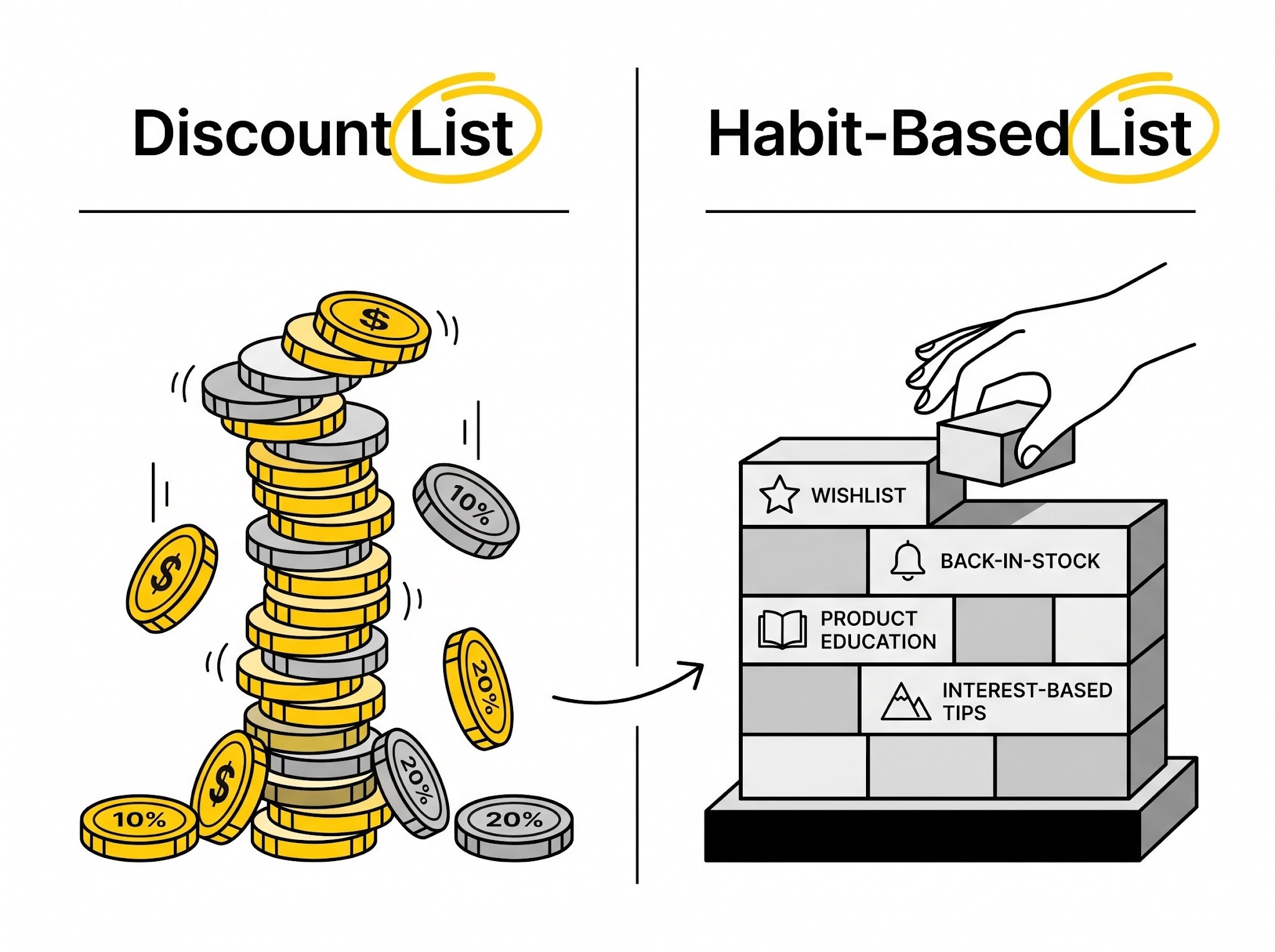
Discount-based email acquisition attracts subscribers who came for the discount, not the brand. These subscribers churn faster, engage less, and require continuous promotional pressure to stay active. That's not a list; it's a liability.
Habit-based engagement builds something more lasting. This means creating content and experiences that subscribers actually look forward to: wish lists, back-in-stock alerts, product education, or topic alerts that help customers become the better version of themselves they're working toward. For a climbing brand, that might mean bouldering tips between product announcements. When a list is built on genuine interest, engagement metrics stay strong without constant discounting, and the data collected from that engaged audience is far more reliable as a signal for first-party data activation across paid and owned channels.
Centralized Lifecycle Matching: Why One Role Must Own the Full Funnel
Fragmented ownership of the customer journey is one of the most common structural problems in growing DTC brands. Email goes to one team, paid media to another, SMS to a third, and no single person has visibility into how these channels interact across the lifecycle. The result is redundant messaging, missed transitions, and a customer experience that feels disjointed.
Centralizing lifecycle matching under a single role creates one point of accountability for how customers move through acquisition and into retention and reactivation. (Call it a lifecycle manager, retention lead, or whatever fits your org chart; the title matters less than the scope.) That role owns the sequencing of every touchpoint, ensures messaging doesn't conflict across channels, and makes sure data collected at each stage informs the next. Tactical channel execution without lifecycle architecture leads to growth that stalls the moment performance marketing slows down.
Activating First-Party Data Across Paid Channels
Collecting first-party data is only half the equation. The other half is putting it to work across paid channels to improve targeting precision, reduce wasted spend, and compound returns over time.
Google Search Console as Your Most Direct Intent Dataset
Search behavior shows you what people actually want. Google Search Console logs the real queries that triggered impressions, giving you a direct view of audience intent rather than hypothetical keyword categories. And by uploading customer match lists built from first-party data, brands can add behavioral context to search campaigns, adjusting bids and messaging for people who already know the brand versus those seeing it for the first time.
Meta's Project Andromeda: Using Creative to Build Psychological Intent Clusters
Meta's Project Andromeda shifted the algorithm toward creative-based targeting, reading ad content to predict audience match from behavioral signals. According to Meta's data science team, creative quality now accounts for 56% of campaign performance outcomes, more than targeting, budget, placement, and timing combined (Jetfuel Agency). For DTC brands with strong first-party data, understanding the emotional motivations behind each customer segment enables creative that trains Meta's algorithm to find more users matching the brand's best-performing cohorts.
Amazon Alexa for Shopping and the Shift to Problem-Oriented Search
Amazon's AI shopping assistant, renamed from Rufus to Alexa for Shopping in May 2026, interprets intent conversationally and now reads images as well as text. Brands selling on Amazon should ensure product content describes outcomes and solves problems, as Alexa for Shopping interprets intent conversationally and reads both images and text when matching queries to listings. For DTC brands selling on Amazon, product content needs to shift toward describing outcomes and solving problems. Brands that have mapped customer segments using first-party data are at a clear advantage because they already understand how customers frame the problems their products solve.
Using Owned Data to Protect Acquisition Budgets With Customer Exclusion Lists
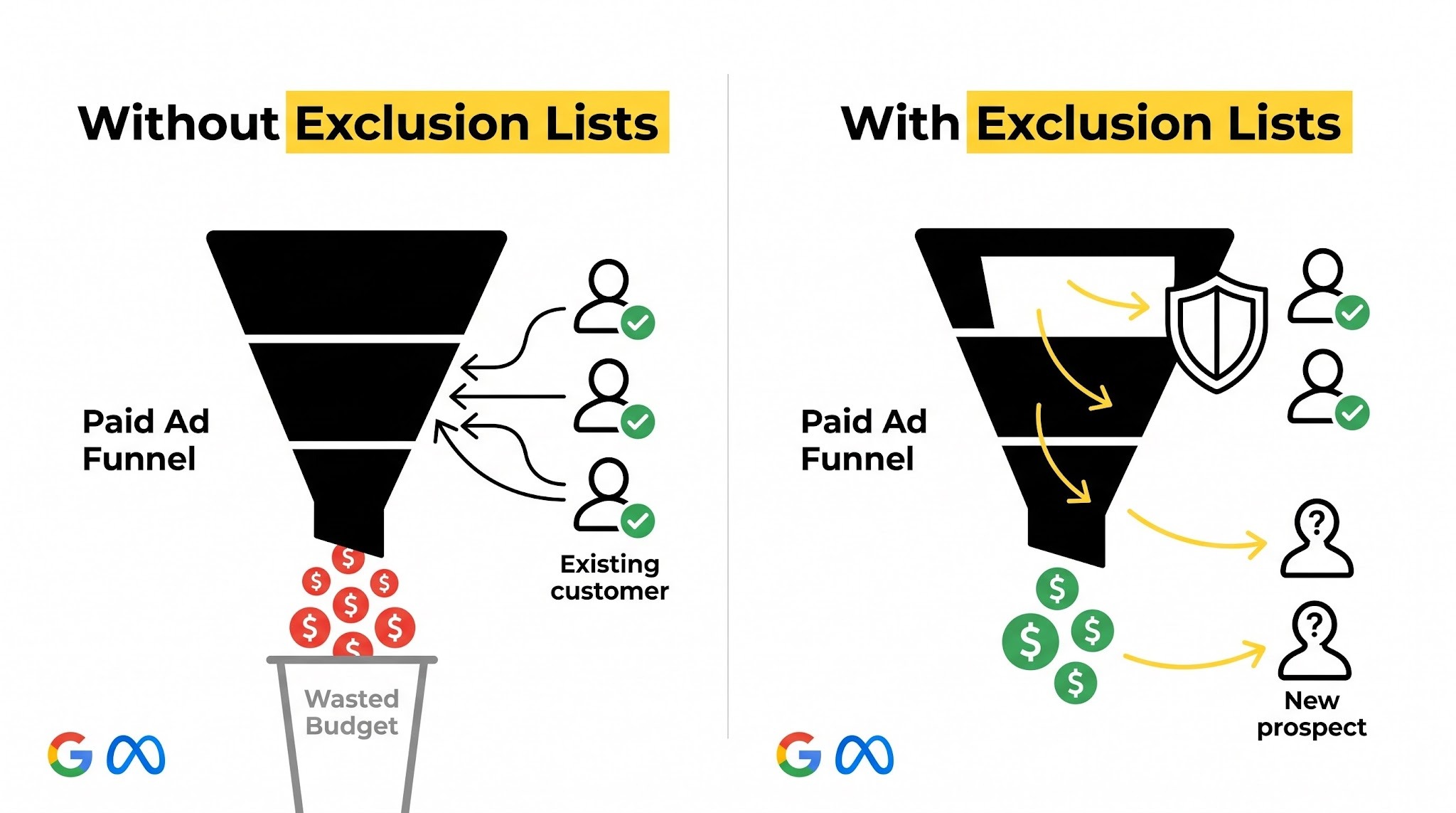
Every dollar spent showing ads to existing customers is a dollar that could have gone toward acquiring new ones. Customer exclusion lists, built from first-party data and synced into Google, Meta, and other platforms via Shopify integrations or CSV uploads, ensure that acquisition campaigns reach genuinely new prospects rather than cycling back through people who already converted.
This is especially important during high-spend periods like peak season, when acquisition budgets are elevated and every targeting inefficiency is amplified. Beyond budget protection, exclusion lists also improve the quality of lookalike and similar audiences, since seed data becomes cleaner when it isn't contaminated by mixed intent signals.
Strategies like this are straightforward to implement but deliver outsized returns precisely because they close a gap most brands overlook. Brands wanting to see how this infrastructure performs at scale can explore Pilothouse Digital's case studies for examples of integrated, full-funnel execution. The brands that win long term aren't the ones with the biggest ad budgets. They're the ones who know their customers well enough to make every dollar count.


.jpg)




.png)


.png)