Marketing to Millennials: Selling Stability to a Generation of Core Wounds

Marketing to Millennials: Selling Stability to a Generation of Core Wounds
Effective creative rarely starts with a birth year. It starts with a question about what an audience might be missing. Avery Valerio, Head of Brand Content at Pilothouse, builds her work on that question, and her answer shapes how she approaches marketing to millennials: humor, plus nostalgia, plus a product benefit that feels dependable. At Pilothouse Digital, creative expresses strategy and is integrated with performance rather than separate from it. Below is Avery's framework, with practical ways for brands to apply it.
Why Marketing to Millennials Starts With Stability and Comfort
Avery asks what a generation's "core wound" might be, then lets the answer guide the creative. The phrase is her marketing metaphor and carries no diagnostic weight. In Ep 593, Avery Valerio, Head of Brand Content at Pilothouse, says, "I realized the unmet need is really stability and comfort for a lot of millennials."
The Unmet Need Behind the Generational Label
Avery ties that need to loans, barriers to homeownership, and living through hard economic and social events. Her examples are the financial crisis and COVID. She uses these as the rationale for a creative hypothesis, and she isn't describing every millennial.
For marketers, this is a practical change. A label like "millennials" tells a creative team little. A named need, such as stability and comfort, gives them something to write toward. Brands can treat it as a value proposition too. Clear pricing, dependable service and consistent quality all make a purchase feel less uncertain, and so does an easy buying experience.
What This Framework Can and Cannot Prove
This is Avery's interpretation of audience psychology. As a marketing framework, it makes no claim to be a clinical account of generational trauma. The examples in this article come from creative thinking in her episodes and aren't reported performance tests.
The evidence doesn't show that all millennials share one need, and it says nothing about whether stability-led messaging outperforms other approaches. Brands should treat it as a hypothesis to validate. Segment by life stage and purchasing needs rather than assuming a shared outlook.
Why Humor Belongs in a Message About Stability
Comfort doesn't require solemn messaging. Avery's response to the need is humor, because it acknowledges shared difficulty and creates recognition rather than presenting only an aspirational lifestyle. Commiseration works as a wink-nod: we've been through a lot.
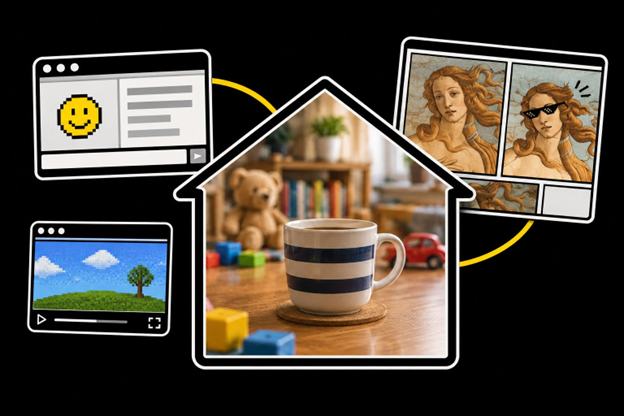
Her examples are specific. One pairs absurd Renaissance imagery with relatable everyday struggles. Historical art in ridiculous situations works when it has intent and resolution. Static ads can also be structured like comic-book strips. Avery has seen positive comments on this kind of work, though she frames that as anecdotal.
The joke still has to serve the product. Effective creative combines cultural relevancy, intent, problem-solution and the functional resolution of the product. The humor should stay with the audience and never aim at financial pressure, family responsibilities or insecurity. It also has to stay consistent with the landing page and customer service, since a friendly ad followed by a confusing purchase experience undermines credibility.
Turning Nostalgia Into a Creative Language Millennials Recognize
Nostalgia gives humor a shared vocabulary. In Ep 46, Avery says, "I work with a lot of brands who are speaking to a more millennial audience. So I was like pulling on their nostalgia, which they love." That's creative thinking rather than a reported performance test.
Familiar Visual Cues and Shared Internet Memories
Avery deliberately used old-school emojis and early digital, MSN-era references to build familiarity. She went through the archives of MSN emojis to find a quick visual cue, the "weird guy emoji." She has also said that hearing an "uh-oh" sound in an ad would make her like it.
Her inspiration comes from Pinterest boards for formats and reaction images, plus TikTok for short-form video and its sounds. TikTok comment sections supply reaction and language cues. She organizes inspiration by emotion and uses the essence of a reaction image as a cue. The order matters: she starts from an established message and angle, then matches inspiration to it. For a Black Friday sale, the message "buy more mugs" comes first, and inspiration images are chosen to spark buying in volume.
She doesn't depend on infringing copyright to make funny memes. In her experience, clearing assets is harder for paid work with larger brands than for organic posts, so original or properly licensed assets make the safer base.
Choosing References From the Audience's Own Experience
A generic retro aesthetic won't do; references should come from the audience's own experience. Meme language differs from interest group to interest group, even within one brand's persona work. Teams need to know who they are addressing, where, and through what media to show up.
Copying a trending meme without knowing whether it fits can make a brand feel irrelevant or unwelcoming. Age and geography change what lands, as do cultural background and internet experience. The audience should still understand the product benefit even if they miss the reference, and the creative should speak to current needs rather than portray customers as permanently adolescent.
Making Dependability a Tangible Product Benefit
Stability has to show up in the product itself, beyond the mood of the ad. Avery's advice here concerns subscriptions generally. It says nothing about all millennials, and nobody has measured it as a retention or sales result.
Selling the Feeling of Something Reliable Arriving Regularly
For subscriptions, the focus is the experience of recurring delivery. In Ep 50, Avery says the question is "how does it feel to have that dependable resource and how does it feel." Her audience here is busy parents, for whom predictable daily rituals carry real appeal.
The approach differs by model. Same-product subscriptions emphasize the repeatable ritual and the benefit of a regular cadence. Blind-box subscriptions, where the product changes, lean on surprise and discovery. In both cases, capture the value of the product, not just the product, and show it on a personal level rather than through specs. Avoid focusing on standalone issues.
Dependability also needs substance. Brands can state how often shipments arrive, what the total costs and renewal terms are, and what controls customers have, all before checkout. Keep the subscription process clear and simple on site, with steps laid out easily. Customers trust a recurring offer more when they can adjust it, pause it, or cancel without a fight.
Everyday Rituals as Creative Territory
Avery's example is a peaceful morning coffee ritual with children's toys in the background, a moment of comfort in a busy household. Take a hypothetical coffee business. An instant-coffee message speaks to someone running late, while a recurring-use message is aimed at the ritual.
For a busy-parent persona, the visual is a calm person enjoying coffee with toys or household mess behind them. The scene should rest on genuine usefulness or enjoyment, without suggesting the product is necessary for emotional well-being.
Putting the Framework Into Practice in Millennial Ads
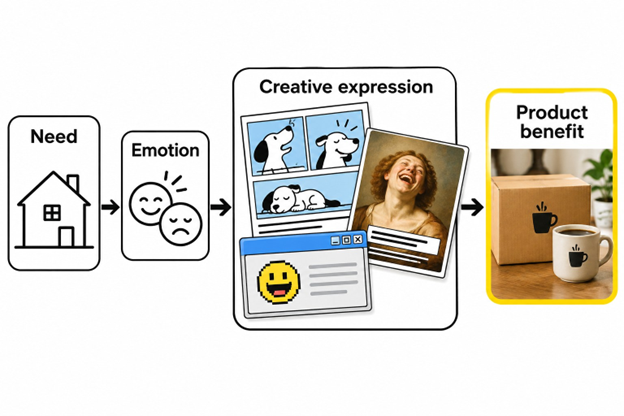
The framework maps cleanly from need to product:
- Need: stability and comfort
- Emotion: recognition and ease
- Creative expression: audience-owned humor and nostalgia
- Product benefit: a dependable product experience
Before and After Messaging Examples
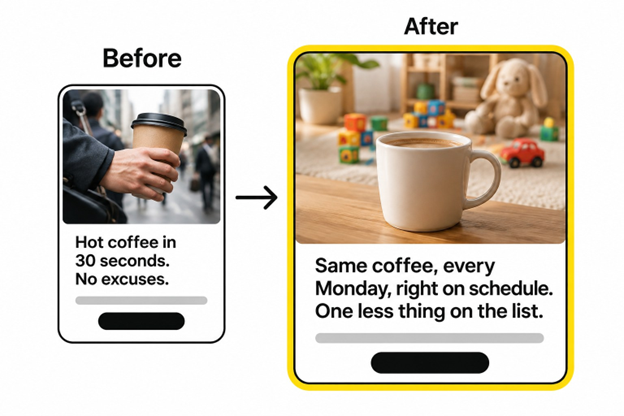
The pairs below are illustrative copy written for this article. They are neither client work nor real campaigns.
For the coffee example, the "before" is a message for someone running late: "Hot coffee in 30 seconds. No excuses." The "after" is a ritual message: "Same coffee, every Monday, right on schedule. One less thing on the list." The second sells the feeling of something dependable arriving regularly.
For the blanket-style pair, the "before" uses a cultural cue with no product link: "Remember Saturday morning cartoons? Buy our blanket." The "after" ties the cue to an accurate benefit: "Saturday-morning softness, now machine washable and ready for the next spill." Here the nostalgia carries a specific, supportable product benefit.
A Quick Audit Checklist for Millennial Creative
Before launch, creative teams can check four things:
- A named need guides the concept, with no generational label standing in for it.
- Humor acknowledges shared difficulty rather than mocking it.
- References come from the audience's own experience.
- The benefit is shown as an experience, backed by clear terms.
Mistakes to Avoid When Marketing to Millennials
Most errors come from skipping a step in the framework. The first is leading with a generational label instead of a need, which treats a broad group as one personality type or income bracket.
Others follow:
- Using a generic retro aesthetic rather than references the audience actually owns.
- Chasing trending memes without checking audience fit.
- Adopting a solemn or purely aspirational tone when recognition would connect better.
- Letting humor or nostalgia overshadow the product and its usefulness.
- Selling the product without the dependable-benefit experience, or making dependability claims that fulfillment and support cannot meet.
Next Steps: Build a Stability-First Millennial Strategy With Pilothouse Digital
Pilothouse Digital is an integrated growth agency helping DTC eCommerce brands at the $10M+ inflection point scale with defensible growth, integrating creative strategy, multi-channel media and customer journey insights rather than choosing between performance marketing and brand building. A good first step is a focused discussion about the audience, the product's reliable benefits and the claims the brand can substantiate. Tell us about your business and a Pilothouse team member will get in touch.
Marketing to millennials works best when it starts from a need, speaks in references the audience owns, and delivers a benefit people can feel.
FAQs About Marketing to Millennials
Do all millennials want stability and comfort?
No. Stability and comfort are Avery's hypothesis about an unmet need she sees for many millennials. Life stage and circumstances vary, and so do priorities, so brands should validate the idea with their own customers.
Does every ad need nostalgia?
No. Nostalgia is a creative approach. Its relevance depends on the audience and the product.
Can humor work in stability messaging?
Yes. In Avery's framework, humor acknowledges shared difficulty and creates recognition. It works best when it laughs with the audience and still resolves a clear product problem.
How does subscription creative differ?
It focuses on the experience of recurring delivery. Same-product subscriptions highlight ritual and cadence, while blind-box subscriptions highlight surprise and discovery.
Does this approach guarantee performance?
No. It is a marketing framework, and brands should test it against alternatives and judge results by business outcomes.
How can nostalgia show up in creative?
Through old-school emojis, MSN-era references, familiar sounds and shared internet memories, chosen from the audience's own experience and matched to the message.