


How to Increase Average Order Value: Bundles, Thresholds, and Upsells

How to Increase Average Order Value: Bundles, Thresholds, and Upsells
Most DTC brands scaling past $10M+ in revenue have already squeezed traffic and conversion rate for every point they can get. The next lever, and often the most overlooked one, is Average Order Value (AOV). Learning how to increase Average Order Value means treating it as a systemic exercise in unit economics. That's a different job than bolting on a popup or slapping a discount on three products and calling it a bundle. Brands that treat AOV that way end up with defensible growth instead of short-term revenue spikes that fade once the promotion ends.
What Average Order Value Measures and Why It Drives Profitable Growth
AOV is one of three core revenue inputs, alongside traffic and conversion rate, and most brands overinvest in the first two while leaving AOV largely untouched, even though a customer who's already committed to buying costs nothing extra to acquire (Skailama).
The AOV Formula and How to Calculate It
The AOV formula is total revenue divided by number of orders. A worked example makes the calculation concrete: a brand generating $500,000 in revenue from 5,000 orders in a month has an AOV of $100. If that same brand shifts to 5,000 orders generating $560,000, AOV rises to $112, a 12% lift without a single additional customer acquired. Shopify's own methodology for calculating AOV uses gross sales minus discounts, excluding refunds, order edits, shipping, and taxes (Mida), which is worth noting since it affects how the number compares across platforms.
Context matters too. Global AOV stood at $172 in Dynamic Yield's April 2026 data, with Luxury & Jewelry leading over the trailing twelve months at $310 and Pet Care & Veterinary Services lowest at $66 (ClickPost). Single months can swing sharply: Consumer Goods hit $418 in April 2026, up 25% from March. Region and device matter as well: EMEA led at 158) and APAC ($125), and desktop orders averaged $218 versus $159 on mobile. None of these is a universal target; what counts as a strong AOV depends heavily on vertical, margin structure, and a brand's own baseline.
Traffic growth without AOV discipline is an expensive way to run a business. Every incremental visitor costs money to acquire, but every incremental dollar of order value from an existing buyer is close to pure margin. Improving AOV protects contribution margin and shortens CAC payback. It deserves the same rigor as acquisition strategy, not an afterthought bolted on at checkout.
Bundling as Strategy, Not a Discount Tactic
Bundling gets treated as a clearance tool far too often. Aves Valerio, Host of Ad-venturous and Creative Strategist at Pilothouse Digital, makes the case in Ep 39: Bundles Aren't Discounts. They're Strategy: a well-built bundle is a merchandising decision. Discounting is the shortcut version, and it usually costs more in the long run.
Segmenting Bundles by Customer Lifecycle Instead of Funnel Stage
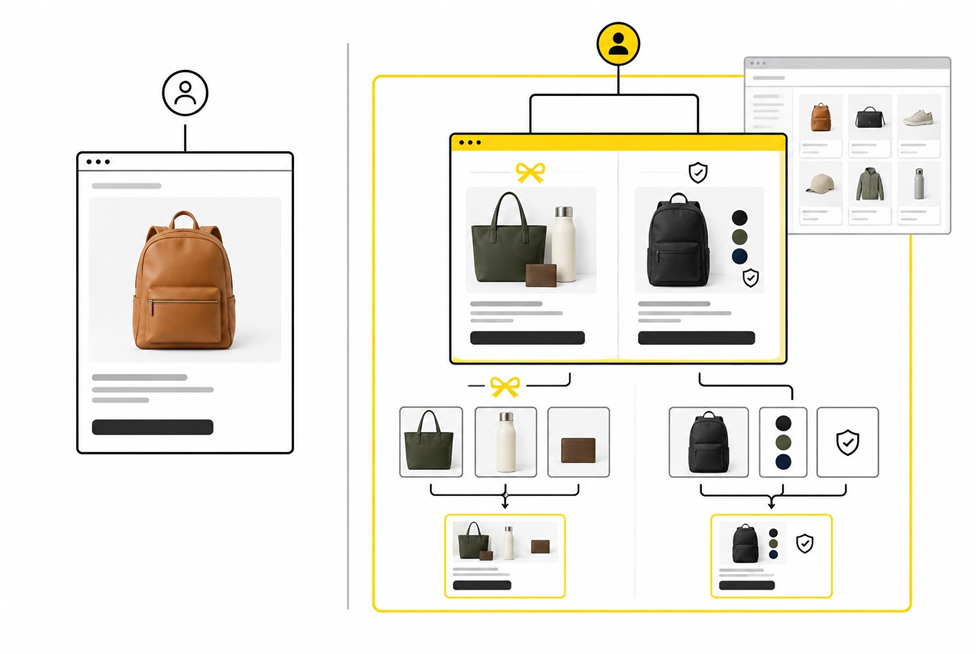
Rather than mapping bundles to TOFU, MOFU, and BOFU stages, Valerio argues brands should segment by customer lifecycle: first-time purchasers versus returning customers. Cold traffic needs a low-friction entry point, while returning customers are far more receptive to multi-product or repeat bundles. Pushing multi-product bundles onto cold traffic in short-form video ads overloads viewers with context they haven't earned yet. Conversion can drop sharply even as AOV climbs on paper.
Aves's point on readiness is direct: a brand that can't sell a single product on its own has no business bundling. Extra SKUs only overcomplicate the message and muddy the path to conversion when the core offer isn't proven. It's a diagnostic question worth answering before any creative work starts, and it's exactly the kind of unit-economics check Pilothouse runs before recommending any bundle structure.
The underlying principle, per Aves's guidance, is that top-of-funnel bundling works best in categories where consumers already expect to buy in sets. Standalone or higher-priced
products risk a conversion penalty if bundled too early in the customer relationship, before trust or intent has been established (Ep 39).
Why Dedicated Bundle Pages Outperform Standard PDPs
Bundles perform differently depending on where they live on the site, and standard Product Detail Pages (PDPs) are rarely the right home for them. Aves recommends placing bundle offers on dedicated, standalone landing pages instead. This isolates the exclusive value proposition without adding browsing friction to the main site, and lets the offer breathe without competing against the brand's full catalog.
Landing page exclusivity also creates room to "beef up" the offer, whether that means a five-item pack instead of three with a steeper discount, or a cross-category surprise item thrown in. This exposes first-time buyers to a wider slice of the SKU line while giving the bundle a reason to feel special rather than discounted.
Building Bundles for Returning Customers by Persona
Generic bundles leave money on the table with repeat buyers. Aves's framework calls for tailoring bundles by persona instead of running one generic offer for all past purchasers. Repeat holiday buyers (gifter personas), targeted through email and retargeting, respond well to two- or three-item bundles built around multi-unit savings messaging and personalization add-ons like custom engraving or gift wrapping. Returning buyers exploring different SKU variations (functional personas) are better served by functionality-expansion bundles, think an additional unit plus variant options, paired with security guarantees like extended warranties or shipping protection, rather than low-value promotional freebies customers don't actually want.
Post-Click Upsell Tactics That Lift AOV Without Hurting Conversion
Bundles and thresholds work at the offer level; upsells work at the moment of decision. Ep: 43: Sell Like It's 1999: Infomercial Tactics That Still Work, pulls a lesson straight from direct-response marketing history.
Aves's recommendation is to apply the classic "and wait, there's more" tactic post-click, right at cart and checkout, through popups, timed discount codes, or bonus add-ons. Shopper intent peaks at this moment. It lifts excitement and order size without cluttering ad creative that needs to stay simple higher up the funnel.
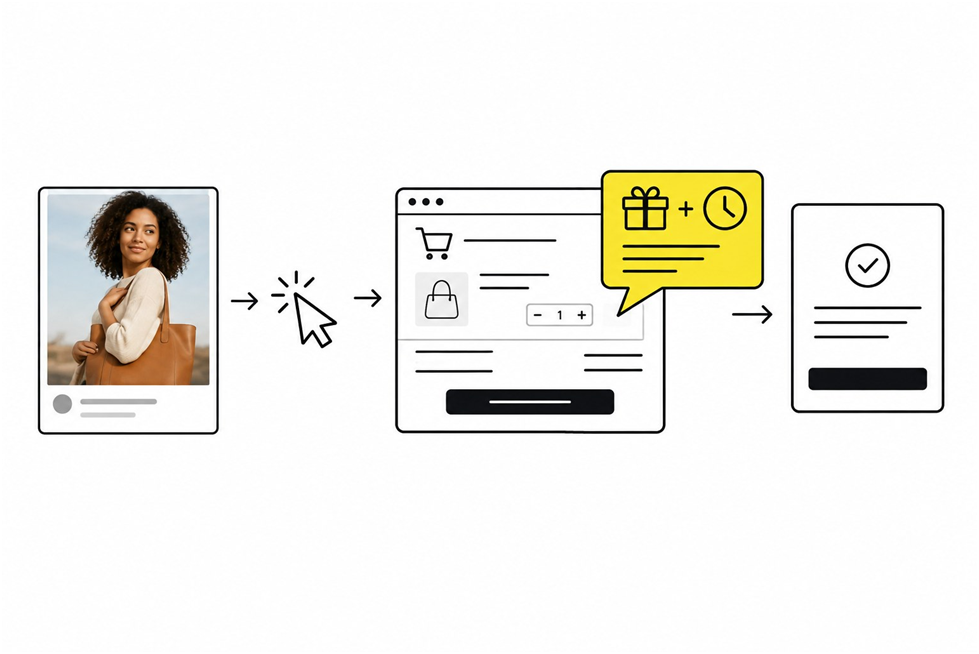
Brands under $10M in revenue, without a major celebrity spokesperson to carry the brand story, need to lean on consistent post-click conversion and AOV drivers (checkout popups, threshold incentives, value-add bonuses) to fund growth and maximize every cart.
Aligning Merchandising and Copy to Support Higher Cart Values
Increasing AOV is a copy and merchandising question just as much as a pricing one. Ep 579: How to Nail DTC Merchandising in Q1: From Scroll to Sale, featuring Eric Dick, Host of the DTC Podcast, alongside Taylor, Technical E-commerce Strategist at Pilothouse, and Aves Valerio, Creative Strategist at Pilothouse, lays out how creative and post-click experience need to work as one system.
Feed creative needs to align with the information architecture of PDPs and landing pages, answering objections before shoppers even have to ask, rather than leaving them to figure things out once they click through. For higher-AOV products, copy should anchor on emotional identity and daily rituals rather than leading with technical specs or an early price cut. Specs answer questions, but identity is what creates desire, and desire is what justifies a bigger cart total.
Trust thresholds on PDPs matter here too. Lifetime guarantees and clear protection policies take the hesitation out of a bigger purchase. Higher cart totals can push shoppers past a comfort-zone threshold where conversion begins to decline (GrowthSuite), so a jump in price changes how the purchase feels, not just what it costs. Trust anchors matter when cart totals approach that comfort-zone threshold.
Measuring and Testing Your AOV Strategy
None of this works without measurement discipline built in from the start.
Tracking AOV Alongside Conversion Rate and Margin
Don't track AOV by itself. Order size and conversion rate have an inverse relationship past a category-specific comfort zone, meaning conversion tends to peak and then decline as totals climb too far (GrowthSuite). One recommended approach is setting a free shipping threshold around 30% above current AOV, high enough to stretch the cart without feeling out of reach (Aaron Zakowski), though this is one consultant's guideline rather than a fixed rule. Extra or unexpected costs remain the top driver of cart abandonment, contributing to 48% of abandoned carts (OptiMonk), and overall cart abandonment averages 70.22% across an aggregate of 50 studies (Baymard Institute). Neither figure should be read as a verdict on bundling or upsell tactics specifically; they're baseline industry context, not causal evidence.
Segmenting AOV Results by Customer Lifecycle Stage
Blended AOV hides more than it reveals. Segmenting results by first-time versus returning customers shows which tactics are actually moving the number for each group, rather than averaging away the difference.
Turning Strategic AOV Gains Into Sustainable Growth
Promotions can push order size up, but the lift rarely lasts. Catalog marketing veteran Stephen Lett argues in Total Retail that promo-driven order size drifts back to its natural level once the offer ends, and that offers designed to inflate AOV often cost you response rate and total orders. Durable gains come from merchandising and how the buying experience is built, not one-off discounting. Before deploying bundles, thresholds, or upsells, check what a bigger order is actually worth: a gain you can't tie back to margin, LTV, or CAC payback is hard to defend to stakeholders, no matter how good the top-line number looks.
The Rag Company shows what that looks like in pract[1] ice. In Pilothouse Digital's case study, post-purchase and upsell flows ran alongside a Rebuy integration that was involved in 22% of total sales during peak season, and AOV rose 5.7% in November 2025 versus November 2024. The case study credits that lift to acquisition, retention, and CRO working as one system, rather than to promotional lift alone.


