Ecommerce Checkout Optimization: Removing Friction Where It Costs Most


Ecommerce Checkout Optimization: Removing Friction Where It Costs Most
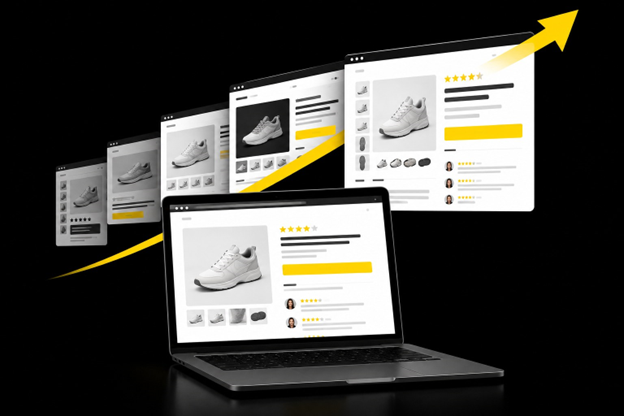
Checkout is where marketing spend either turns into revenue or just disappears. For DTC brands past the $10M mark, ecommerce checkout optimization isn't a UX nicety anymore. Every point of friction removed from checkout ties directly to contribution margin, and every leak left alone is spend already paid for but never recovered. This piece breaks down where checkout friction costs the most and how to fix it in priority order, drawing on Pilothouse Digital's own podcast know-how rather than generic UX advice.
What Checkout Friction Really Costs Your Store
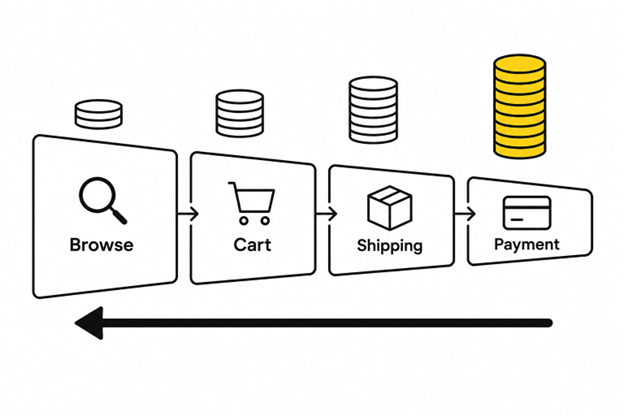
Checkout friction shows up as unexpected costs, unclear steps, and missing trust signals right at the moment a buyer is ready to commit. Because checkout sits at the end of the funnel, every dollar spent on acquisition up to that point is at risk the moment friction appears. Ecommerce teams get the clearest gains when they treat checkout optimization as revenue recovery rather than a design refresh, since the fixes tie back to dollars already spent to get the shopper that far.
The High-Cost Drop-Off Points in a Typical Funnel
The most expensive drop-offs happen closest to payment, where acquisition cost is fully baked in and losing the sale costs the most. Losing someone at the top of the funnel costs far less than losing them at the payment field, where the full cost of acquisition has already been spent. Audit ecommerce checkout flows from the payment step backward, prioritizing fixes where dollars already spent are most exposed. Fix the checkout process optimization closest to the money first, then work upstream.
Bundles and Add-Ons: Strategy, Not Discounts
Bundles and add-ons work as strategic tools for average order value, not as blanket discounts. As Aves (Avery Valerio, Host & Creative/Brand Strategist at Pilothouse) explains in Ep 39: Bundles Aren't Discounts. They're Strategy, first-time buyers need the lowest-friction entry point possible. Loading them with complex bundle choices before they've made a first purchase decision reduces conversion rather than lifting it. The fix is sequencing: earn the first purchase cleanly, then expand basket size later.
Why Simple Cart Bumpers Beat Complex Bundles at First Purchase
At the initial conversion point, Aves recommends stripping the primary offer down and using simple cart bumpers for supplementary items instead of complicating the core decision. Complex bundles introduce decision fatigue exactly when a first-time buyer needs the path to be obvious. Keep the primary offer simple and let a single cart bumper carry the incremental revenue.
Adding Warranties and Shipping Protection to Close Risk-Averse Buyers
For functional, risk-averse shoppers, Aves notes that adding security options, extending a one-year warranty to two years, or offering shipping protection closes sales more reliably than deeper discounts. These additions work because they resolve risk instead of price. Unwanted add-ons just create confusion, so post-click upsells should map to genuine buyer intent rather than pad order value artificially. Sell certainty to risk-averse buyers before selling savings.
Matching the Post-Click Experience to the Pre-Click Promise
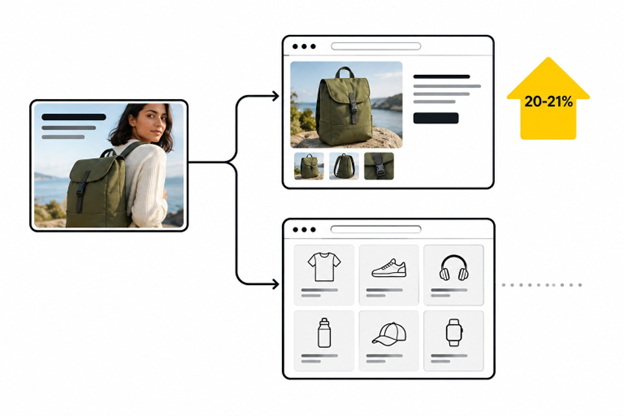
What a shopper clicks on sets an expectation, and the storefront that follows either honors it or breaks it. Consistency between ad and landing experience is one of the highest-leverage levers in checkout optimization because it decides whether traffic even reaches checkout in a mindset to buy.
Aligning Storefronts With Ad Creative for a 20-21% Conversion Lift
In Ep 639: The Creative Is the Brief - Pilothouse on AI Storefronts and a 20-21% Conversion Rate Lift, Daniel Sendecki (VP Brand & Performance at Pilothouse) and Eric Dick (Host, President & Co-founder of DTC Media) talk about treating the ad unit itself as the brief for the post-click storefront. Dynamically matching storefront messaging and visuals to the ad that drove the click produced a 20-21% conversion lift in Pilothouse's own pilot work. Modern tooling now compresses landing page generation to one to two minutes per page, removing the lead-time friction that once forced brands into broad, generic homepages. Build the post-click page to answer the exact promise made in the ad.
Avoiding the 'Generic Catalog' Trap of Broad Landing Pages
Daniel describes sending traffic to a generic PDP or category page as handing a customer a hundred-page catalog when they asked for a specific 65-inch TV. That mismatch creates friction. Session recognition and predictive analytics now let persistent user IDs power real-time personalized storefronts, cutting bounce and post-click hesitation. Match specificity, not just branding, between ad and landing destination.
Resolving Buyer Anxiety Before They Reach Payment
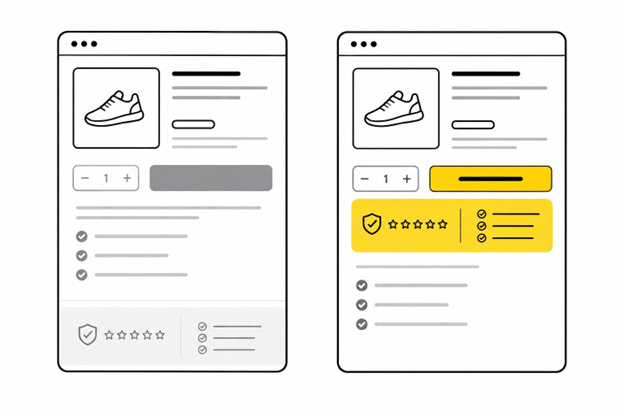
Checkouts usually stall on anxiety more than indecision. Resolving it before the payment field appears keeps the checkout optimization work from being undone at the last step.
Trust Signals, Guarantees, and Reviews at the Point of Decision
In Ep 579: How to Nail DTC Merchandising in Q1: From Scroll to Sale, Taylor Cain (Ecommerce Strategist), Avery Valerio (Lead Content Manager), and Eric Dick (Host), walk through how trust signals like lifetime guarantees and verified reviews on product and checkout pages reassure hesitant shoppers. Aligning site architecture with a shopper's emotional truth, resolving price and trust objections before they reach checkout, creates a more linear, frictionless path to purchase. Place guarantees and reviews at the exact point where doubt peaks, not buried in a footer.
Addressing Competitor Comparison Anxiety On-Site
The same episode covers a piece of Pilothouse's own field observation: shoppers often check a handful of competing sites, typically three or four, before buying. Ecommerce checkout flows need to resolve competitor-comparison anxiety directly on-site rather than assume the shopper has already ruled out alternatives. Clear USPs and testimonials do this work. Answer the "why not a competitor" question before the shopper goes looking for it elsewhere.
Infomercial Tactics That Still Convert at Checkout
Some of the oldest sales tactics still work at the newest checkout moments, because they're built around timing, not novelty.
'And Wait, There's More' Offers at the Money Moment
In Ep 43: Sell Like It's 1999: Infomercial Tactics That Still Work, Avery describes deploying "and wait, there's more" incentives, instant checkout promo popups, surprise gifts, at the exact moment a customer is about to buy. Dismantle friction methodically at the post-click and cart stages, not by cramming it into a short pre-click ad. Save a surprise incentive for the money moment, not the ad.
Using Search Intent to Agitate and Resolve Buyer Hesitation
Aves also points to using search-intent insight to identify the specific anxiety behind hesitation, then agitating and resolving it directly at the point of sale. This turns checkout copy into a tool that answers objections rather than just processing payment. Build checkout messaging around the actual questions shoppers are searching, not generic reassurance.
Designing Low-Friction Funnels and Custom Checkouts
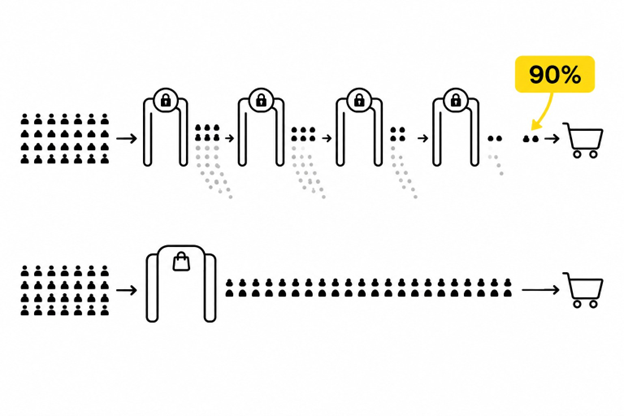
Funnel design decisions made for operational convenience often create friction that costs more than they save.
Why Low-Friction Trial Offers Outperform Forced Commitments
In Ep 645: Don't Run Ads Until $10M' and Two Other Takes, Jordan Gordon (Email & Customer Retention, Pilothouse) and Rafael Gi (Strategy Growth & Partnerships, Pilothouse) note that forcing shoppers into an inescapable custom quiz or multi-step plan drove over 90% of visitors who started it to drop off before checkout, in Pilothouse's own observed campaigns. Requiring high-friction subscribe-and-save commitments upfront, instead of a low-friction trial like a sampler pack, severely depresses conversion. Let cold traffic sample before asking for commitment.
The Risks of Non-Standard, Custom-Built Checkout Paths
The same conversation flags that non-standard, custom-built checkout funnels introduce operational and measurement friction, breaking session tracking and deviating from proven benchmarks. Designing checkout strictly around existing buyers, stripping out brand introductions and trust-building, creates heavy friction for net-new, cold traffic that hasn't earned that trust yet. Keep checkout builds standard enough to measure, and welcoming enough for first-time visitors.
Building Trust Through Creator-Driven and Authentic Messaging
Authenticity earns trust faster than brand messaging alone, and that trust travels with the shopper into checkout.
Whitelisting Creator Content for Higher-Efficiency Ads
In Ep 641: Creator-Handle Ads Ran 70% More Efficient, Aves (Avery Valerio, Head of Brand Content, Pilothouse) and Eric Dick (Host) discuss whitelisting ads through creator handles, which ran up to 70% more efficient than brand-handled ads in Pilothouse's reported results, because third-party endorsement builds trust before checkout even begins. High cart abandonment at the money step often signals a trust gap that top-of-funnel interest alone can't close. Let creator credibility do trust-building that brand voice can't do alone.
Embedding Friction Removers Into Mid- and Bottom-Funnel Content
Aves also emphasizes embedding explicit friction removers, return policy details, risk-reversal guarantees, trust badges, directly into mid- and bottom-funnel content rather than waiting for checkout to introduce them. In-cart upsells, bundling, and clear product matching at the post-click destination protect against lost conversions the way an insurance policy protects against loss. Introduce trust and reassurance before the cart page, not at it.
Auditing Your Funnel to Fix Leaks in the Bucket
Pilothouse's own framing for this work, discussed in Ep 579, is fixing "leaks in the bucket": drop-off caused by unresolved objections before checkout ever loads. Checkout-only audits miss most of this. A full-funnel audit is what surfaces these leaks, since friction often starts well before the cart.
A practical audit groups findings loosely by area. On flow, check whether every step, from the initial ad click through to order confirmation, matches the promise made upstream. On forms, check field count, autofill support, and whether guest checkout is available. On payment, check whether preferred methods are visible early and whether errors are handled clearly. On mobile, check load speed and tap-target sizing, since mobile checkout tends to carry the most friction and the least attention.
Prioritize fixes by where they sit relative to the payment step, weighing impact against effort. That keeps the audit tied to margin impact instead of busywork. Audit the whole funnel, but fix closest to the money first.
Partnering With Pilothouse Digital to Optimize Your Checkout
The Three Pillars of Pilothouse's CRO Approach
Pilothouse Digital's CRO service is built around three pillars: discovery, conversion, and cohesion. Discovery helps shoppers find products through search and chat, with crawler-friendly on-site optimization and AI-driven recommendations and bundles. Conversion removes hidden conversion killers through heat mapping, site funnels, and split testing across the full journey from landing page to checkout, run as scientifically rigorous tests for quantifiable results. Cohesion keeps the site aligned with product calendars, promotions calendars, and traffic channels so users get the right experience whenever they land.
Why an Integrated Agency Model Matters
That structure reflects how Pilothouse operates as an integrated agency, with strategy, acquisition, retention, creative, and CRO under one roof, so insight from one channel informs decisions across all of them rather than sitting in a silo.
Fast-loading pages sit at the foundation of Pilothouse's post-click approach, using custom technology to deliver headless-commerce benefits without a full store rebuild. That includes landing pages with integrated checkouts, giving brands headless-commerce benefits without a full store rebuild. The Rag Company's work with Pilothouse, which drove 101% year-over-year growth through unified acquisition, retention, and CRO efforts, shows what this integrated approach can produce when acquisition and checkout optimization are managed as one system rather than two separate projects.
Getting a Full Funnel Diagnosis
For DTC brands past the $10M mark looking for a full diagnostic of where funnel and checkout performance are leaking margin, Pilothouse's case studies are a reasonable place to see how this work plays out across different brands and categories.