YouTube Pre-Roll Ads for DTC Brands: Why Information Intent Changes Everything

Most DTC brands approach YouTube advertising the same way they'd approach a TV buy: a polished spot, a brand message, and a hope that someone in the target demographic is paying attention. That thinking misses the single most important thing about the platform. YouTube is not a passive medium. It's a search-driven environment where viewers arrive with questions, and pre-roll ads land right in the middle of that moment. If your YouTube strategy isn't built around information intent, you're not just leaving performance on the table. You're actively working against the platform's fundamental dynamic.

YouTube Pre-Roll Ads Start With a Question, Not an Interruption
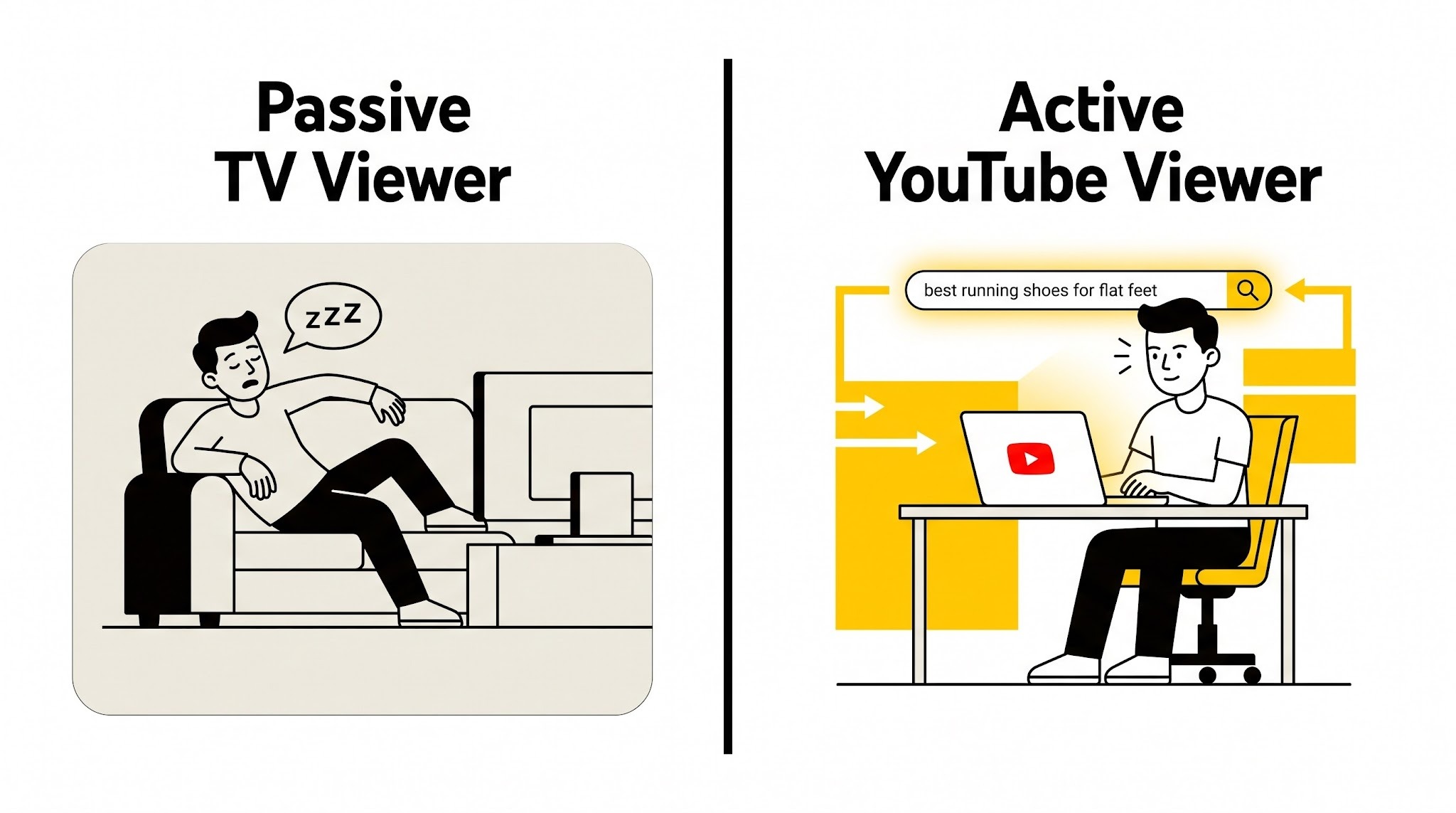
When someone lands on a YouTube video, they're pursuing something: learning, comparing, solving a problem. Pre-roll ads appear right in the middle of that pursuit. That context makes pre-roll fundamentally different from every other paid format. On Meta, ads interrupt a scroll. On YouTube, they enter a moment of active intent. The viewer has already signaled what they care about simply by choosing what to watch.
Why Information Intent Separates YouTube From Every Other Paid Social Channel
YouTube viewers make deliberate choices. They search for something, click a specific result, and settle in. That intentionality creates a different quality of attention, one that's more receptive to relevant messaging and far less tolerant of noise that doesn't fit.
A viewer who searched "best running shoes for flat feet" and clicked a review video is already primed to receive footwear information. If an ad meets them with exactly that content, it doesn't feel like an interruption. It feels like a continuation of what they were already looking for.
What DTC Brands Get Wrong When They Treat Pre-Roll Like a TV Spot
The most common mistake is lifting TV or Meta creative and running it unchanged. TV audiences are captive. YouTube audiences have a skip button. TV ads rely on mood, spectacle, and repetition to build brand familiarity over time. Pre-roll operates on entirely different logic.
Viewers are in information-gathering mode, and a slow brand build or lifestyle montage doesn't align with why they're on the platform. The result is high skip rates, weak view-through metrics, and a campaign that technically ran but never connected.
Shift Your Creative From Interruptive Persuasion to an Intent Resolution System
Here's the reframe that changes how pre-roll gets built: stop thinking about ads as persuasion tools and start thinking of them as intent resolution systems. The viewer has a question or a problem. The ad's job is to signal, within the first few seconds, that it has the answer.
This isn't just a creative philosophy. It's a structural approach to scripting, positioning, and targeting that shapes every decision downstream. When creative is built around resolving intent rather than projecting brand values, it stops competing with the content the viewer actually wanted to watch and becomes relevant to it instead.
Mapping Viewer Friction Points Before Writing a Single Line of Script
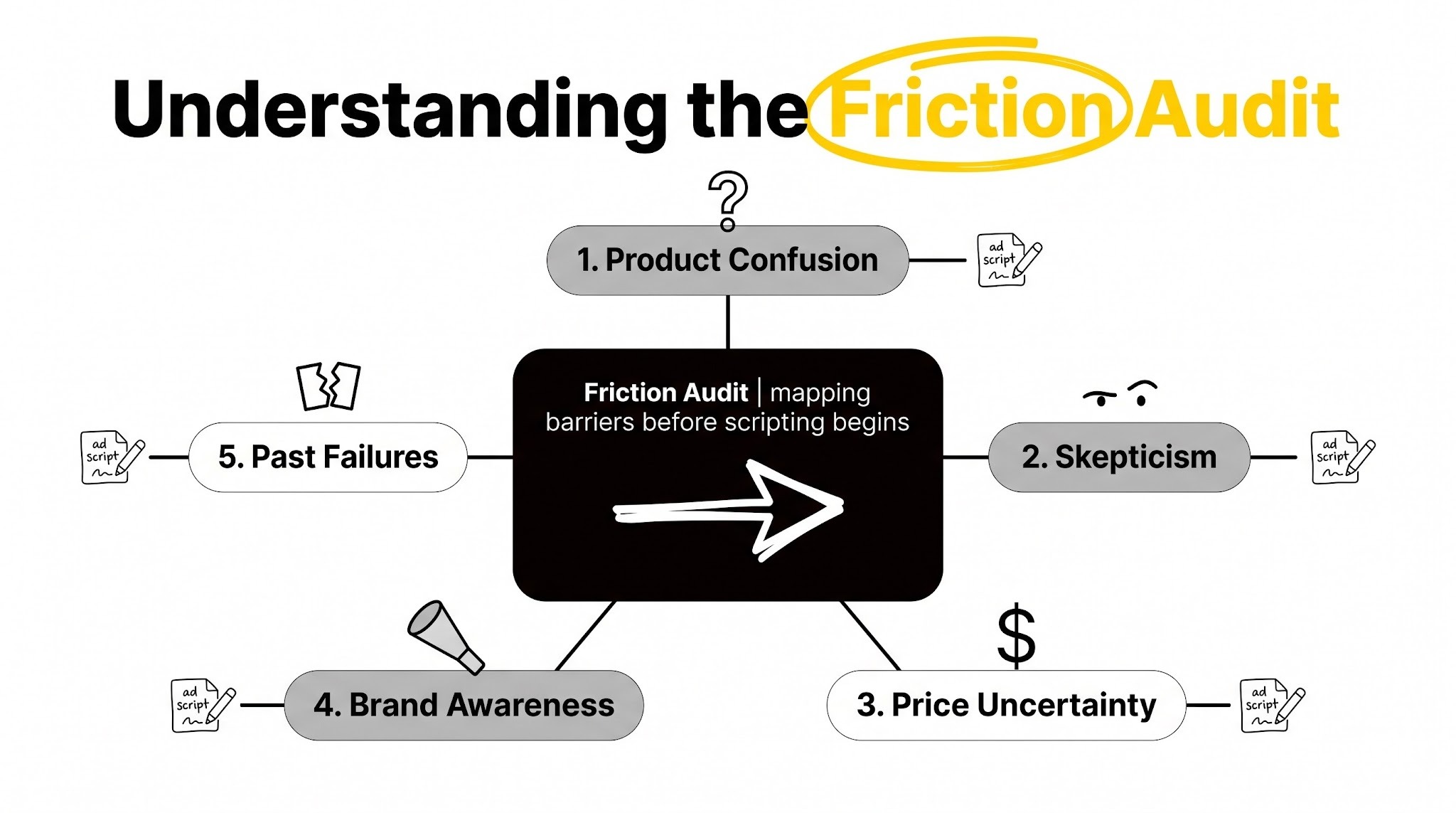
The best pre-roll ads don't start in a creative brief. They start with a friction audit. Before scripting begins, effective advertisers map the specific barriers standing between their ideal customer and a purchase: confusion about which product fits their situation, skepticism about claims, uncertainty about price, or simply not knowing the brand exists.
Each friction point is a creative opportunity. If audiences don't understand what makes a product different, the ad addresses that directly. If they've tried similar products that failed them, the ad speaks to that disappointment and positions the solution differently. The friction map becomes the architecture for a script that actually lands because it speaks to something the viewer is genuinely experiencing.
How to Mirror the Exact Language Your Audience Is Already Searching
Once friction is mapped, the language has to be right. The phrases audiences type into the YouTube search bar are the exact phrases an ad should reflect. This isn't just SEO logic; there's a specific psychological mechanism at work. When ad language mirrors a viewer's search query, the ad resolves cognitive tension rather than creating it. The viewer feels understood, and that feeling earns attention past the skip.
Custom Intent Audiences on Google Ads work precisely on this signal: when configured with the "People who searched for any of these terms on Google" option, they're built from actual previous Google search queries, not behavioral profiles. That's a distinction many DTC marketers miss. The audience isn't defined by who someone is. It's defined by what they actively sought out. Keyword research, comment sections on competitor content, and review videos all surface the raw language an audience actually uses. That language, placed verbatim in a script, is more powerful than any polished brand copy.
The 5-Second Branding Rule and the Recognition Hook
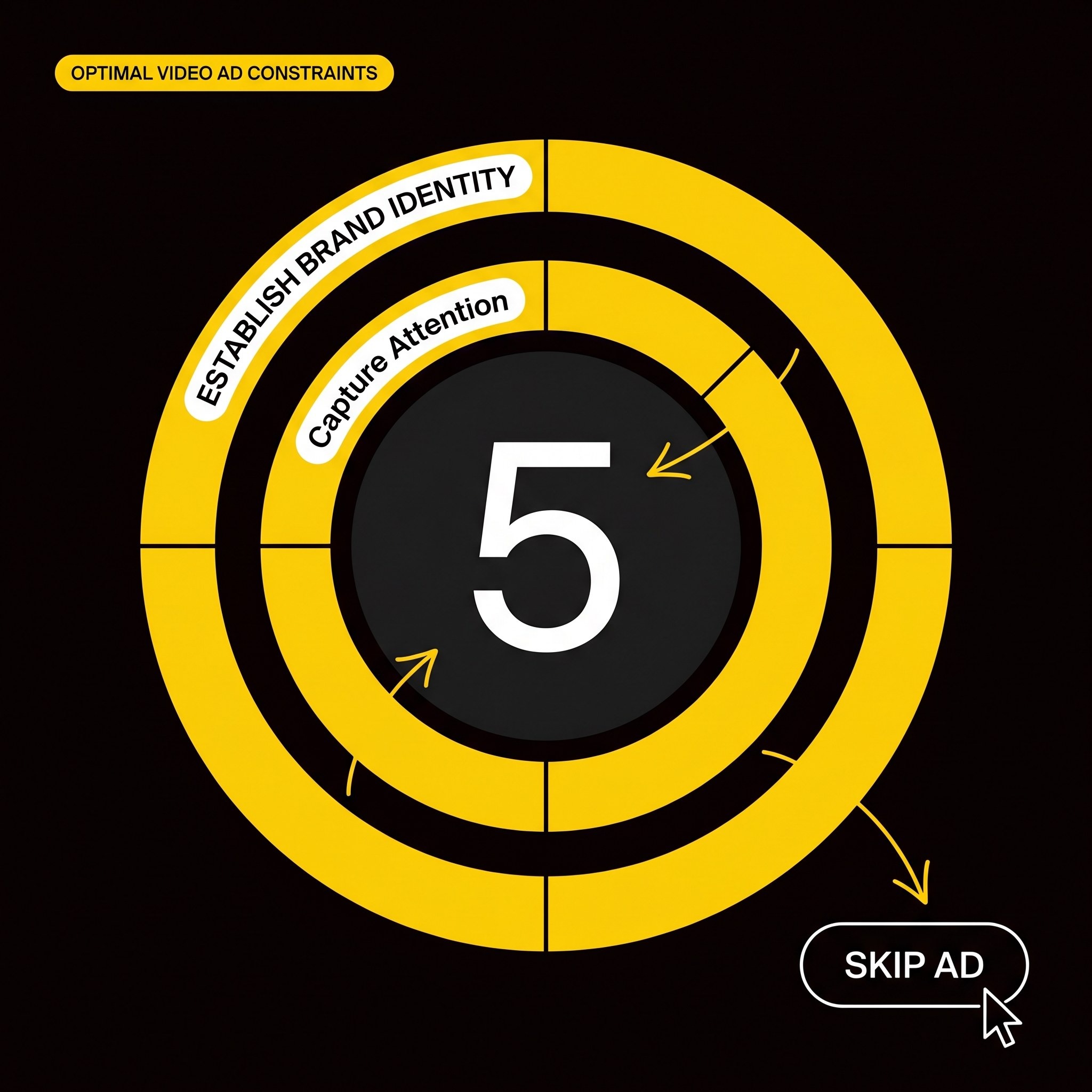
Pre-roll ads come with a timer. Five seconds in, the viewer can skip. That constraint shapes everything about how an ad needs to open. The first five seconds carry two responsibilities: capture attention and establish brand identity. Most creative fails on at least one.
Conventional wisdom says hook first, brand later. Hold the logo reveal until the viewer is already engaged. For YouTube's skippable format, that logic actually works against the brand. Even a viewer who skips can register a brand impression, but only if the brand appears before that choice gets made. The brand is part of the hook, not a reward for watching past it.
How to Make a Viewer Think 'That's Exactly What I Was Wondering'
The hook that earns the watch is built on recognition, not spectacle. It might be a direct question that names the viewer's problem, a statement that acknowledges a frustration they've felt, or a scenario specific enough to their situation that it stops them mid-reach for skip. This is the recognition hook: it collapses the distance between viewer and ad in a single moment.
When a viewer thinks "that's exactly what I was wondering," they shift from passive observer to active participant. They're no longer watching an ad. They're watching something that feels made for them. That shift is what separates pre-roll ads that earn attention from ones that get dismissed immediately.
Why Content Targeting Now Outperforms Interest Targeting on YouTube
The brands winning on YouTube right now have shifted from audience-first to content-first targeting. Interest targeting relies on behavioral signals to guess who might be receptive. Content targeting aligns the ad with the video a viewer is actively watching, which is a much stronger proxy for intent.
Content targeting for Video campaigns currently outperforms broad interest targeting for top- and mid-funnel YouTube campaigns. When a pre-roll ad plays before a video directly related to what a brand sells, the contextual alignment does significant creative work before a single word is spoken. The viewer is already in the right mindset.
Effective content targeting means thinking carefully about what content the ideal customer actually watches, not just their demographic profile. A buyer of premium kitchen equipment might watch cooking tutorials, restaurant review vlogs, or technique-focused videos. Each context signals a different stage of the decision journey, and the ad should speak to that stage specifically.
Deploy the Full Five-Message Framework Inside a Single YouTube Pre-Roll Ad
One structural advantage of YouTube is length. Compared to social video formats where six to fifteen seconds is the norm, YouTube regularly rewards longer formats when content earns viewer time. That length is a real strategic asset. It gives DTC brands room to deploy a complete five-message framework in a single ad unit.
Google's ABCD framework (Attention, Branding, Connection, Direction), built from analysis of thousands of campaigns, provides the structural foundation. According to Google/Kantar research, brands applying it see a 30% lift in short-term sales likelihood and a 17% lift in long-term brand contribution (Think with Google).
The five-message framework comes from Duncan Ferguson, Strategy Lead at Pilothouse, who outlined it on the DTC Podcast (Ep 595: 5 Messages That Scale DTC Growth). Ferguson's argument is that once you know the five things a customer needs to hear to go from never hearing about you to purchase, you stop reinventing the wheel for every campaign and start scaling a repeatable creative system. It maps naturally onto Google's ABCD architecture.
Awareness, Social Proof, Differentiators, Objections, and Urgency in Sequence
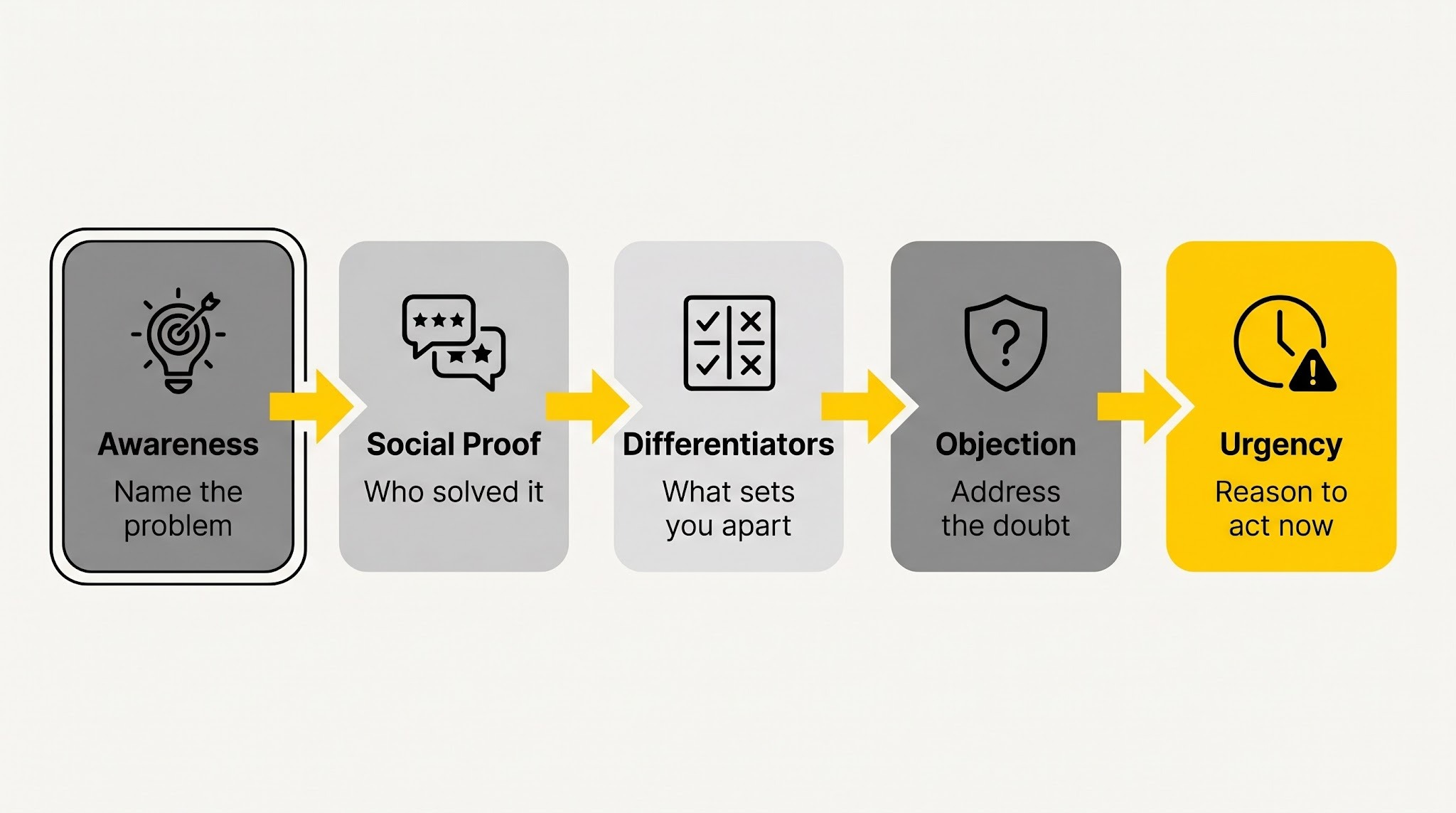
The sequence matters. Start with awareness: name the problem or desire the product addresses. Follow with social proof, specifically who else has solved this problem and what they said about it. Introduce differentiators, what makes this solution different from the alternatives the viewer has probably already considered. Address the primary objection directly, because ignoring it doesn't make it disappear. Close with urgency: a reason to act now rather than save the tab for later.
This framework works because it maps to how real decisions actually get made. People don't buy when they understand a product. They buy when they feel understood. For DTC brands in considered-purchase categories (supplements, skincare with active ingredients, fitness equipment that requires explanation), the longer format provides room to be thorough, and thorough is exactly what a viewer with a real question needs.
Teach First, Position Second, Convert Third: The YouTube Content Hierarchy
The brands that consistently win with YouTube pre-roll resist the urge to sell first. YouTube audiences distrust ads that lead with an ask. They respond to ads that lead with value. Teaching first means giving the viewer something genuinely useful early: an answer to a common question, a clear explanation of a complex concept, an honest breakdown of a category trade-off. That value creates trust, and trust is what makes positioning land. The conversion ask, when it comes, feels like a natural next step rather than a pressure tactic.
Half of viewers say digital video makes them aware of new products and brands, and 45% say it helps them choose which product or brand to buy (Google/BCG via Think with Google). The same study found YouTube was 1.7x more likely than social platforms to positively influence brand consideration. Those numbers reflect what happens when creative respects the platform's culture. YouTube has built its entire ecosystem on educational content. Ads that adopt that same posture fit the environment rather than fighting it.
Measuring What Actually Matters: Brand Search Lift Over On-Platform ROAS
Evaluating pre-roll ads by the same ROAS standards applied to Google Shopping or Meta conversion campaigns is a structural measurement error. Pre-roll operates higher in the funnel. Its immediate impact is on awareness and consideration, not last-click conversion.
The metric that actually reflects pre-roll impact is Search Lift: the increase in organic searches for a brand after ad exposure. When viewers watch an ad and then search for the brand by name, that signal confirms the creative is working. It predicts downstream conversion more reliably than on-platform clicks. Brands that track Brand Search Lift alongside branded search volume, return visitor rate, and time-on-site get a far more accurate picture of what YouTube is actually returning across the full funnel.
Why YouTube's TV Dominance Changes the Conversion Model
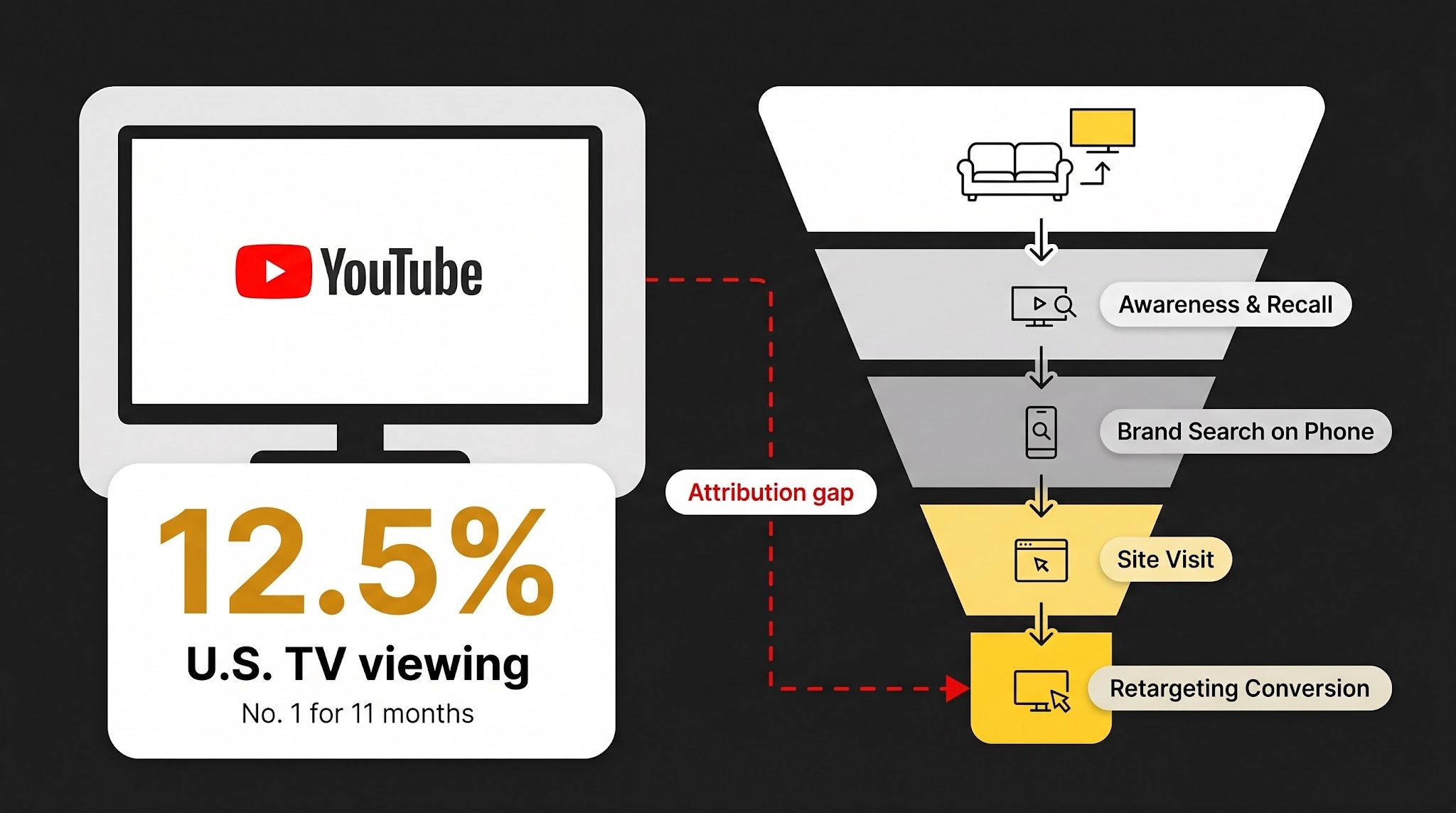
YouTube has become the most-watched media distributor on U.S. television, holding the No. 1 spot in Nielsen's Media Distributor Gauge for 11 consecutive months through January 2026, when it captured 12.5% of all U.S. TV viewing time (Nielsen, The Gauge). That share peaked at 13.4% in July 2025, the largest lead any single media company has held since Nielsen began this measurement in November 2023. A viewer watching YouTube on a connected TV is not going to click a link. The immediate direct-response mechanism simply doesn't exist in that environment.
What does happen is awareness and recall. That viewer may search for the brand on their phone ten minutes later, visit the site the next day, or recognize the product in a retargeting ad on Meta. Attribution models that look only at direct on-platform conversions will miss this entirely. Adjusting success metrics to include Brand Search Lift, direct traffic, and retargeting performance gives an honest view of what YouTube is actually contributing.
The 60- to 90-Day Commitment YouTube Pre-Roll Requires
YouTube pre-roll is not a short-game channel. Initial evaluation should happen at the 3-month mark; full performance measurement requires 6 months or more. Brands that pull the plug after three weeks because ROAS isn't immediate are making a structural error, measuring a brand-building channel on a direct-response timeline.
The brands that stay consistent, iterate on creative based on view-through and engagement data, and give the channel time to compound are the ones who eventually see YouTube become a significant driver of both awareness and acquisition. For DTC brands accustomed to Meta's faster feedback cycles, that requires a genuine shift in strategic posture. Pre-roll isn't buying clicks. It's buying presence at the moment of intent.
Connecting Pre-Roll to the Broader Growth System
Information-intent pre-roll is most powerful as one compounding input in a full-funnel engine, not a standalone campaign type. It builds the brand recognition that makes retargeting more efficient, the search intent that improves paid search conversion rates, and the trust that lifts lifetime value. Brands exploring how this fits into a broader acquisition strategy can review Pilothouse case studies for examples of how video strategy connects to full-funnel growth outcomes.
To discuss how a full-funnel approach could apply to your brand, book a free exploratory call with the Pilothouse team.


.png)