User Generated Content Ads That Actually Feel Authentic: Outcome-Based vs. Script-Based Briefs
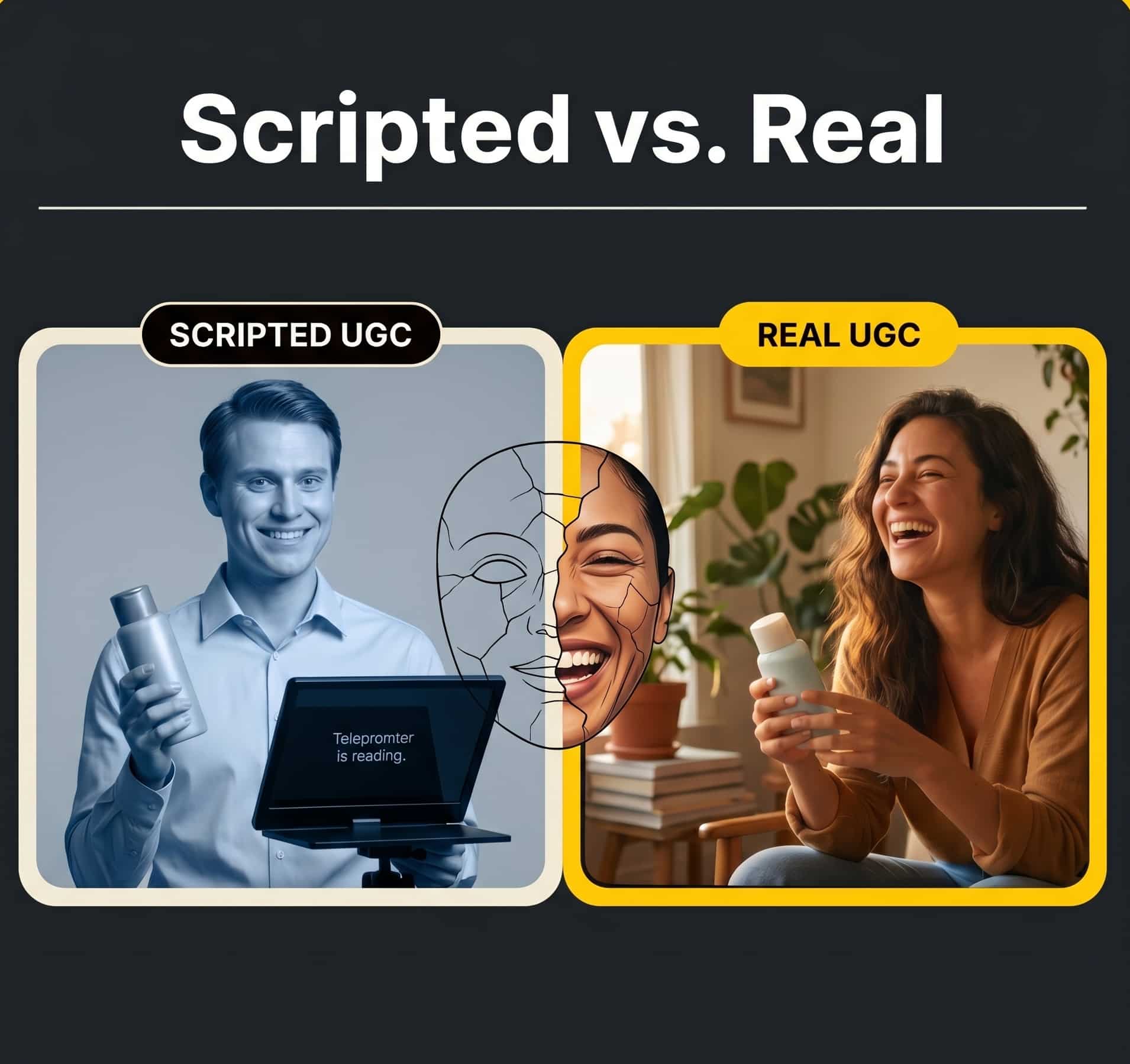
Real people holding a product on camera doesn't automatically make an ad feel real. Brands invest in UGC creators, get footage back, and still end up with something that feels like a polished commercial with a lo-fi filter slapped on top. Audiences notice, even if they can't explain why.
The problem isn't the format. User generated content ads remain one of the most powerful tools in performance advertising, especially for DTC brands scaling through paid social. The problem is the brief, specifically the kind that tells a creator exactly what to say, when to smile, and how to hold the product. That level of control kills the very thing that makes UGC work: genuine human expression.

Why UGC Ads Fail at Authenticity Even With Real People
UGC works because it mirrors how people actually talk about products they love. When brands start engineering that honesty, they break the spell.
The difference between polished brand creative and genuine UGC
Brand creative is built around the brand's perspective, what the company wants the viewer to believe. Genuine UGC is built around the creator's experience, what someone actually felt, noticed, or found useful. When a brand over-produces UGC-style content, the result lands in the uncanny valley of advertising. It looks like a testimonial but sounds like a script. Audiences who consume paid social content all day have sharp instincts for this disconnect. They don't articulate it as "scripted delivery." They just scroll past.
How scripted delivery triggers algorithm fatigue and viewer distrust
Scripted UGC ads tend to underperform on two fronts: platform delivery and audience reception. TikTok and Meta both optimize for engagement signals like watch time, hook retention, and completion rate, and formulaic delivery patterns, stilted product callouts, and rigid talking points generally produce weaker signals than organic-feeling content. Lower signals mean less efficient delivery, which compounds the problem over the life of an ad.
The audience side reinforces this. Viewers have grown more adept at spotting branded scripts dressed up as testimonials, and skepticism toward influencer and UGC content has climbed in recent years. When the seams show, the message lands with less weight, even if the viewer watches to the end.
Script-Based Briefs vs. Outcome-Based Briefs: The Core Distinction
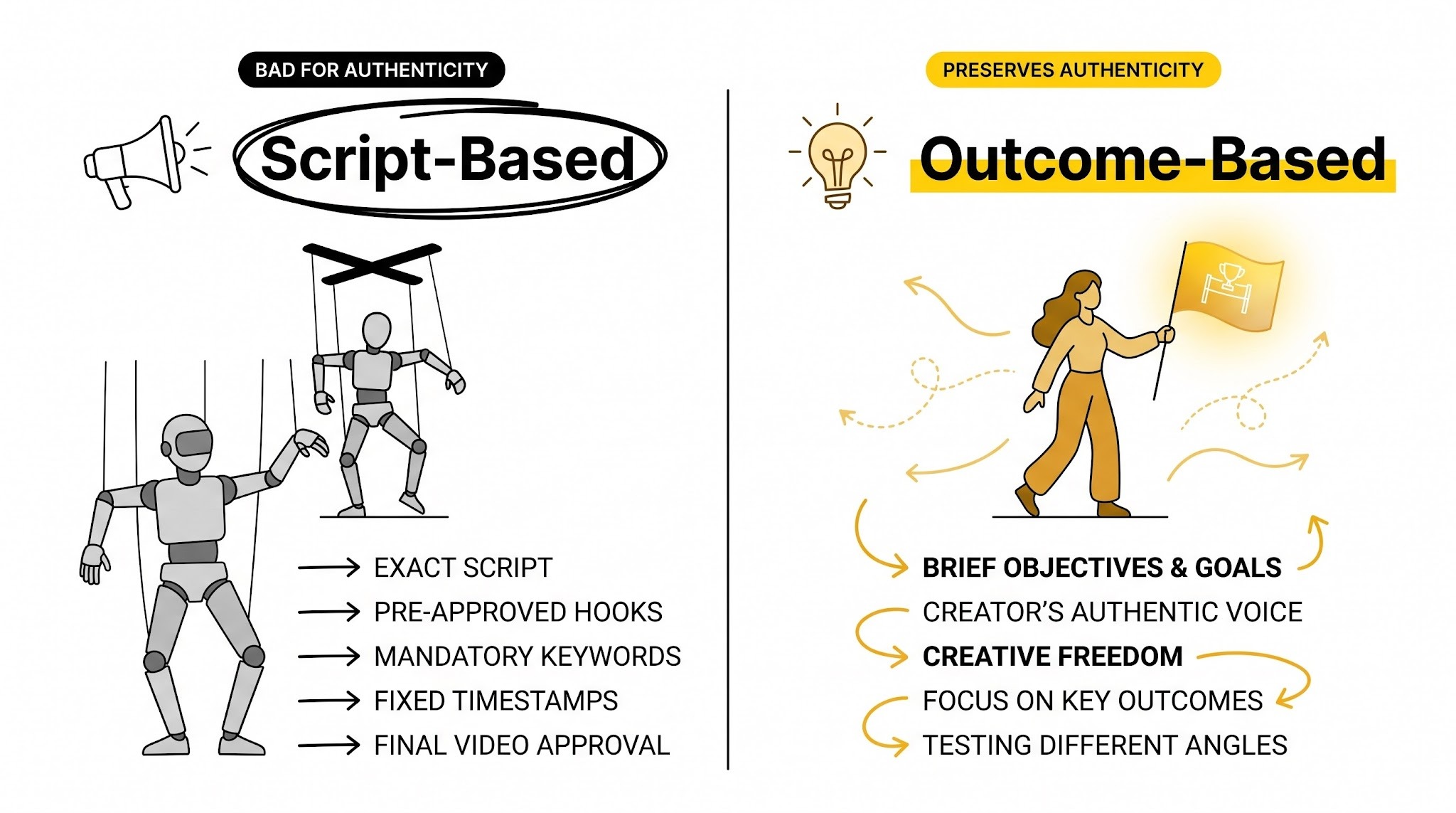
The brief is where the difference between content that converts and content that merely checks a box gets decided, before a single frame is filmed.
How over-direction strips creator voice
A script-based brief dictates the narrative: which words to use, which benefits to mention in which order, often down to literal talking points. The intent is control. The outcome is uniformity, and uniformity is the enemy of UGC. There is also a deeper issue most brands miss: creators do not care about the brand or its performance the way the internal team does. As Aves from Pilothouse puts it on the Adventurous podcast, assuming a creator will absorb internal passion or study the brand book is a costly mistake (Ep 40: How to Write Creator Briefs That Actually Perform).
Every creator has a natural way of communicating, shaped by their personality, their audience relationship, and their honest reaction to a product. When a brief overwrites that voice with brand-approved language, the creator becomes a delivery mechanism for the brand rather than a real person sharing an experience. What disappears from the content is exactly what makes people stop scrolling: the micro-expressions, the natural pauses, the genuine enthusiasm that no script can manufacture.
What outcome-based briefs define instead
An outcome-based brief defines the destination without mapping every road. Rather than scripting what a creator should say, it communicates what the viewer should feel, understand, or believe by the end of the ad. The shift is from persuasion to resolution. As Daniel Sendecki, VP of Brand + Performance at Pilothouse, puts it on the DTC Podcast, modern UGC ads should not try to convince or interrupt - they should identify a quiet anxiety the viewer already has and resolve it (Ep 581: Meta Ads Aren't About Targeting Anymore: How $5–50M Brands Win with Intent-Based Creative). This creates space for the creator's voice to emerge naturally. When a creator receives an outcome-based brief, they're solving a communication problem in their own way. The difference in delivery is immediately visible on screen.
Psychological Intent Clusters: Answering the Viewer's Quiet Anxiety
A strong UGC ad strategy doesn't start with what the brand wants to say. It starts with what the viewer is already thinking. Every prospective buyer arrives at an ad carrying doubts, questions, and unspoken desires. UGC that speaks directly to those undercurrents converts. UGC that ignores them entertains at best.
Mapping target doubts and desires
Before building any brief, the most valuable work a brand can do is map what the target audience privately worries about, not the obvious objections, but the ones people don't say out loud. Pilothouse uses customer language pulled from Reddit threads and Meta comments to establish psychographic ground truth. The goal is to cluster audience intent by mindset rather than demographics, not "women 25-34" but "women tired of 10-step skincare routines."
These psychological intent clusters shape every element of the brief: the value propositions, the creator profile, the tone, the visual context. That's how UGC ads earn engagement rather than demand it.
Why Recognition Hooks drive conversions
The most powerful thing a UGC ad can do in its first few seconds is make the viewer feel seen. A Recognition Hook isn't a clever opening line. It's a moment where the viewer's internal monologue becomes the ad's opening statement. When someone hears their own unspoken question reflected back at them, they stop scrolling. Recognition Hooks drive conversions because they establish relevance before the pitch begins. In Pilothouse's experience running performance creative at scale, hooks that land this way tend to produce stronger engagement signals in the first three seconds, which compounds into more efficient delivery and better downstream performance.
How to Build an Outcome-Based Brief Using Pilothouse's Framework
At Pilothouse Digital, the briefing process is built around one core principle: give creators what they need to tell a true story, and nothing more. This is a disciplined system designed to produce UGC content that performs in paid social environments.
Applying the over-contextualization rule
One of the most common brief mistakes is information overload. Product specs, brand guidelines, competitor comparisons, and platform notes get compiled into a document that reads more like an onboarding manual than a creative prompt. The over-contextualization rule is simple: include only what's directly necessary to serve the intended outcome. The creator needs to know the product's core promise, who the audience is, and what the ad should make that audience feel or do. Everything else dilutes focus and increases the likelihood of mechanical delivery.
Writing value props in natural language
Value propositions written in marketing language produce marketing-language responses. When a brief says "leverages a proprietary formula for enhanced bioavailability," the creator either repeats it awkwardly or spends time translating it. When value props are written the way a real person describes them, "it works faster because your body actually absorbs it," "keeps skin hydrated all day," "built for busy mornings," creators find their own voice within the message. That produces natural delivery, and natural delivery is what makes UGC ads convert.
The 3-5 second visual rule
The first three to five seconds determine whether the viewer stays or leaves. Pilothouse's approach is to be prescriptive about the visual hook without scripting the audio: describe what the viewer should see, a close-up of the product mid-use, a relatable environment, a specific gesture, and let the creator decide what to say. Visual context loads instantly; scripted audio triggers "this is an ad" pattern recognition and drives disengagement.
Outcome-based brief template
A minimal, immediately applicable brief structure covers:
- Campaign objective: What action should the viewer take?
- Target persona (mindset-based): The specific desire or frustration driving their search, not just demographics
- Psychological intent cluster: The doubt or desire being resolved
- Creative angles: Two or three narrative directions (not scripts)
- Visual hook direction: What the opening frame should show
- Natural language value props: Outcome-focused phrases, not feature lists
- Reference examples: For energy and pacing only, not replication
- Brand guardrails: Do's and don'ts
- Platform specs: Format, length, aspect ratio
- Timeline and compensation
Cooperating With Culture vs. Co-Opting It
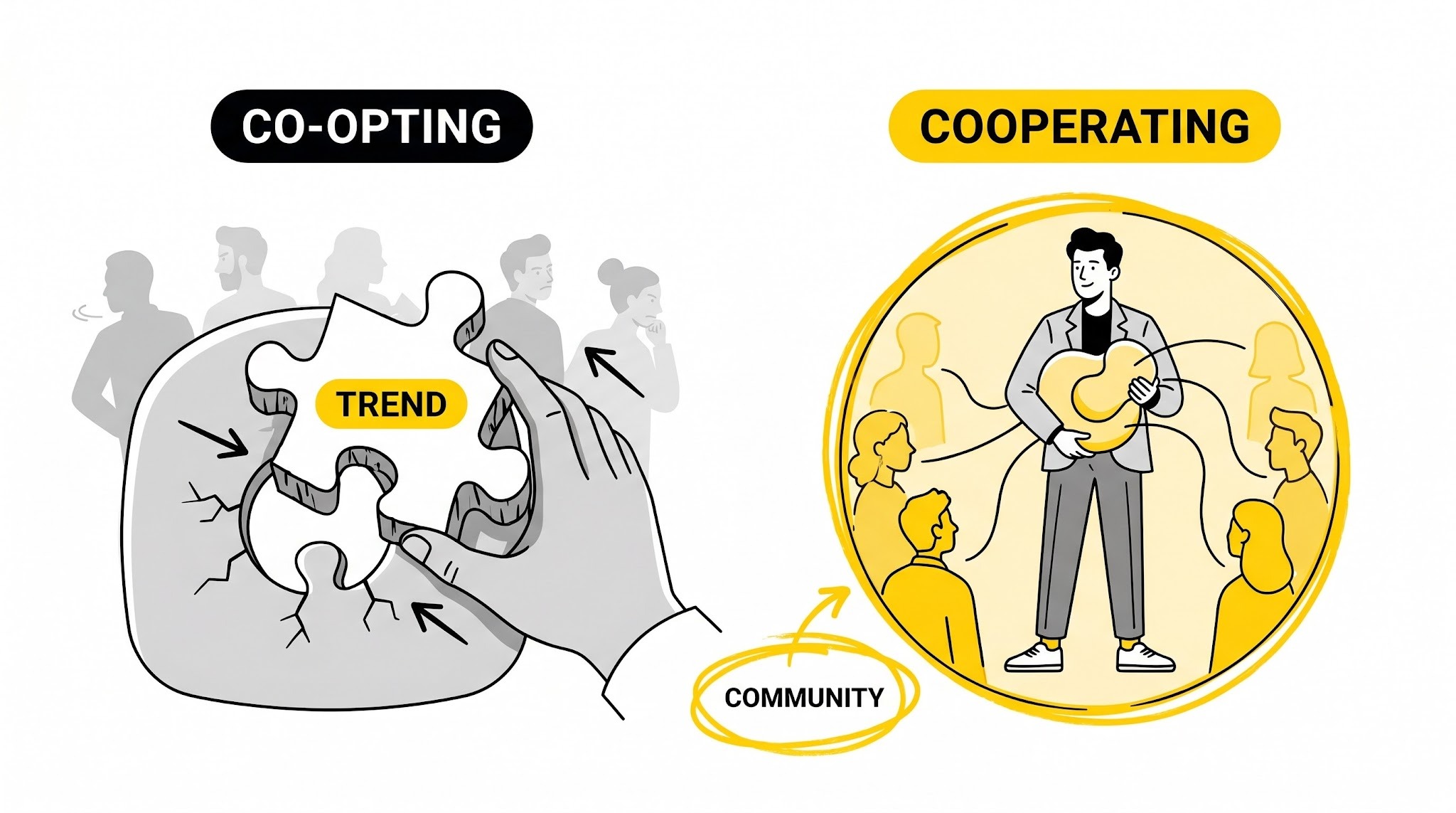
Cultural relevance is one of the most misunderstood elements of UGC marketing. Brands see a trend performing well, insert themselves into it, and expect credibility to follow. It rarely does.
Why chasing trends reads as cringe
When a brand forces its product into a trending format with no natural connection to its identity, the dissonance is immediate. A skincare brand that shows products embedded in real morning routines belongs in that moment. The same brand slapping "clean" on its packaging to chase the clean beauty trend is co-opting without connection. Audiences sense it, and algorithms penalize it through weaker relevance scores and inflated cost-per-result.
Using the Content Muse system
Pilothouse uses a Content Muse framework to anchor creative decisions in audience truth rather than trend cycles. The Content Muse identifies the aesthetic, emotional register, and cultural references that actually connect with a brand's target audience, not what's currently viral, but what's genuinely meaningful to the people the brand is trying to reach. This shapes creator selection as much as it shapes the brief. A creator who already exists within the audience's cultural world produces content that feels native to it. The brand doesn't manufacture cultural belonging. It hires someone who already has it.
Scaling UGC Ad Production Without Losing the "Human Stank"
Scaling is where most brands hit a wall. The first few pieces feel authentic, then production volume increases, individual voices blur into a branded sound, and the authenticity that made the early work perform starts to disappear.
The solution isn't to slow down production. It's to systematize the brief rather than the content. A repeatable outcome-based brief framework defines the structural inputs: audience intent mapping, natural-language value props, visual hook direction. The creative output stays variable. Each creator still brings their own voice, and the framework maintains strategic coherence while the creators maintain human variation. That combination is what makes UGC ads perform at volume without becoming interchangeable.
AI tools have a growing role in UGC workflows, covering brief generation, performance analysis, and creator matching. But authenticity lives in the judgment calls: which creator voice fits this audience, which emotional angle will actually connect, whether a piece of content has that specific quality that makes it feel real. Removing that human layer in the name of efficiency is where brands lose the "human stank," the slight imperfection, the genuine laugh, the unpolished moment, that makes UGC worth anything in the first place.
Measuring What Actually Matters in UGC Ad Performance
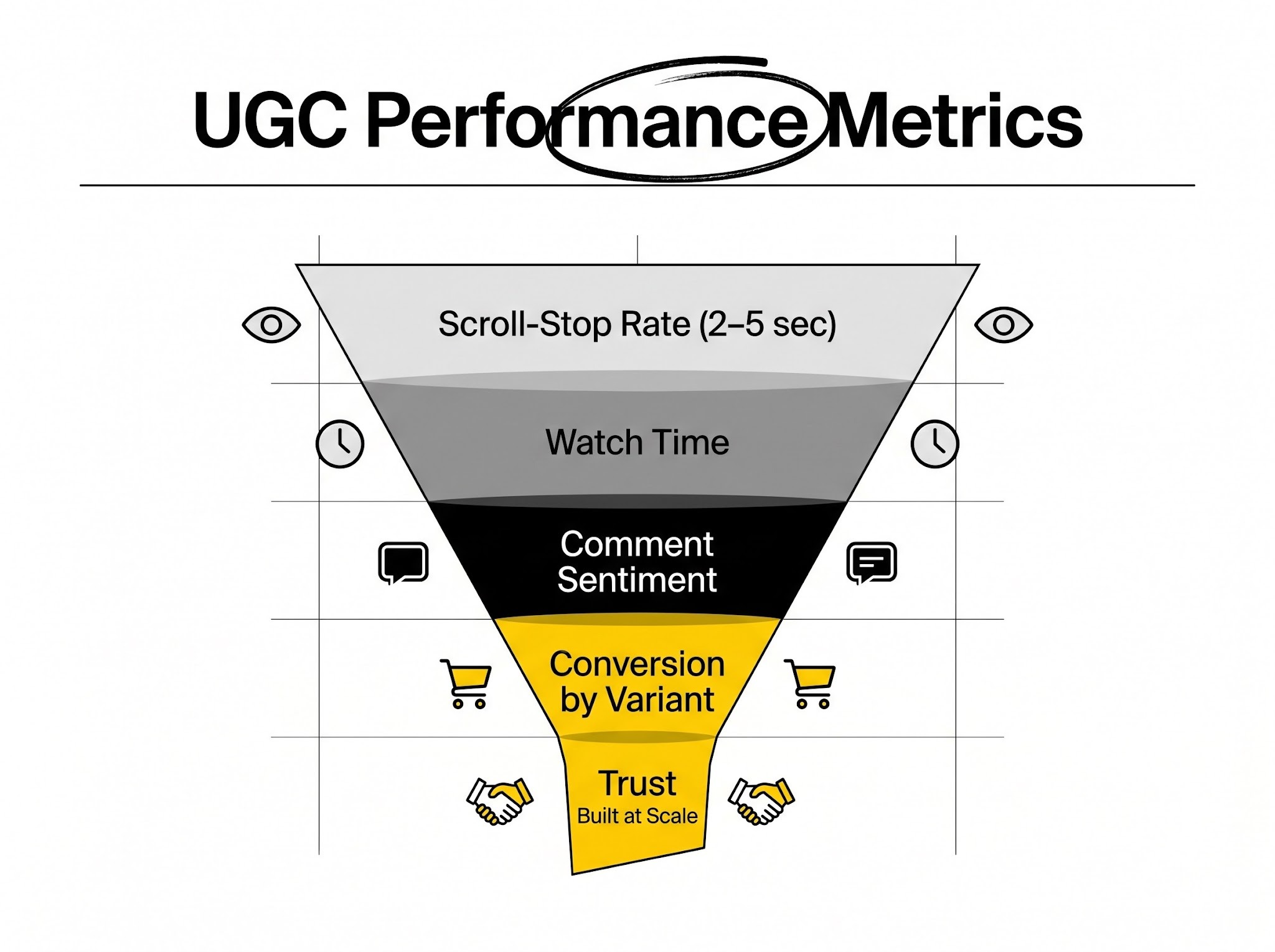
Performance measurement for UGC content requires a wider lens than standard creative reporting. Impressions and raw likes capture what happened but don't explain why. Watch time and scroll-stop rate at the two- and five-second marks reveal whether the hook landed. Comment sentiment, particularly unprompted responses where viewers share their own experiences, signals whether content created genuine recognition. Conversion rate by creative variant, segmented by audience cohort, shows which psychological intent clusters the content is actually addressing.
These signals matter because the goal of a UGC ad strategy isn't just abstract performance. It's building a content engine that generates trust at scale. Brands that measure for trust signals alongside conversion metrics build better briefs over time, because they understand not just what converted, but why the viewer believed it.
Work With Pilothouse to Build UGC Ads That Convert and Feel Real
UGC marketing only delivers when the content feels genuinely human. That starts with the brief, and the brief starts with a framework that respects both the creator's voice and the viewer's intelligence.
A system built for performance at scale
Pilothouse Digital operates with over 160 specialists producing 5,000+ creative assets per month, with $1B+ in attributable revenue across DTC clients. That scale is built on brief discipline, the same outcome-based framework described in this article, applied consistently across campaign types, platforms, and product categories.
From brief to distribution
Pilothouse works with DTC brands across the full UGC production cycle: brief frameworks, creator selection, paid social distribution, and performance analysis. The work is built around one consistent principle: advertising that connects with people converts better than advertising that just looks like it should.
Start building briefs that perform
If current UGC ads are producing content that looks right but isn't performing, the issue is almost certainly in the briefing process. That's a fixable problem. Explore Pilothouse case studies to see outcome-based performance creative in practice, or get in touch with the Pilothouse team to start building UGC campaigns that convert because they're real.