


DTC Customer Retention That Works: Moving Beyond Discounts to Lifecycle-Driven Repurchase
.jpg)
Most DTC brands treat customer retention like a fire to put out rather than an engine to build. When a customer goes quiet, the default response is a discount email. When a cart gets abandoned, it's a coupon code. This feels like it's working because conversions happen, but it quietly trains customers to wait for the sale while eroding the margins that fund growth. Customer retention ecommerce strategy deserves more precision than reactive discounting. The brands that build durable revenue engineer the conditions under which customers want to return, repeatedly, for reasons unrelated to price.

Why Discount-First Retention Creates a Flat Business Model
The core problem with discount-first retention isn't the discount itself. It's what the discount signals to customers over time. When price reduction becomes the primary re-engagement tool, brands effectively sort their list by price sensitivity and reward the customers least likely to stick around at full margin.
How Discount Dependency Degrades Repurchase Quality and Hides Performance Data
Over time, this creates a flat business model. Repeat purchase rates may look stable, but the quality of those repurchases degrades. Customers responding to discounts do so because the brand hasn't given them a compelling reason to return otherwise. Discount dependency also obscures performance data: when every re-engagement campaign includes a promo code, it becomes impossible to distinguish a customer who loves the product from one who just loves a deal.
What the Klaviyo Data Says About Flows vs. Campaigns
The data backs this up. According to Klaviyo's 2024 Ecommerce Benchmarks report, automated email flows generate up to 30x more revenue per recipient than one-time campaigns, with abandoned cart flows averaging $3.65 RPR compared to $0.11 RPR for campaigns. The brands pulling away from the pack aren't the ones running better discount calendars. They're the ones replacing broadcast promotions with behaviorally triggered lifecycle messages that meet customers at the moment of actual intent.
Why Going Beyond Discounts Is Now the Industry Default
Klaviyo's own framing of the report reinforces the point: shoppers now expect sales year-round, and brands that want to excel beyond the average will need to go beyond discounts and develop smarter digital relationships through better segmentation and personalization. This mirrors the argument Jordan Gordon, VP of Retention and CRO at Pilothouse, made on the Pilothouse DTC Podcast (Ep 583: Counter Intuitive Ways to Maximize Net Present Value from Your Email List), where constantly leaning on "20% off" offers was framed as a "flat" business model that fails to build the customer relationship or long-term business value.
Maximizing Net Present Value: The Metric That Should Drive Your Retention Strategy
Retention should be evaluated through net present value. NPV shifts the conversation away from campaign-level conversions toward what a customer relationship is actually worth over the next 12 months. A 20% discount to reactivate a customer looks very different depending on whether that customer has a projected three-purchase lifecycle or a ten-purchase one. For high-LTV customers, a small reactivation investment is clearly justified. For low-LTV customers, that same discount may never pay itself back.
NPV-driven retention forces teams to think about customer quality, not just customer count. It creates the right filter for deciding which segments get white-glove treatment, which get automated nurture flows, and which aren't worth the reactivation cost at all.
Reading Post-Purchase Data to Identify Your Retention Personas
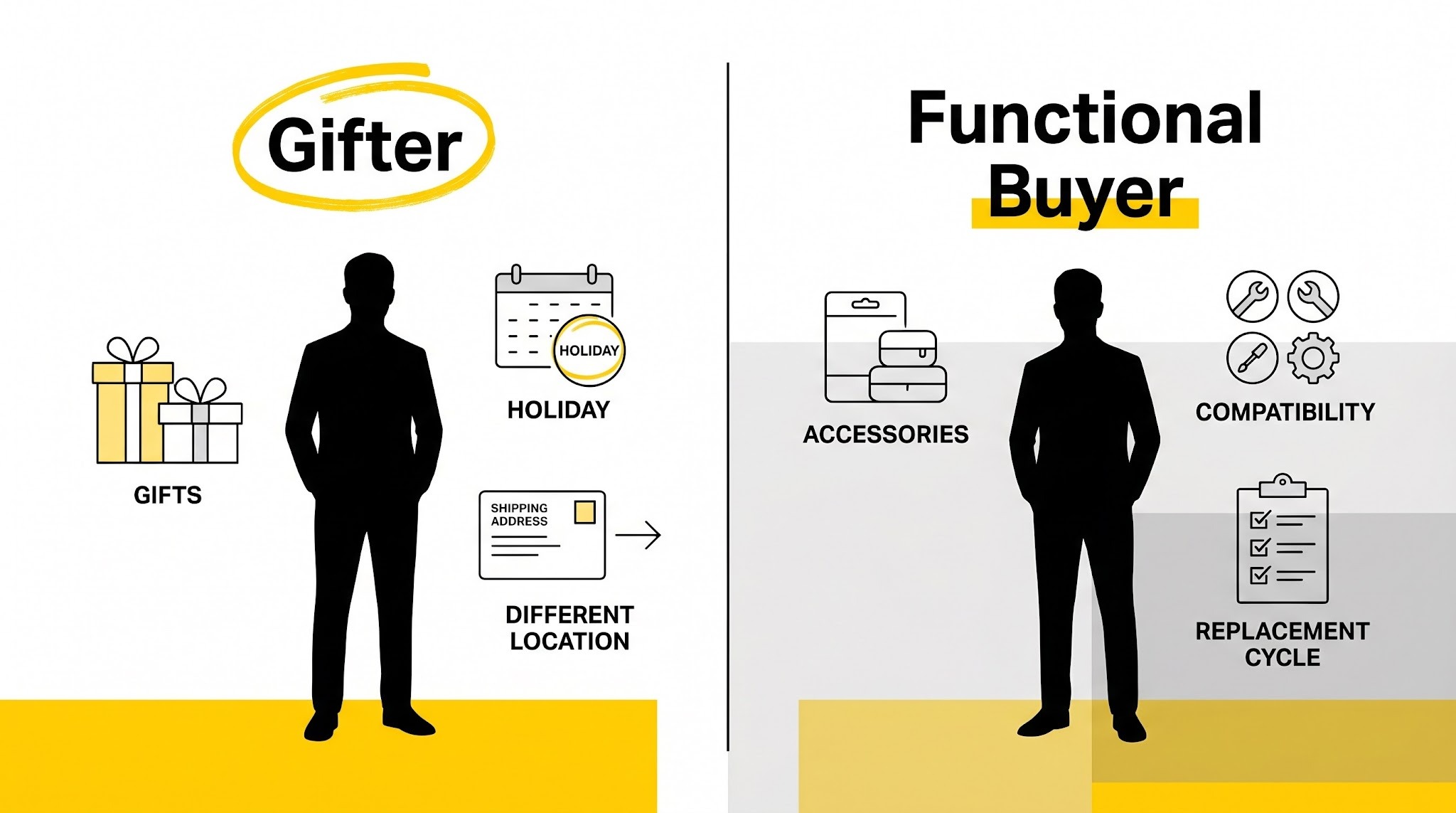
Post-purchase data is the most underused asset in DTC retention. Order history, product combinations, purchase timing, and referral patterns all indicate why a customer bought and what they're likely to need next. The objective isn't segmentation for its own sake. It's building retention personas that map to behavioral clusters, each with distinct motivations and different sensitivities to the tactics deployed.
The Gifter: Customers Who Shop for Others
Gifters frequently appear as low-frequency customers, triggering automated win-back flows as though they've disengaged. In reality, they were never shopping for themselves. Their repurchase trigger is calendar-driven, tied to occasions like holidays or birthdays, not personal need. Observable signals include gift-wrap selection, shipping to addresses different from billing, and purchase clustering around seasonal peaks.
The retention play for gifters centers on emotional relevance and ease. Personalized gift recommendations, occasion-based reminders, and packaging that makes gifting feel special are far more effective than a mistimed discount. Delight tactics work here because they amplify the emotional job: the experience of giving something that lands well, without any change to price.
The Functional Buyer: Accessories, Add-Ons, and Product Breadth
Functional customers are motivated by utility. Purchase signals include accessory additions, compatibility-driven cart composition, and repeat purchases within a single product line. Their next purchase will follow the same logic, making them ideal for cross-sell sequences, but only when recommendations reflect genuine product fit.
Friction removal is the right intervention for this persona, not persuasion. Extended warranties, shipping protection, clear return policies, and compatibility guidance address hesitation at the decision point. When functional customers encounter friction, they don't negotiate with it; they leave. Brands that invest in checkout optimization for repeat customers see measurable retention lifts without touching pricing strategy. As Aves from Pilothouse puts it on Ep 39 of the Adventurous podcast, describes this persona using the example of a customer who keeps coming back to buy different lids for the same base mug. The right next-purchase intervention is security rather than persuasion: an extended warranty or shipping protection on the next bundle.
Lifecycle Interventions Matched to Each Customer Type
Knowing retention personas is only valuable if communications reflect that knowledge. Effective lifecycle interventions require matching the message to the persona and stage, including timing and whether an offer is warranted at all.
Surprising and Delightful Tactics That Move Gifters Without Price Drops
A personalized note acknowledging the gift occasion carries real weight. So does a follow-up asking how the gift was received. A well-timed reminder ahead of a likely future occasion can do even more. These touchpoints feel thoughtful rather than transactional, and no discount campaign replicates that. Unique packaging and small unexpected inclusions carry disproportionate weight with gifters, who evaluate the brand largely on the experience it creates for the recipient.
Removing Conversion Friction for Functional Buyers Through Security and Assurance
Functional customers need confidence before they convert. Streamlined payment flows, visible warranties, and transparent product information are foundational to retaining this segment. Cart optimization and checkout security are directly connected to retention outcomes for this persona, and brands that treat them as such see meaningful improvement in customer retention ecommerce metrics.
Building Rituals, Not Solving One-Off Problems: Identity-Driven Retention
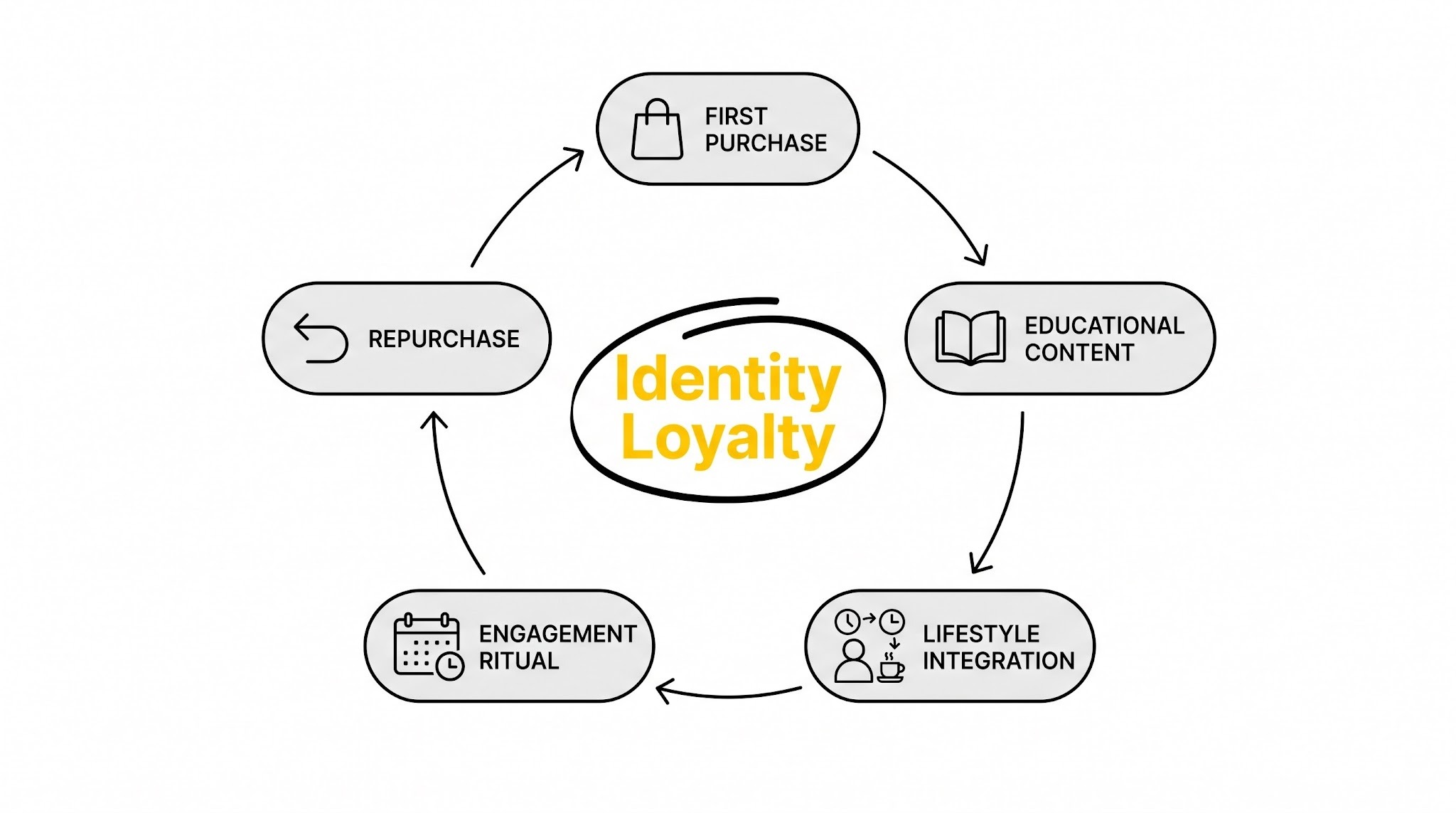
The brands with the highest retention rates in their categories share a common trait: customers don't think of themselves as people who bought from Brand X. They think of themselves as people who use Brand X as part of how they live. That kind of identity integration is what produces the deepest loyalty.
Building rituals means giving customers reasons to engage with the brand on a schedule not driven by sales events. Subscription programs and loyalty structures that reward engagement rather than just spend both contribute here. So does educational content tied to actual product use. Content that reinforces the lifestyle role of a product, the calm of a morning coffee routine or the discipline of a training regimen, cements the product as part of a customer's self-concept. The goal shifts from "will they come back?" to "when."
The Engagement Content Equation: Non-Promotional Emails That Compound Over Time
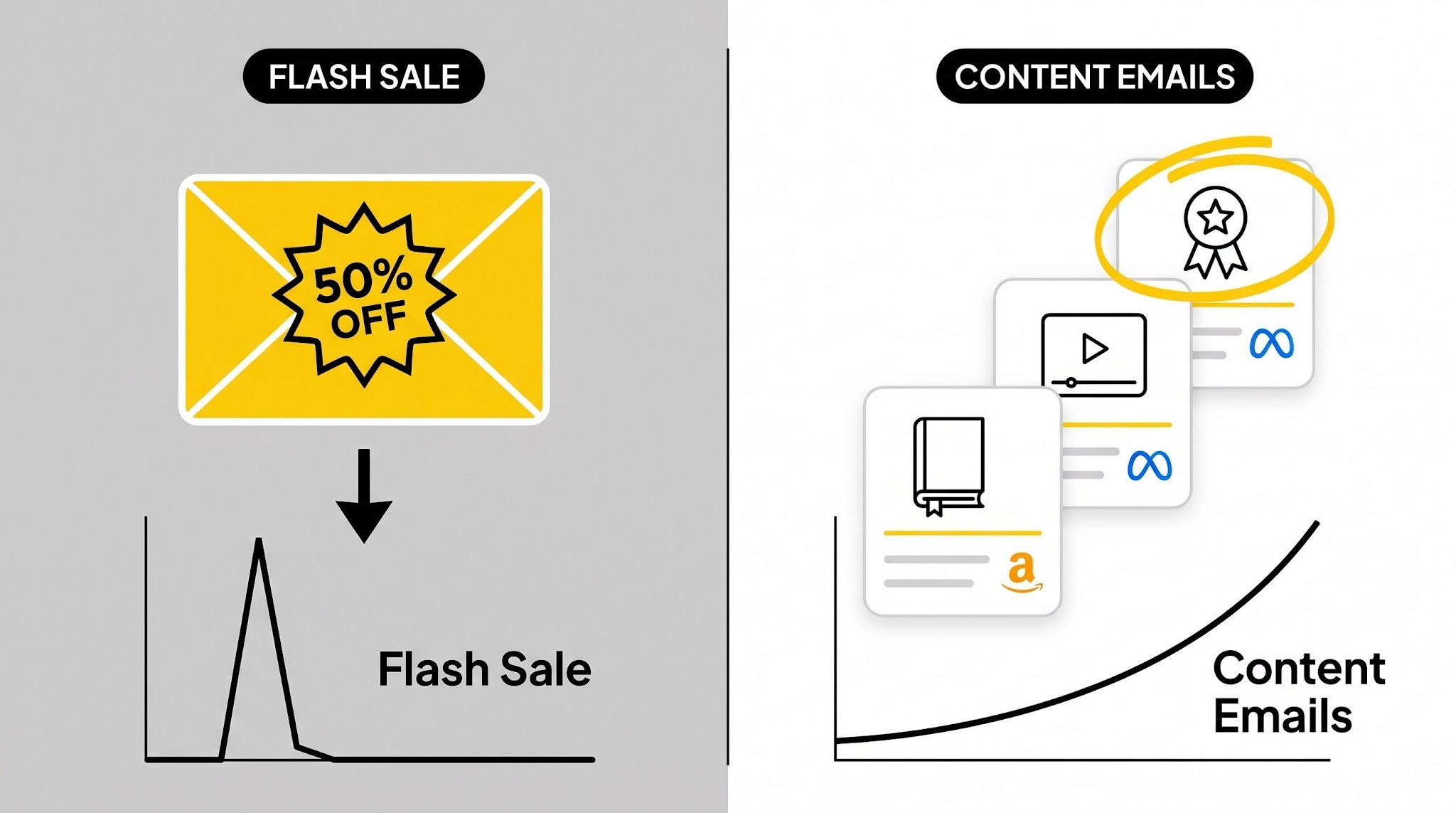
Few brands consistently send value-add content because the ROI isn't immediate. A flash sale drives click-to-purchase spikes that a helpful email never will. What consistent non-promotional content does instead is keep the brand relevant on days when customers aren't in buying mode, and that creates a compounding advantage.
How High-Quality Content Grows List Size, Click Rates, and Business Valuation
The logic compounds quickly: better content drives higher open rates, which improves deliverability and warms the audience for every promotional email that follows. Brands that invest in this consistently find their email channel becomes a genuine competitive asset. There's also a valuation angle worth considering. An engaged, growing email list has real monetary value. Brands that can show high engagement and a documented content strategy driving repeat behavior command better investor valuations. Non-promotional email content is both a customer relationship investment and a business-building one.
Why Aggressive List Pruning Backfires on Recovery Flows
Segmentation is essential, but it can be taken too far. AI-driven list pruning creates a counterintuitive risk: over-optimizing for engaged addresses shrinks reach and undermines the abandonment and recovery funnels that depend on list volume.
Klaviyo's own segmentation guidance reflects this trade-off. Their standard "engaged" segment definitions of 30, 60, or 90-day openers and clickers are designed to be loosened, not tightened, when open rates dip. The reason is structural: cutting too aggressively eliminates the click volume that powers downstream recovery flows, which depend on broad reach to identify high-intent behavior in the first place. A customer who hasn't opened an email in 60 days but still browses the site is exactly the kind of contact a browse abandonment flow exists to recover, and aggressive pruning removes them from the pool before the flow can do its job.
Broad, value-driven content that speaks to universal brand reasons can recapture attention from less-engaged contacts without requiring perfect segmentation data. The goal isn't to send the same message to everyone. It's to keep enough of the list reachable that behavioral signals can still surface when they appear.
Matching Your Message to Buyer Readiness: Angles vs. Why Buys
Customers who are hesitating or slowly drifting are in a specific stage of readiness, and the message that fits that stage is rarely the one that fits a promotional calendar. A customer in the consideration phase needs a "why buy" message: context about the product category, the problem it solves, and why this brand specifically is the right choice. A customer in the decision phase needs social proof, product clarity, or friction removal, not a broad awareness hook.
Has a customer been opening emails but not clicking? That's a "why buy" audience still building category conviction. Has a customer been clicking but not converting? That's a decision-stage audience that needs a specific reason to act now. Mapping communication type to behavioral signals requires almost no additional creative investment once the framework is in place.
Closing the Loop at the Cart: Modern Tactics to Capture Last-Moment Conversions
Most brands address cart abandonment with a single automated email and a discount. The more effective approach is layered. Exit-intent sequences and multi-step abandonment flows that escalate in relevance over 48 to 72 hours consistently outperform single-touch recovery campaigns. The goal is to understand why the customer hesitated and address that specific barrier, not to blunt the hesitation with a price cut.
Smart pop-ups, post-click offers, contextual add-ons, and final-step reassurance messages function as the modern equivalent of the infomercial upsell: relevance and confidence additions at the moment of highest intent. SMS recovery plays a meaningful role for high-intent customers who showed significant time-on-page before exiting. Pairing email and SMS with appropriately spaced timing and distinct messaging angles closes more loops than either channel achieves alone.
Customer retention ecommerce strategy spans persona identification, lifecycle design, content strategy, and conversion recovery. Brands that build intentionally across each layer grow repeat purchase rates without sacrificing the margin that makes growth sustainable. At Pilothouse Digital, this retention architecture is what separates brands that plateau from those that scale.
If you want to see where your current retention setup is leaking margin to discounts and where lifecycle interventions could replace them, get in touch with the Pilothouse Digital team. We'll walk through your post-purchase data, persona mix, and recovery flows with you.


_IMG_970x600-1-5.jpg)