Integrated Digital Marketing Agency: The Smarter Way to Scale Your DTC Brand
Most DTC brands don't fail because they lack talent or budget. They plateau because their marketing operates in silos. Your paid social team runs campaigns independently. Creative works off last quarter's briefs. Email operates on its own calendar. Each channel reports its own wins, but the system breaks down between them.
The result? Customer acquisition costs creep up, messaging fragments across platforms, and attribution becomes guesswork. You spend more but grow slower. The problem isn't any single channel. It's the gaps between them.

Why DTC Brands Hit Growth Ceilings (And Why Disconnected Channels Are the Real Problem)
Growth stalls when brand channels operate in isolation. Facebook ads build awareness, but email flows tell a different story. The landing page experience doesn’t reflect what TikTok promised. Each channel chases its own KPIs while nobody owns the actual customer journey.
Fragmented Messaging = Fractured Trust, Higher CAC
When channels operate alone, messaging splinters across touchpoints. Your brand shows up one way on Instagram, another on your website, and something else entirely in email. Trust slips right when brands can least afford it. CAC keeps climbing: average ecommerce acquisition sits around $68–$78, yet early-stage DTC brands often pay $100–$500 per customer. Meanwhile, established players in the same category still hover near that $70 benchmark thanks to stronger awareness and loyalty (LoyaltyLion).
Attribution Chaos and Misplaced Budgets
In siloed setups, every channel tries to take credit for the same conversion. Brands end up over-investing in channels that look good on paper but weaken overall performance. Resource allocation becomes a guessing game because the data tells six different stories.
The Missing Compounding Effect
Great marketing works when channels amplify each other. A branding campaign should make performance ads cheaper. Retention campaigns should reinforce what customers saw on paid social. Creative should evolve using signals from every channel, not just one. Without that compounding effect, every channel keeps starting from zero.
The Data Is Loud and Clear: Winners Don’t Fix Channels,They Rebuild Systems
The brands that scale build systems where every channel amplifies the others. And the results prove it. Brands engaging consumers across three or more touchpoints see 250% higher engagement than single-channel retailers. Even more telling: omnichannel retailers report 179% faster revenue growth than those running disconnected strategies. (Capital One Shopping)
The leaders aren’t tweaking channels. They’re rebuilding the system so every channel works together, compounds impact, and reinforces the same story.
What an Integrated Digital Marketing Agency Actually Does
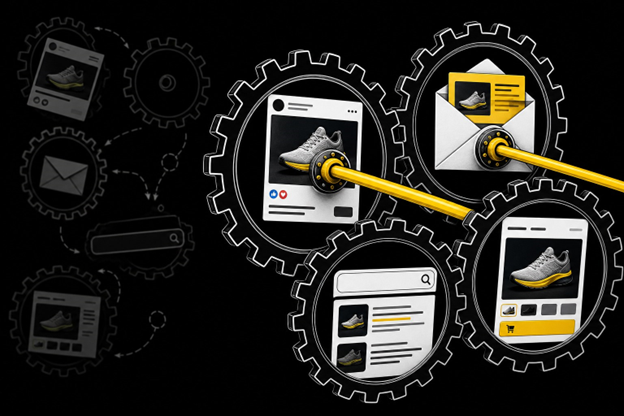
An integrated digital marketing agency doesn't just run campaigns across multiple channels. It architects a single system where media buying, creative development, and strategic execution work as interconnected parts of one growth engine. Every channel informs the others. Creative assets built for paid social get adapted and tested across email, landing pages, and organic content. Data from one platform shapes strategy across all platforms.
This Isn’t Channel Management. It’s Growth Architecture.
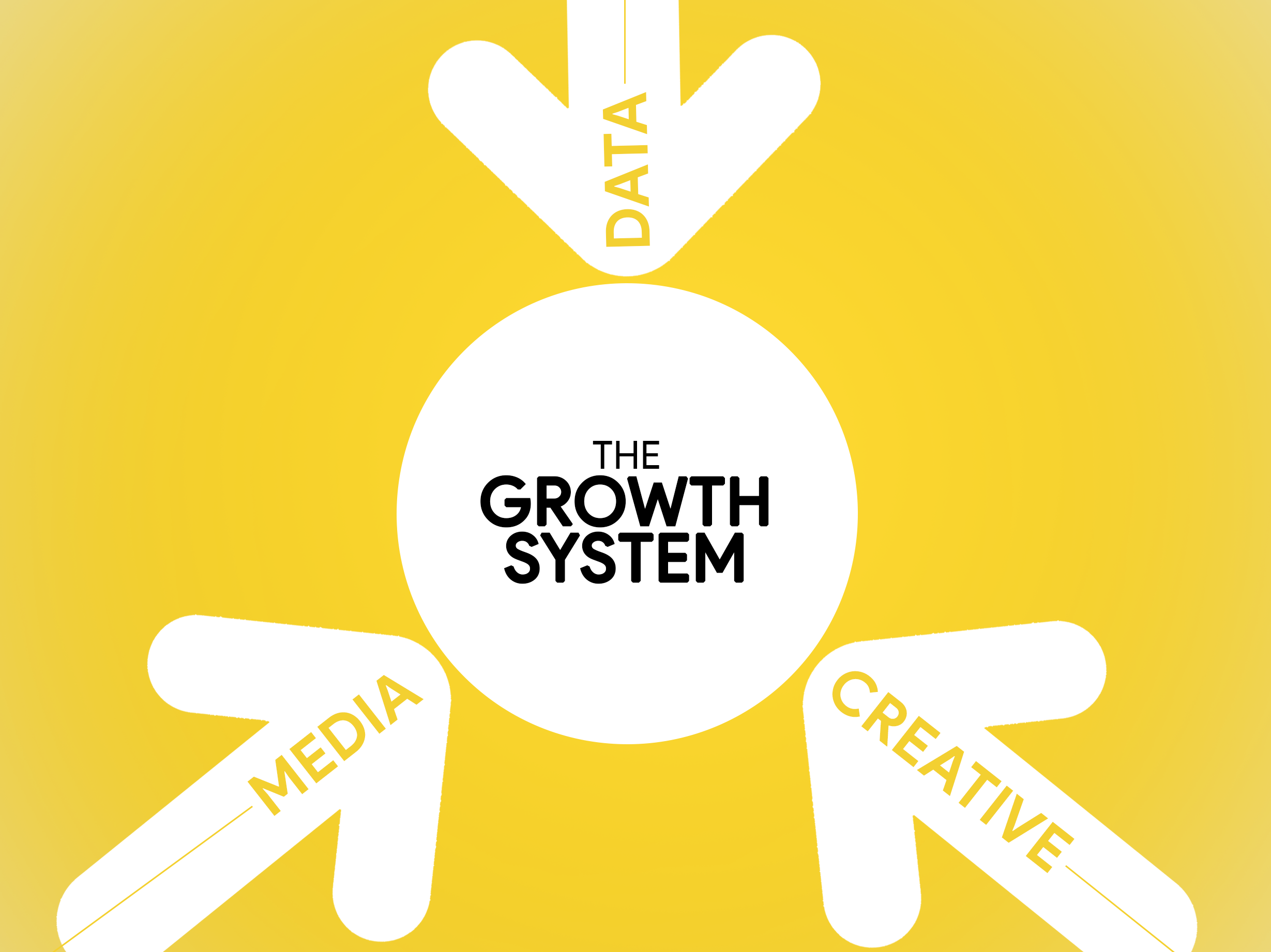
This changes how campaigns get built. Instead of separate teams executing isolated tactics, Pilothouse Digital operates with shared objectives, unified data and a dedicated account strategist overseeing the full system. That strategist connects media, creative, and data, making sure every channel ladders up to one growth narrative, not competing agendas. Media buyers collaborate with creative teams in real time, not quarterly planning sessions. Attribution models account for cross-channel influence, not just last-click conversions. Strategy adapts based on holistic performance, not channel-specific vanity metrics.
Unified Teams. Shared Data. One Objective: Growth.
Integrated marketing firms focus on the customer journey as a continuous experience, not disconnected touchpoints. When someone discovers your brand on TikTok, the creative they see should inform the messaging in your retargeting ads, the copy in your email welcome series, and the positioning on your landing pages. That level of cohesion only happens when strategy, media, and creative operate as one system.
The advantages of integrated marketing communications show up across every metric that matters. Lower customer acquisition costs because you're not duplicating effort. Higher conversion rates because messaging stays consistent throughout the journey. Better attribution because you're tracking holistic performance, not optimizing for channel-specific KPIs that might conflict with overall growth.
The Pilothouse Integration Framework: Strategy, Media, and Creative as One System
Pilothouse Digital built its framework around a key insight: sustainable DTC growth requires integration at every level. Strategy can't exist in a vacuum. Media execution and creative development must inform each other continuously. Data needs to flow freely between teams so insights from one channel immediately impact decisions across all channels.
This isn't coordination. It's true integration. The difference matters when you're trying to scale past $10M or $20M in revenue. Coordination means teams talk occasionally. Integration means they operate from shared data, unified strategy, and collaborative execution by default.
Unified Performance Strategy Across All Channels
A unified performance strategy starts with understanding that channels don't compete for credit. They work together to move customers through an interconnected journey. Pilothouse Digital approaches integrated digital strategy by mapping the full customer path first, then deploying channel tactics that support each stage cohesively.
Your paid social campaigns aren't just driving awareness. They're launching messaging that your email team will reinforce, your content team will expand on, and your retention campaigns will reference months later. Every channel plays a specific role, but all roles ladder up to shared objectives.
Resource allocation becomes clearer when the strategy is unified. Instead of dividing the budget by channel and hoping for the best, you invest based on how channels support each other. Maybe TikTok drives discovery, but has weak direct conversion. That's fine if your email and SMS systems are optimized to convert that audience over time. The integrated marketing platform view lets you see where to invest for maximum system-wide impact, not maximum channel-specific ROAS.
Data Intelligence and Attribution That Actually Works
Most attribution models fail DTC brands because they're built for channel reporting, not growth decisions. Last-click attribution gives all credit to the final touchpoint. First-click over-credits awareness. Multi-touch tries to split the difference but still treats the journey as linear when customer behavior is anything but.
Pilothouse Digital's approach to data intelligence focuses on understanding true customer behavior across your full marketing ecosystem. Advanced analytics tools track how audiences move between channels, which combinations drive action, and where the real inflection points occur. This isn't about giving every channel partial credit. It's about seeing which channel interactions actually matter for conversion and which are just noise.
Accurate attribution changes budget decisions fundamentally. When you understand that your best customers discover you on YouTube, engage on Instagram, and convert through email, you optimize the entire sequence. You don't cut YouTube because its last-click conversions look weak. You don't over-invest in the conversion channel while starving the discovery channels that feed it. You allocate based on system performance, not isolated channel metrics.
Data also flows back into creative development and strategic planning in real time. If certain messaging drives engagement on paid social but fails to convert on landing pages, creative teams adapt immediately. If a specific audience segment shows strong cross-channel behavior, media buyers can prioritize it across all platforms simultaneously. That feedback loop separates integrated agencies from coordinated ones.
Creative Execution Built for Cross-Channel Performance
Creative should adapt to each platform's unique characteristics while maintaining a consistent brand voice and strategic messaging. Pilothouse's creative teams build assets designed for flexibility from the start. A campaign concept developed for Instagram gets versioned for TikTok's native format, adapted for email's longer-form storytelling, and tested in paid search creative, all while keeping the core message intact.
This requires creative teams to think beyond platform-specific best practices. Yes, TikTok creatives should feel native to TikTok. But it also needs to connect thematically to what customers see everywhere else. The same campaign theme should feel cohesive whether someone encounters it through paid ads, organic content, or email marketing.
Testing becomes more powerful when creatives are integrated. Insights from one channel inform hypotheses for others. If a specific value proposition outperforms on Facebook, you can test that positioning across Google, email subject lines, and landing page headlines simultaneously. You're not testing in silos. You're finding systematic insights that improve performance everywhere.
What Sets Pilothouse Apart as Your Integrated Digital Marketing Agency
Most agencies claim to offer integrated services. They have teams for different channels under one roof. That's not integration. That's co-location with occasional coordination. True integration requires shared data systems, collaborative workflows, and unified strategic planning from day one.
Pilothouse operates as an integrated agency where media buyers, creative strategists, and data analysts work together on every account. Strategy sessions include all disciplines. Creative development happens with media execution timelines in mind. Data analysis informs both creative direction and media allocation in real time. This structure eliminates the handoff friction that slows down most agency relationships.
Transparency matters when you're trusting an agency with significant spend. Pilothouse provides full visibility into how decisions get made, why budgets shift between channels, and what the data actually shows. You're not getting summary reports that hide complexity. You're getting clear explanations of what's working, what isn't, and what changes will drive improvement.
The agency's track record with over 150 DTC brands provides pattern recognition that benefits every client. When you've scaled brands from $5M to $30M and beyond across multiple categories, you develop instincts for what works at different growth stages. That experience shapes strategy, creative direction, and media execution in ways that help you avoid costly mistakes and accelerate past growth plateaus.
Real DTC Growth: Case Studies from the Pilothouse Portfolio
The difference between coordinated marketing and true integration shows up clearest in results. Brands working with Pilothouse typically see improvements across multiple metrics simultaneously because the entire system optimizes together, not just individual channels.
Success stories span diverse categories, from apparel to supplements to home goods. Each brand faced different challenges, but the solution framework remained consistent: integrate strategy, align media execution across channels, develop creative that works cohesively, and use data to optimize the full system.
One consistent pattern emerges across the portfolio. Brands that commit to integrated execution see their customer acquisition costs stabilize or decline even as they scale spend. That's unusual in DTC, where CAC typically rises with scale. The reason it works differently with integrated systems is that you eliminate waste at every handoff point and compound efficiency gains across channels.
Integration in Action: Key Outcomes from Pilothouse Client Case Studies
- Octopied Mind: By fully integrating email with Pilothouse’s broader marketing strategy, this apparel brand saw an 87% increase in email-driven revenue, a 432% growth in its subscriber base, and customer retention jumped by 105%, demonstrating the power of coordinated data and creative across touchpoints.
- Hestan: During a year-round digital marketing transformation, Hestan saw a 78% increase in net sales, a 139% lift in order volume, and a 32% higher conversion rate by integrating Pilothouse’s creative, paid media, and conversion optimization into one unified growth strategy.
- Circulon: During Black Friday/Cyber Monday, Circulon achieved a 332% increase in net sales, a 900% year-over-year surge in purchase volume, and a 1616% jump in active subscribers by weaving together paid media, creative, and CRM into a single, data-backed campaign architecture.
- RUX: With media buying, creative, and conversion optimization unified under an aggressive scaling plan, RUX lifted ROAS 111% in just three months and tripled ad spend profitably, culminating in record-breaking Black Friday sales.
- Four Sigmatic: For this well-known supplements brand, Pilothouse’s integrated Amazon strategy delivered a 115% increase in monthly gross profit, an 83% boost in shipped revenue, and a 99% year-over-year rise in active subscribers.
These case studies demonstrate how integrated marketing services deliver outcomes that disconnected tactics can't match. When messaging aligns, attribution improves, and creative reinforces itself across platforms, the entire customer journey becomes more efficient. You're not just doing more marketing. You're building a growth system that compounds over time.
Scale Your DTC Brand with a Single, Unified System
Scaling past $10M requires different capabilities than getting to $10M. Early-stage DTC growth often comes from finding one or two channels that work and pushing them hard. But channel-specific tactics hit diminishing returns as you scale. What got you here won't get you there.
A unified marketing system changes the scaling equation. Instead of trying to squeeze more performance from individual channels, you optimize how channels work together. That creates new efficiency gains even as absolute spend increases. Your paid social becomes more effective because email nurture is aligned. Your Google campaigns convert better because the entire pre-click experience is consistent.
Working with an integrated marketing company means you get one strategic partner instead of managing multiple agencies with conflicting priorities. Strategy stays coherent. Data flows freely. Creative development happens faster because there's no coordination overhead between teams. You make decisions based on full-funnel performance, not channel-specific metrics that might conflict.
This approach simplifies operations while improving results. You're not managing separate relationships with paid social agencies, creative studios, email teams, and analytics consultants. You have one integrated partner responsible for the entire system's performance. That accountability matters when you're trying to scale efficiently.
If you're ready to move from tactical coordination to systematic integration, the framework exists. Pilothouse's approach to integrated marketing services provides the structure, expertise, and execution capability to scale your brand with a unified system designed for performance at every level.